The city of L.A.'s poets write about their neighborhoods.


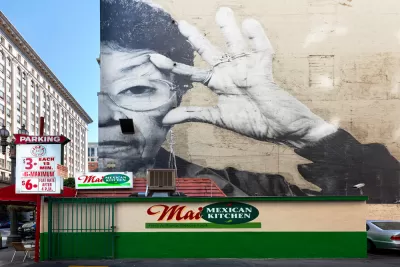
Sesshu Foster has curated a collection of Los Angeles-based poets to write about their neighborhoods in a recent feature for the Los Angeles Review of Books. Foster starts with the origin story of a love for poetry, birthed in an era of wartime propaganda:
Only the poets seemed willing and able to address the truth of this world directly, speak it as they saw it, without the “once upon a time” fictions of storytellers or the equivocations and evasions of official pronouncements or ordinary conversations.
So for a vision of Los Angeles only possible with the perspective of poets, Foster "asked a bunch of L.A. poets to reflect on their neighborhoods."
For me, the light of these poets — like that of Wanda Coleman, Manazar Gamboa, Jayne Cortez, and Charles Bukowski before them, and Carlos Bulosan before them — cuts through the city like the last orange light of the afternoon, when shadows go long and 10,000 walls and windows shine.
What follows is mostly the prose musings of poets, with plenty of poetry sprinkled in or infused into the long passages on neighborhoods all across the city, as they were to the city's poets in many eras.
FULL STORY: Los Angeles, City of Poets


Planetizen Federal Action Tracker
A weekly monitor of how Trump’s orders and actions are impacting planners and planning in America.

The state-sanctioned urbicide of Austin
People don’t kill cities. Freeways do.

US to reduce Colorado River water deliveries to Mexico
A new Colorado Treaty amendment reduces Mexico’s Colorado River water allocation by 250,000 acre feet.

Colorado’s Largest Data Center Could Rise Next to Homes — Without a Public Hearing
The proposed campus would consume 11 times the power of Denver International Airport; as it has across the country, opposition mounts.

5 New England states march closer to 800 megawatt wind energy project
Securing federal approval for the project may be complicated under the Trump administration, which has historically been hostile towards domestic wind power.

Baltimore to break ground on $50 million Transit Priority Project
The project will bring faster bus trips, safer streets and better bike connections to Baltimore.

FREE Course: Walkable City 1: Why Walkability?
After describing his path towards focusing on walkability as the essence of good planning, Jeff Speck marches through his five principal reasons for making more walkable places.
Reinventing Malls: Planning Alchemy—Turning Gray Fields Into Gold
The course focuses on the opportunities and imperatives that shape reinvention of mall sites.

Eagle County Government
Harvard University Graduate School of Design
Nashville Planning Department
The Architects Foundation
University of Cincinnati Online
The Pocatello Development Authority
The Urban Renewal Agency of the City of Pocatello
Journal of the American Planning Association