When the line shuts down for repairs next year, an uptick in cycling is expected. Infrastructure improvements will make this shift easier and could promote biking well into the future.


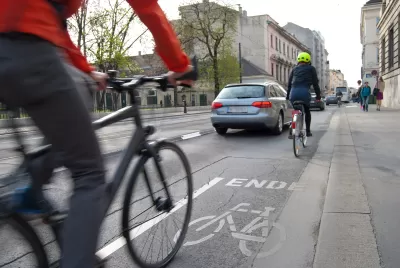
Aaron Gordon considers the effects the L train shutdown will have on cycling in New York. The line is scheduled to go offline for repairs starting in the spring of 2019. Predictions indicate that two percent of riders, about 4,500 riders, will move over to biking, and almost half to three-quarters of them will be using the Williamsburg Bridge, reports Gordon.
In anticipation of this increase in cyclists, the New York City Department of Transportation is proposing a series of road improvements, including better connections to the Williamsburg Bridge and protected bike lanes in the area.
But not all the changes have been well received, says Gordon. A plan for a two-way protected bike lane along 14th Street was met with resistance from residents. Now two one-way bike lanes are planned for 12th and 13th Streets, which disappointed bike advocates who were hoping for the safer two-lane design and a crosstown route that would encourage cycling.
A shift to cycling is critical and it benefits all travelers, argues Gordon. Otherwise, he says, traffic will worsen as the number of ride-hailing vehicles increases and other transit modes reach capacity. “And the more people who regularly bike, the louder the calls will be for safer, protected infrastructure. And maybe, just maybe, this positive cycle will continue after the L resumes rumbling under the river,” adds Gordon.
Read the full story: Why biking is critical for surviving the L train shutdown
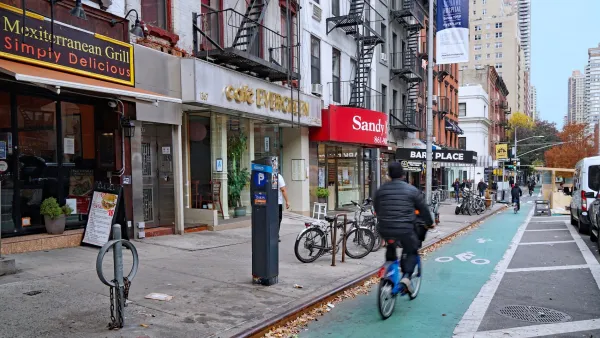
Study: Protected bike lanes increase Citi Bike rides by nearly 400 rides a month
An analysis of millions of NYC bike share rides reveals that only protected bike lanes have a 'statistically significant' increase in ridership.
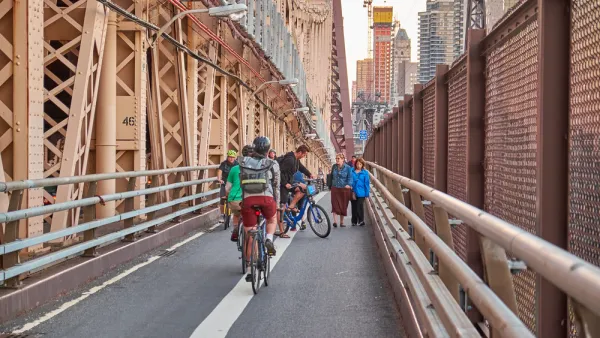
Bike Traffic Up 88 Percent On New Brooklyn Bridge Bike Lane
Bike ridership nearly doubled after New York City installed a new bike lane on the Brooklyn Bridge.
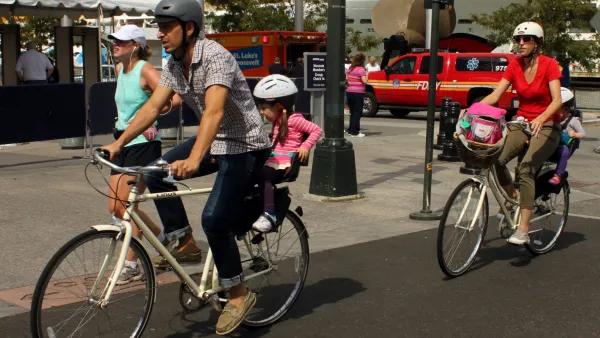
Signal Priority in N.Y.C. to Make Streets Safer for Cyclists
New York City will create green waves by adjusting traffic signals to keep cyclists moving, even when drivers will have to slow down.

Planetizen Federal Action Tracker
A weekly monitor of how Trump’s orders and actions are impacting planners and planning in America.

California plans to bury El Niño’s downpour
If the state plays its cards right, it may be able to store a billion acre-feet of El Niño’s water in aquifers.

Desperate measures: Advocates weigh draining Lake Powell to fill Colorado River
Draining the reservoir could reduce evaporation losses by a couple hundred thousand acre-feet.

Voters across the country reject data centers
Dozens of communities voted on measures to restrict the buildout of data centers.

US buildings threatened, destroyed by fires set to triple by 2060
Researchers found a high fire risk for socioeconomically vulnerable neighborhoods in the American West.

LA residents may be allowed to paint their own crosswalks
Councilwoman Katy Yaroslavsky put out a motion instructing the Los Angeles Department of Public Transportation to study the feasibility of allowing volunteers to paint crosswalks.

FREE Course: Walkable City 1: Why Walkability?
After describing his path towards focusing on walkability as the essence of good planning, Jeff Speck marches through his five principal reasons for making more walkable places.
Reinventing Malls: Planning Alchemy—Turning Gray Fields Into Gold
The course focuses on the opportunities and imperatives that shape reinvention of mall sites.

City of Rosemead
Rutgers University, Edward J. Bloustein School of Planning and Public Policy
One Hundred Miles
Hunter College, City University of New York (CUNY)
The Architects Foundation
University of Cincinnati Online
City of Cambridge
Montrose County
The Pocatello Development Authority