A missing link in Boston's subway system could be built for a lower price and on an accelerated timeline.


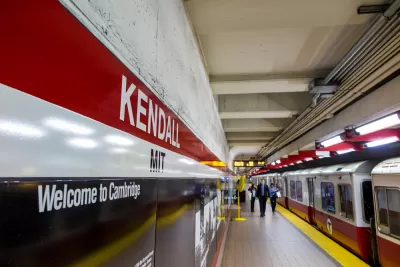
Connecting Boston's Blue and Red lines could cost about substantially less than previously thought, a new analysis shows—and that could be enough to warrant giving the project priority status.
"The long-debated proposal to link the Red and Blue lines — the only two MBTA subway lines that don't connect — has received renewed consideration over the past year, after Boston officials said the project could help entice Amazon to bring its new headquarters to East Boston," Adam Vaccaro reports in the Boston Globe. The project would link Blue Line stops including Logan Airport, East Boston, and Revere to Red Line stops like Massachusetts General Hospital and Kendall Square.
Now, the MBTA will decide whether to include the connector in the list of projects it plans to complete by 2040.
Original estimates for the project in 2010 put its cost at $748 million, assuming it would be built using a tunnel boring machine. The new analysis suggests that using the "cut and cover" method, which involves tearing up the street during construction, would cost about $500 million. Both estimates include design, testing, and station improvements.
FULL STORY: Red Line-Blue Line connection could be much cheaper than thought, study says

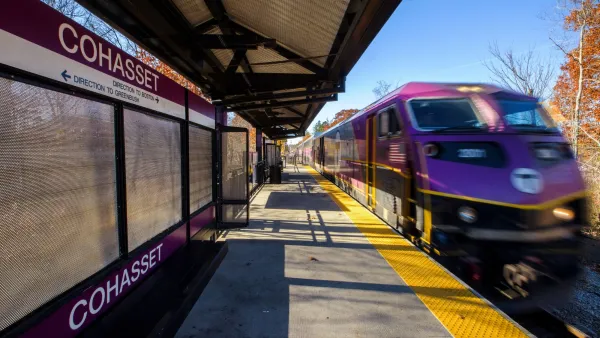
MBTA extends commuter rail discounts and lowers express bus fare to keep passengers riding into the fall
Boston-area commuters can access half-price monthly passes through November.
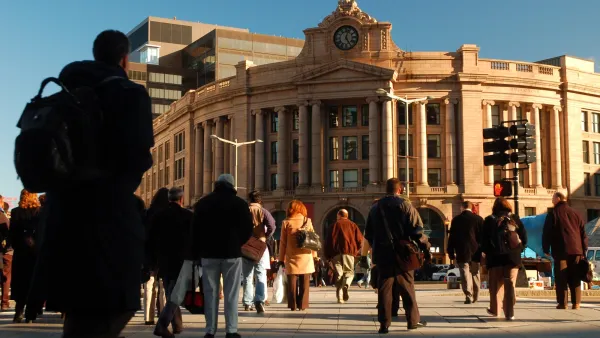
MBTA threatens to use eminent domain to pedestrianize Boston streets during World Cup
Boston city hall has been unusually reluctant to align with MassDOT and MBTA's proposed crowd management plans.
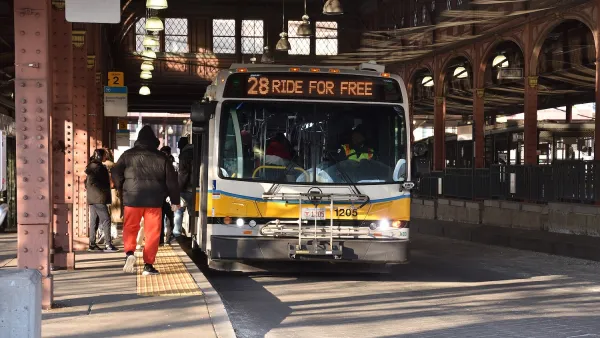
Boston’s Free Buses are Also its Slowest
Two fare-free bus lines have seen a sharp increase in travel times.

Planetizen Federal Action Tracker
A weekly monitor of how Trump’s orders and actions are impacting planners and planning in America.

The state-sanctioned urbicide of Austin
People don’t kill cities. Freeways do.

US to reduce Colorado River water deliveries to Mexico
A new Colorado Treaty amendment reduces Mexico’s Colorado River water allocation by 250,000 acre feet.

Mamdani overhauls NYC's Vision Zero plan with 100 new policy goals
The overhaul aims to reduce traffic deaths and make streets safer for pedestrians, cyclists and drivers through lower speed limits, new safety infrastructure and more.

Amtrak not solely to blame for New Jersey commuter rail's unreliability, report finds
A new study from the Garden State Initiative found that NJ Transit’s budget grew 20% across a 4 year period, but reliability declined significantly over the same period.

EPA erases limits on planet-warming pollution from power plants
Under Monday’s plan, power plants would still have some limits on how much mercury, arsenic and other contaminants they can emit.

FREE Course: Walkable City 1: Why Walkability?
After describing his path towards focusing on walkability as the essence of good planning, Jeff Speck marches through his five principal reasons for making more walkable places.
Reinventing Malls: Planning Alchemy—Turning Gray Fields Into Gold
The course focuses on the opportunities and imperatives that shape reinvention of mall sites.

Eagle County Government
Harvard University Graduate School of Design
Nashville Planning Department
The Architects Foundation
University of Cincinnati Online
The Pocatello Development Authority
The Urban Renewal Agency of the City of Pocatello
Journal of the American Planning Association