With buses crawling along through downtown Philadelphia, the city has plans to step up law enforcement to help them move faster.


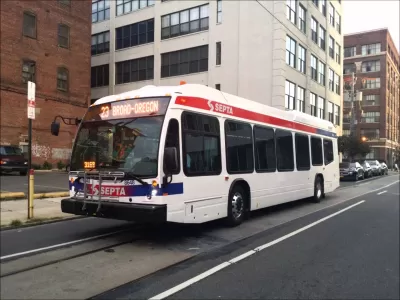
Jason Laughlin reports on a new effort to get traffic moving in Philadelphia’s Center City area. Traffic congestion has steadily been increasing and consequently slowing down Southeastern Pennsylvania Transportation Authority buses:
Bus speeds have been declining since 2014 and now average less than 12 mph. Fifty-four of SEPTA's 83 city bus routes don’t meet an on-time rate of 80 percent punctuality. Federal Transit Administration data released early this year showed bus ridership declined by 18 million trips, about 10 percent, from 2016 to 2017.
To tackle the problem, a new pilot program will use more police officers to enforce traffic regulations and stop violations, from double parking and blocking intersections to stopping in bike lanes and bus stop zones. "It's not just the number of vehicles. It’s what they're doing. Center City's narrow streets can be almost completely blocked by a truck stopping to make a delivery, or a ride-share picking up a passenger," says Laughlin.
Bus travel times will be one of the measures used to gauge the program's success. City officials also hope that the outcomes in vehicle traffic will improve streets for pedestrians and cyclists.
FULL STORY: With bus service no faster than walking, a new approach to clear up Center City traffic jams


Philadelphia Bus Cameras Document Over 30,000 Violations
A pilot program tested AI-powered cameras that monitored bus-only lanes for parked vehicles.
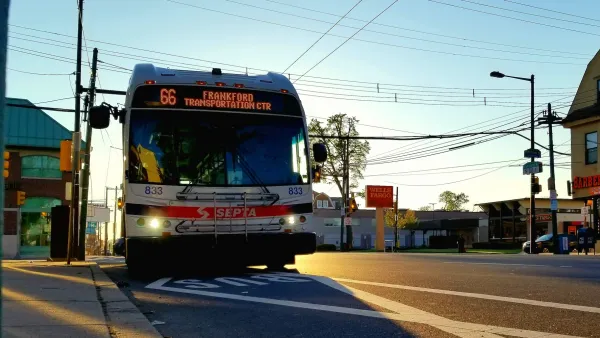
SEPTA's bus-mounted lane enforcement cameras cut travel times by up to 6%
The AI-assisted cameras have issued nearly 200,000 citations to drivers blocking bus lanes.
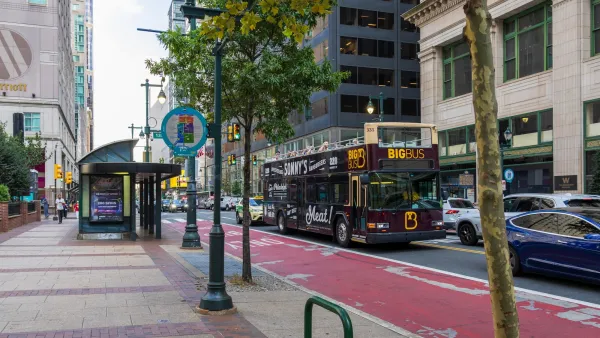
Philadelphia Bus Lane Enforcement Cameras Issued Over 112,000 Citations in First 7 Months
The bus-mounted cameras have helped increase bus speed by 3 to 6 percent.

Planetizen Federal Action Tracker
A weekly monitor of how Trump’s orders and actions are impacting planners and planning in America.

The state-sanctioned urbicide of Austin
People don’t kill cities. Freeways do.

US to reduce Colorado River water deliveries to Mexico
A new Colorado Treaty amendment reduces Mexico’s Colorado River water allocation by 250,000 acre feet.

5 New England states march closer to 800 megawatt wind energy project
Securing federal approval for the project may be complicated under the Trump administration, which has historically been hostile towards domestic wind power.

Baltimore to break ground on $50 million Transit Priority Project
The project will bring faster bus trips, safer streets and better bike connections to Baltimore.

Airbnb launches $250 million 'last-dollar financing' housing accelerator, makes first investment in Austin
The company will put $6.4 million towards affordable housing development in Texas’ capital.

FREE Course: Walkable City 1: Why Walkability?
After describing his path towards focusing on walkability as the essence of good planning, Jeff Speck marches through his five principal reasons for making more walkable places.
Reinventing Malls: Planning Alchemy—Turning Gray Fields Into Gold
The course focuses on the opportunities and imperatives that shape reinvention of mall sites.


Eagle County Government
Harvard University Graduate School of Design
Nashville Planning Department
The Architects Foundation
University of Cincinnati Online
The Pocatello Development Authority
The Urban Renewal Agency of the City of Pocatello
Journal of the American Planning Association