The findings of a new report might run counter to common perceptions about Cleveland's shrinking population. Downtown Cleveland could, and should, provide more housing opportunities, according to the report.


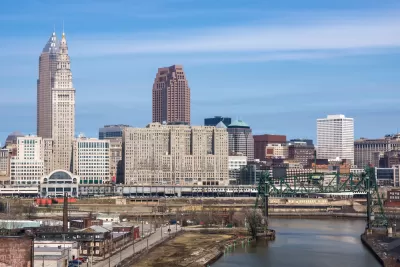
"Developers could build - and expect to fill - 6,800 more residences in downtown Cleveland by 2030 without oversaturating the market," reports Michelle Jarboe.
Jarboe is sharing the findings of a new report published by Philadelphia-based Urban Partners. The reports "lays to rest concerns about a potential overabundance of housing in and near the central business district," according to Jarboe. In fact, there's so much demand, "Cleveland must find ways to add more for-sale homes to the rental-heavy market and to turn more downtown workers into residents."
Among other findings from the report, are details about the number of downtown workers who also live downtown (it's a very small percentage), and the homeownership rate of downtown residents (also a very small percentage). Urban Partners also shared the two following infographics to compare Cleveland's rates to other cities around the country.


Read the full story: Report shows demand for 6,800 more homes in downtown Cleveland by 2030


Has the Millennial Housing Boom Only Just Begun?
The largest, most diverse generation in U.S. history has experienced setbacks, but many are now moving past student debt and the effects of the Great Recession into their prime buying years.
How Do We Calculate Demand for Housing?
Actual demand for a place's housing might exceed increases in the number of residents or households.

Study: Market-Rate Development Filters Into Naturally Occurring Affordable Housing
New research sheds new light on one of the most hotly debated questions in planning and development.

Planetizen Federal Action Tracker
A weekly monitor of how Trump’s orders and actions are impacting planners and planning in America.

California plans to bury El Niño’s downpour
If the state plays its cards right, it may be able to store a billion acre-feet of El Niño’s water in aquifers.

Chicago breaks ground on $3 billion megadevelopment
The new neighborhood, titled Foundry Park, will one day host 3,700 residences.

California High-Speed Rail Authority CEO resigns after $600,000 scandal
Under Ian Choudri, the authority used taxpayer dollars to fund first class flights and trips to nightclubs.

Want to study the Missouri River? Soon, you may need unanimous approval from 10 states
Legislation would require 10 governors’ permission to study or build projects moving water outside the basin.

Desperate measures: Advocates weigh draining Lake Powell to fill Colorado River
Draining the reservoir could reduce evaporation losses by a couple hundred thousand acre-feet.

FREE Course: Walkable City 1: Why Walkability?
After describing his path towards focusing on walkability as the essence of good planning, Jeff Speck marches through his five principal reasons for making more walkable places.
Reinventing Malls: Planning Alchemy—Turning Gray Fields Into Gold
The course focuses on the opportunities and imperatives that shape reinvention of mall sites.

City of Rosemead
Rutgers University, Edward J. Bloustein School of Planning and Public Policy
One Hundred Miles
Hunter College, City University of New York (CUNY)
The Architects Foundation
University of Cincinnati Online
City of Cambridge
Montrose County
The Pocatello Development Authority