The project also brings widened sidewalks and more trees to the Maryland Parkway corridor.


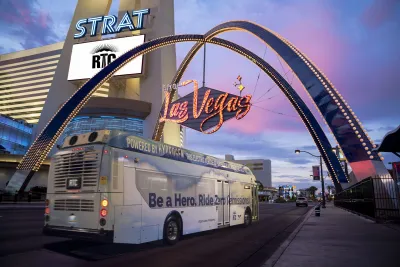
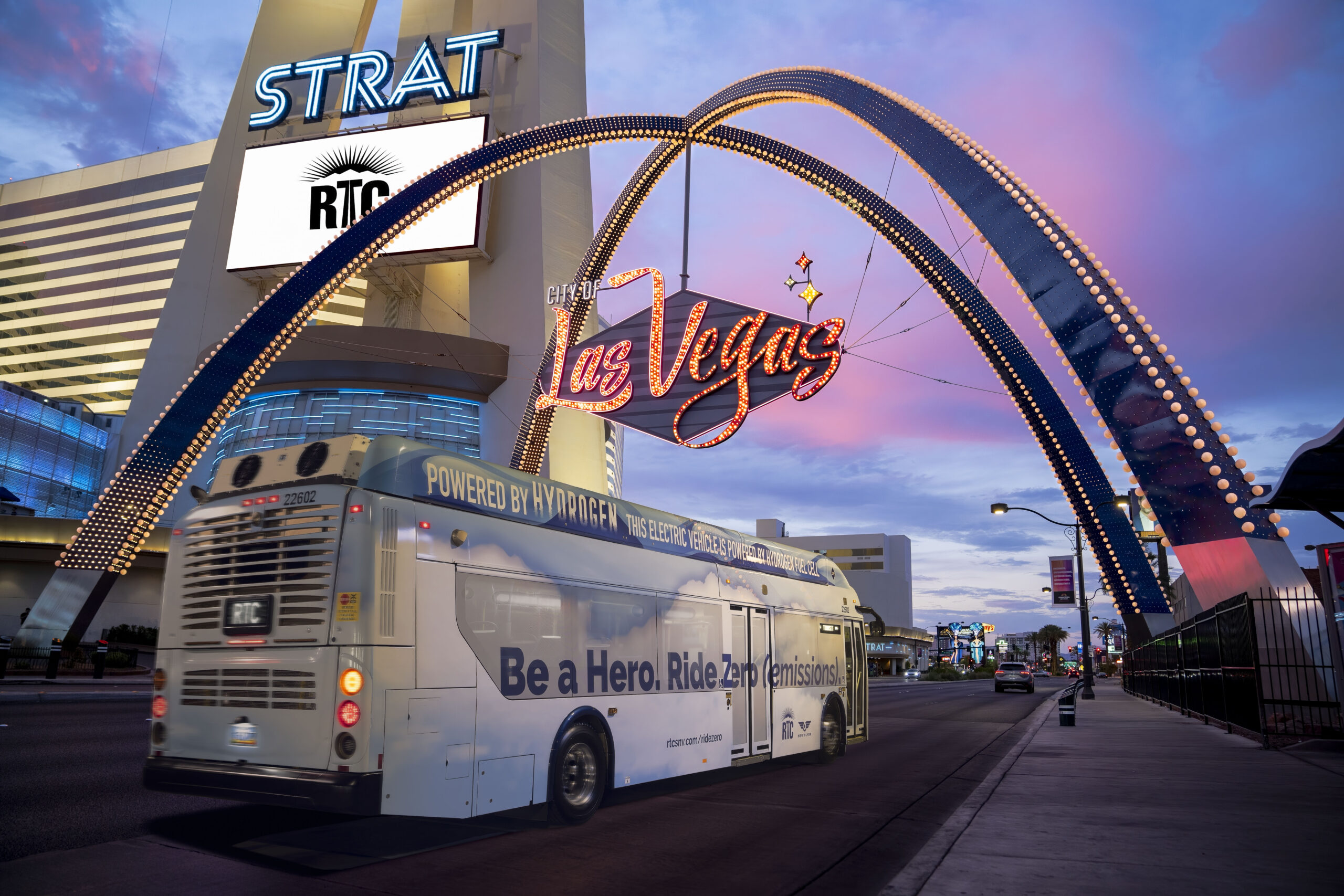
Las Vegas residents looking to traverse downtown or catch a flight at the Harry Reid International Airport will now face an easier trip: the Regional Transportation Commission of Southern Nevada debuted the city’s newest bus rapid transit route on Sunday, which runs along the Maryland Parkway corridor and will service the airport, downtown, the Las Vegas medical district and the University of Nevada, Las Vegas.
The $378 million project will see 60-foot zero-emission hydrogen fuel-cell buses running every 12 minutes during the day, with signal priority and shared bus and bike lanes reducing bus travel time by 20%. The project also widened most city sidewalks along the corridor from 5 feet to 10 feet and planted trees on the median and on both sides of the road, Dan Zukowski writes for Smart Cities Dive.
The corridor carries 35,000 vehicles a day and is home to 63,000 residents and 109,000 jobs. The RTC expects to serve 13,000 daily riders along this route by 2040, up from the 9,000 who utilized the route during construction.
Read the full story, below.
Read the full story: Las Vegas debuts bus rapid transit line to grow ridership, improve service

The Public Wants Light Rail; They'll Probably Get a Bus
A regional transportation planning authority, comprised of local representatives that tilt representation away from the urban core, rejected a voter-approved proposal for light rail in Southern Nevada.

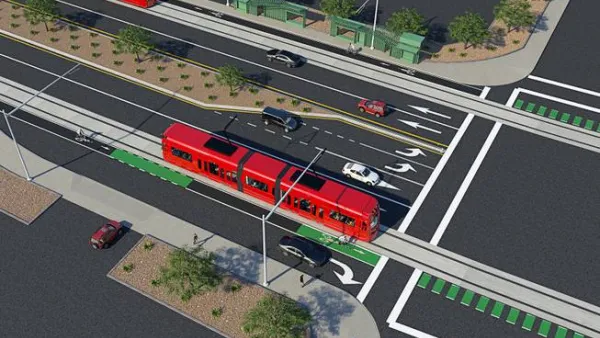
Las Vegas BRT Line Breaks Ground
The new bus project will include pedestrian and bike improvements along a 12-mile stretch of the Maryland Parkway.
Calculating Bus Stop Spacing for 43 U.S. Cities
New research documents the distance between bus stops in U.S. cities—a key question for service designers that determines a lot about the public transit user experience.

Planetizen Federal Action Tracker
A weekly monitor of how Trump’s orders and actions are impacting planners and planning in America.

‘Going backwards:’ Baltimore mayor, students rally against state's transit funding plan
Maryland's proposed six-year plan provides no funding for Baltimore’s BMORE bus program and reduces its road maintenance funding.

Detroit to transform waterfront with $2.2 billion investment
Developers will convert about 18 acres of unused parking lot space into civic spaces.

U.S.-Iran war may have ‘devastating’ impact on cost to warm homes
Vermont and Maine residents may see a 76% increase in the cost of warming their homes this winter.

Senate bill would ‘overhaul’ environmental permitting laws
Under the proposed act, government agencies would also not be able to suspend or rescind permits after granting them.

Exemption applications for NYC’s pied-à-terre tax see 55% success rate
The city sent nearly 40% of its initial pied-à-terre tax warnings erroneously.

FREE Course: Walkable City 1: Why Walkability?
After describing his path towards focusing on walkability as the essence of good planning, Jeff Speck marches through his five principal reasons for making more walkable places.
Reinventing Malls: Planning Alchemy—Turning Gray Fields Into Gold
The course focuses on the opportunities and imperatives that shape reinvention of mall sites.

One Hundred Miles
County of Mendocino
planning NEXT
The Architects Foundation
University of Cincinnati Online
Montrose County
Northern Illinois Transit Authority (NITA)
The Pocatello Development Authority