Residents are using the pop-up roundabouts to slow traffic and make their presence known on Minneapolis streets.


Minneapolis activists are building their own traffic circles as traffic calming measures designed to slow and identify Border Patrol and immigration enforcement agents.
Explaining the phenomenon in MinnPost, Bill Lindeke writes, “The strategy has caught the attention of the higher ups, usually a sign that something is working. Homan, executive associate director for U.S. Immigration and Customs Enforcement, mocked the approach during a recent news conference, and local police seem determined to remove these barricades soon after they are erected. In response, neighbors often simply put them back after police have departed the scene.”
For Lindeke, the action is a useful tool for reducing the “everyday danger faced by these communities.” Comparing it to revolutionary Paris, Lindeke notes that “there is … a spatial logic to reducing speeds and giving neighbors a more visible presence on Minneapolis streets.”
Does each one of these homemade roundabouts conform to traffic engineering and design standards? In most cases, no. “Were signage typefaces the most of our worries, this practice would be outlawed, filed alongside various attempts at non-conforming crosswalks. In the real world chaos of Minneapolis in 2026, this is a productive, on-the-ground change.”
FULL STORY: In occupied Minneapolis, neighborhood barricades rightly slow injustice

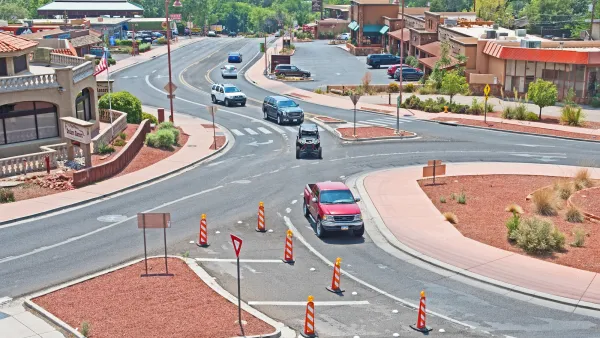
Study: Roundabouts are Primarily in Wealthier Neighborhoods
A North Carolina study sheds light on inequities in road safety interventions.
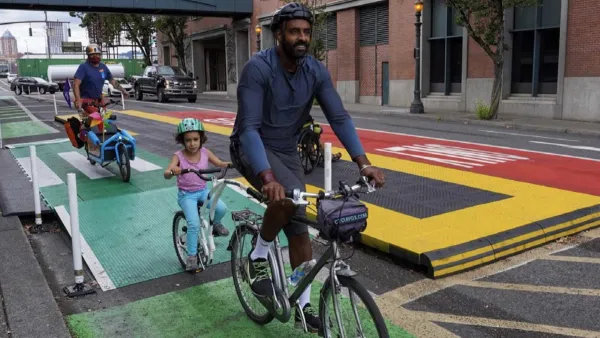
Portland Launches Tool for DIY Community Road Safety Interventions
A set of resources offers safety data and guidance for putting low-cost, quick-build interventions into action.
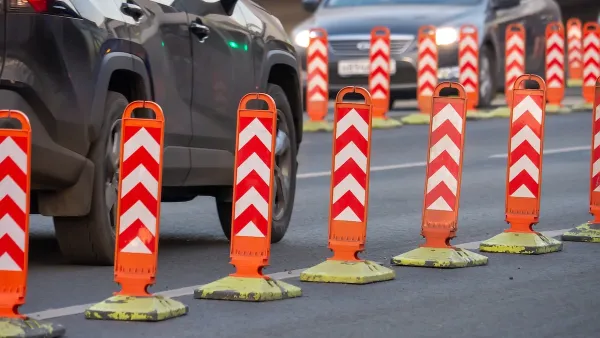
Indianapolis Encourages Tactical Urbanism With Lending Library, Grant Program
Residents can apply to receive assistance with traffic calming projects that can provide valuable data and lead to permanent changes.

Planetizen Federal Action Tracker
A weekly monitor of how Trump’s orders and actions are impacting planners and planning in America.

The state-sanctioned urbicide of Austin
People don’t kill cities. Freeways do.

US to reduce Colorado River water deliveries to Mexico
A new Colorado Treaty amendment reduces Mexico’s Colorado River water allocation by 250,000 acre feet.

5 New England states march closer to 800 megawatt wind energy project
Securing federal approval for the project may be complicated under the Trump administration, which has historically been hostile towards domestic wind power.

Baltimore to break ground on $50 million Transit Priority Project
The project will bring faster bus trips, safer streets and better bike connections to Baltimore.

Airbnb launches $250 million 'last-dollar financing' housing accelerator, makes first investment in Austin
The company will put $6.4 million towards affordable housing development in Texas’ capital.

FREE Course: Walkable City 1: Why Walkability?
After describing his path towards focusing on walkability as the essence of good planning, Jeff Speck marches through his five principal reasons for making more walkable places.
Reinventing Malls: Planning Alchemy—Turning Gray Fields Into Gold
The course focuses on the opportunities and imperatives that shape reinvention of mall sites.


Eagle County Government
Harvard University Graduate School of Design
Nashville Planning Department
The Architects Foundation
University of Cincinnati Online
The Pocatello Development Authority
The Urban Renewal Agency of the City of Pocatello
Journal of the American Planning Association