A North Carolina study sheds light on inequities in road safety interventions.


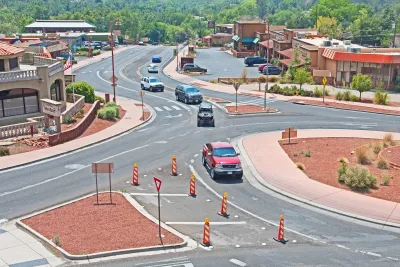
A new study from UNC Chapel Hill reveals that roundabouts, the circular intersection design shown to reduce injury crashes by 80 percent, are disproportionately sited in wealthy neighborhoods in North Carolina.
According to an article by Kea Wilson in Streetsblog USA, the study’s authors wanted to assess whether patterns of inequity are reproduced in transportation planning. “But for study author Matthew Bhagat-Conway, the distribution of roundabouts is only an example of larger inequalities in transportation planning, albeit one that's particularly easy to study in statewide databases – and it likely extends beyond the college-town streets that initially inspired the study.”
The inequity stems in part from the way transportation funding is allocated. Safety innovations are more likely to be implemented when new roads are built or existing roads are expanded. “And since policymakers don't always pay the same attention to the safety concerns from the very poor as they do to, say, rich campaign donors, low-income residents tend to remain stuck in aging neighborhoods with the same kind of traffic signals and signs they've always had, rather than cutting-edge safety initiatives like roundabouts — even though their neighborhoods tend to have the highest crash rates, particularly for pedestrians.”
FULL STORY: Are Roundabouts Just For Rich People?

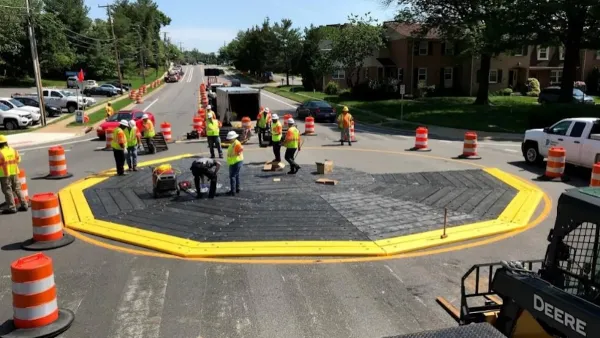
‘Modular Roundabouts’ Offer Quick-Build Traffic Safety Solution
The prefabricated roundabouts can be installed more quickly and at a much lower cost than traditional concrete traffic circles.
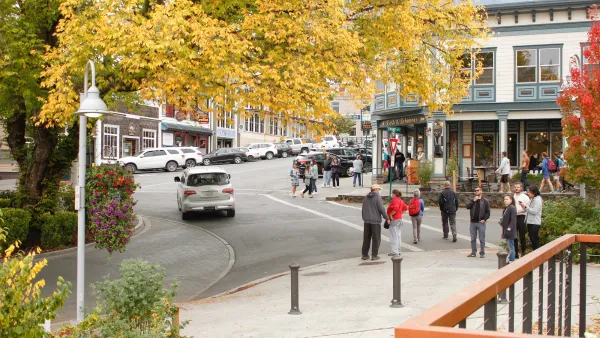
Washington state has quietly built over 600 roundabouts
Nationwide data shows that roundabouts reduce injuries in crashes by 72%.
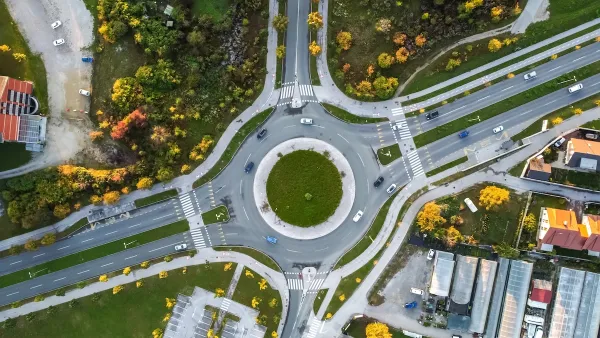
How I Learned to Stop Worrying and Love the Roundabout
What drives the U.S. backlash to roundabouts — objectively safer and more efficient than stop-and-go intersections?

The state-sanctioned urbicide of Austin
People don’t kill cities. Freeways do.

US to reduce Colorado River water deliveries to Mexico
A new Colorado Treaty amendment reduces Mexico’s Colorado River water allocation by 250,000 acre feet.

New Jersey’s second-largest city bans standalone data centers
Jersey City will continue to allow co-location facilities, such as those meant for research institutions that store their own data.

Amtrak not solely to blame for New Jersey commuter rail's unreliability, report finds
A new study from the Garden State Initiative found that NJ Transit’s budget grew 20% across a 4 year period, but reliability declined significantly over the same period.

EPA erases limits on planet-warming pollution from power plants
Under Monday’s plan, power plants would still have some limits on how much mercury, arsenic and other contaminants they can emit.

Phoenix announces new on-demand transit service, more frequent RAPID buses
Both new services will launch in October, and are part of Phoenix's Project Effective Access Solutions for Easing Congestion.

FREE Course: Walkable City 1: Why Walkability?
After describing his path towards focusing on walkability as the essence of good planning, Jeff Speck marches through his five principal reasons for making more walkable places.
Reinventing Malls: Planning Alchemy—Turning Gray Fields Into Gold
The course focuses on the opportunities and imperatives that shape reinvention of mall sites.

Eagle County Government
Harvard University Graduate School of Design
Nashville Planning Department
The Architects Foundation
University of Cincinnati Online
The Pocatello Development Authority
The Urban Renewal Agency of the City of Pocatello
Journal of the American Planning Association