The city gave 1,000 residents a $150 monthly transportation stipend that covered transit, bike share, ride hailing, and car rentals.


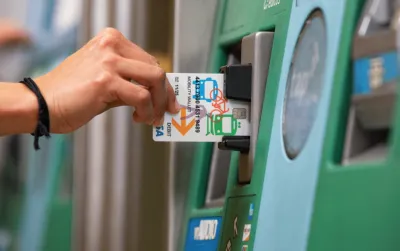
A pilot program that offers Los Angeles residents money to cover transportation costs yielded positive early results, according to research from the UCLA Lewis Center for Regional Policy Studies.
The Mobility Wallet is part of a broader effort to build universal basic mobility: “the notion that everyone should be able to get where they need to go, however best suits them.” The Mobility Wallet provided $150 per month to 1,000 participating Angelenos, funds that can be used for public transit, ride hailing, rental cars, and bike share systems.
Based on interviews with 31 participants, Lewis Center researchers found that subsidizing transportation had far-reaching benefits. “The most common outcome was a decrease in material hardship and general improvement in quality of life. With one less thing to budget, participants said they could redirect money to everyday expenses like groceries, school supplies, and bills.” People reported feeling less stressed and more independent, as well as more able to take their families on outings.
Because the program applied to a wide range of transportation options, it offered more flexibility than traditional transit subsidies. Many participants in the Mobility Wallet program used it as a complement to Metro’s more widely available Low-Income Fare is Easy (LIFE) discount program. “For example, some used the wallet to pay for ride-hailing or e-scooters during long transit waits or to cover first/last-mile access.”
The city is expanding the program to 2,000 participants in the next phase.
FULL STORY: Piloting the future: L.A.’s Mobility Wallet shows early signs of promise

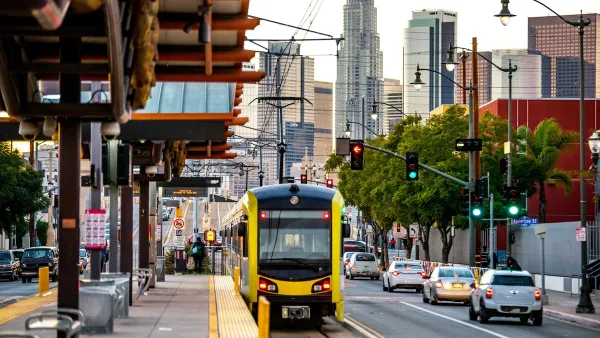
LA’s ‘Universal Basic Mobility’ Pilot, Eight Months In
The program issued ‘mobility wallets’ to 1,000 residents who took over 67,000 trips.
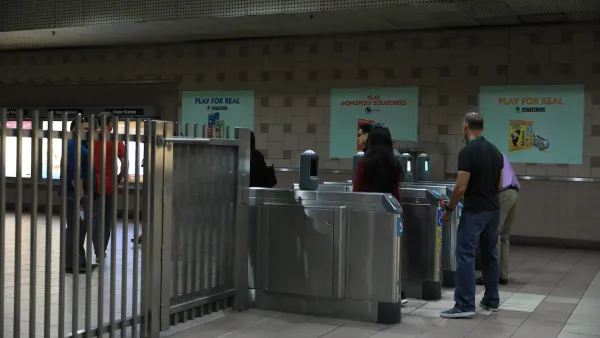
Commentary: By Quietly Ignoring Fare Evasion, LA Metro Inadvertently Became the Nation’s Largest Free Transit Experiment
Since the agency switched to in-house security, fare enforcement citations have plummeted.
The Wave of Transit ‘Fiscal Cliffs,’ Explained
Covid and inflation played a role. But for many agencies, the crisis goes much deeper.

The state-sanctioned urbicide of Austin
People don’t kill cities. Freeways do.

US to reduce Colorado River water deliveries to Mexico
A new Colorado Treaty amendment reduces Mexico’s Colorado River water allocation by 250,000 acre feet.

New Jersey’s second-largest city bans standalone data centers
Jersey City will continue to allow co-location facilities, such as those meant for research institutions that store their own data.

Amtrak not solely to blame for New Jersey commuter rail's unreliability, report finds
A new study from the Garden State Initiative found that NJ Transit’s budget grew 20% across a 4 year period, but reliability declined significantly over the same period.

EPA erases limits on planet-warming pollution from power plants
Under Monday’s plan, power plants would still have some limits on how much mercury, arsenic and other contaminants they can emit.

Phoenix announces new on-demand transit service, more frequent RAPID buses
Both new services will launch in October, and are part of Phoenix's Project Effective Access Solutions for Easing Congestion.

FREE Course: Walkable City 1: Why Walkability?
After describing his path towards focusing on walkability as the essence of good planning, Jeff Speck marches through his five principal reasons for making more walkable places.
Reinventing Malls: Planning Alchemy—Turning Gray Fields Into Gold
The course focuses on the opportunities and imperatives that shape reinvention of mall sites.

Eagle County Government
Harvard University Graduate School of Design
Nashville Planning Department
The Architects Foundation
University of Cincinnati Online
The Pocatello Development Authority
The Urban Renewal Agency of the City of Pocatello
Journal of the American Planning Association