The rapidly growing need for water to cool data centers is endangering one of the West’s most essential resources.


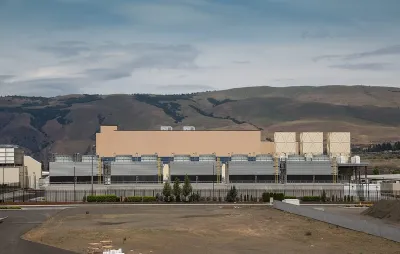
A budding data center industry is sapping the West’s power and water resources, writes Jonathan Thompson in High Country News.
The massive server banks that run nearly every aspect of our digital world churn away in warehouse-like buildings in Phoenix, Las Vegas, rural Washington and Wyoming, each gobbling as much electricity as a small city to process AI queries, cryptocurrency extraction and other aspects of our increasingly cloud-based society.
Thompson notes that “Even when data centers employ dedicated solar, wind or geothermal, they’re taking resources from other users, upending utilities’ planning and prompting them to build yet more natural gas plants while keeping nuclear and coal plants running — and polluting — well past their scheduled retirements.” While some AI companies are building dedicated solar installations to offset their energy use, most Western states still rely largely on coal and natural gas for their energy grids.
Western states are responding in different ways: some, like Oregon, are trying to hold data centers accountable for their energy use. Others are incentivizing data centers to locate there in hopes they will bring jobs and new tax revenue.
FULL STORY: The West’s data centers suck (water and power)

Planning Trends for 2026: States and Cities Take Initiative, Passenger Rail Gains Steam, and the Costs of AI Revealed
With federal funding for everything from transportation projects to housing assistance under threat, city and state governments are poised to take a stronger role in building strong, resilient local economies and public services.
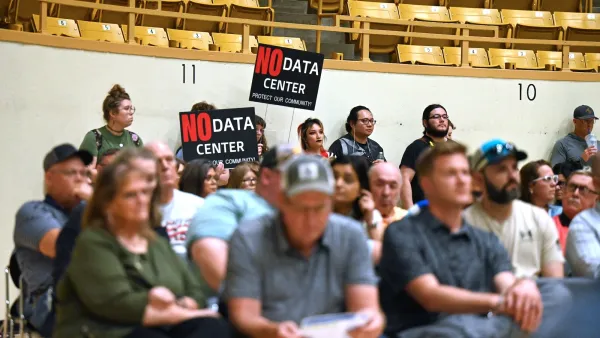
Poll: 75% of Americans oppose data centers near their homes
As they proliferate across the country, data centers face growing backlash from communities concerned about their rapid growth and unknown impacts.
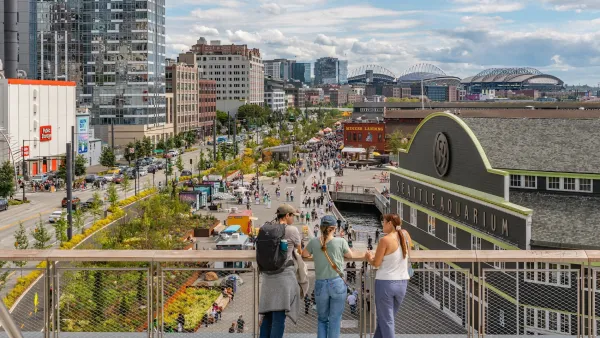
Seattle bans data centers for a year
The city council approved the measure after five 'mystery' projects raised concerns among residents and city leaders.

Planetizen Federal Action Tracker
A weekly monitor of how Trump’s orders and actions are impacting planners and planning in America.

The state-sanctioned urbicide of Austin
People don’t kill cities. Freeways do.

US to reduce Colorado River water deliveries to Mexico
A new Colorado Treaty amendment reduces Mexico’s Colorado River water allocation by 250,000 acre feet.

5 New England states march closer to 800 megawatt wind energy project
Securing federal approval for the project may be complicated under the Trump administration, which has historically been hostile towards domestic wind power.

Baltimore to break ground on $50 million Transit Priority Project
The project will bring faster bus trips, safer streets and better bike connections to Baltimore.

Airbnb launches $250 million 'last-dollar financing' housing accelerator, makes first investment in Austin
The company will put $6.4 million towards affordable housing development in Texas’ capital.

FREE Course: Walkable City 1: Why Walkability?
After describing his path towards focusing on walkability as the essence of good planning, Jeff Speck marches through his five principal reasons for making more walkable places.
Reinventing Malls: Planning Alchemy—Turning Gray Fields Into Gold
The course focuses on the opportunities and imperatives that shape reinvention of mall sites.

.jpg)
Eagle County Government
Harvard University Graduate School of Design
Nashville Planning Department
The Architects Foundation
University of Cincinnati Online
The Pocatello Development Authority
The Urban Renewal Agency of the City of Pocatello
Journal of the American Planning Association