Jefferson County is improving safe access to Rocky Flats National Wildlife Refuge with new trails, a bridge, and signage, as part of the Rocky Mountain Greenway project, ensuring environmental safety and educating visitors about the site’s history.


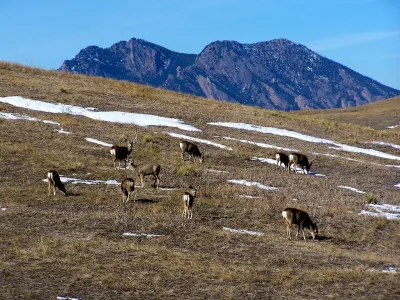
Jefferson County, in partnership with several regional governments, is advancing the Rocky Mountain Greenway (RMG) project to improve safety and connectivity to the Rocky Flats National Wildlife Refuge (RFNWR). Funded largely through a 2016 Federal Lands Access Program (FLAP) grant, the project includes the construction of a bridge over Indiana Street and an underpass on Colorado Highway 128 to connect RFNWR with nearby public open spaces in Boulder and Jefferson Counties. These improvements are intended to make access safer for pedestrians and cyclists while supporting regional trail connectivity.
Given the site’s history as a former U.S. nuclear weapons production facility, Jefferson County Open Space (JCOS) relied on environmental safety assurances from the Environmental Protection Agency (EPA) and the Colorado Department of Public Health and Environment (CDPHE). Independent soil sampling confirmed that the site is safe for public use. To further mitigate risk, the new trails will be surfaced with offsite materials, helping reduce dust, erosion, and soil disturbance while encouraging visitors to stay on designated paths that also protect local wildlife and habitats.
The project also includes interpretive signage at RFNWR entrances to inform visitors about the site’s complex past, helping them make informed decisions about visiting. A key safety feature is the bridge over Indiana Street—built by the Federal Highway Administration—which replaces a dangerous road crossing with limited visibility. With 83% of project costs covered by federal funding and a 17% local match from JCOS, the RMG continues to fulfill its original vision as part of President Obama’s America’s Great Outdoors initiative to expand equitable access to public lands.
FULL STORY: Greenway to Improve Safety for Visitors to Rocky Flats National Wildlife Refuge

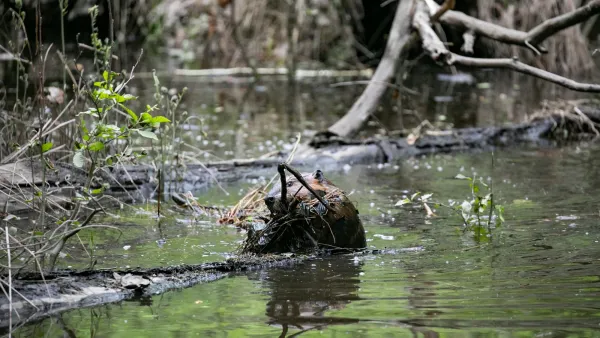
Two years after California reintroduced beavers, they are transforming the landscape into a 'climate-resilient powerhouse'
A beaver restoration program is proving that ancient solutions can help solve modern problems.
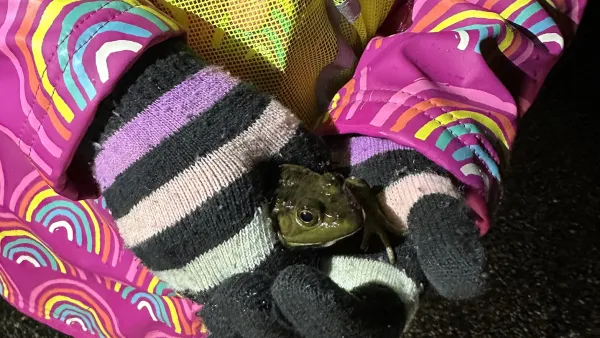
Once a year, Maine roads become highways for amphibians
The 'Big Night' brings out volunteers to help frogs, salamanders, and other migrating amphibians cross roads to reach their breeding grounds.
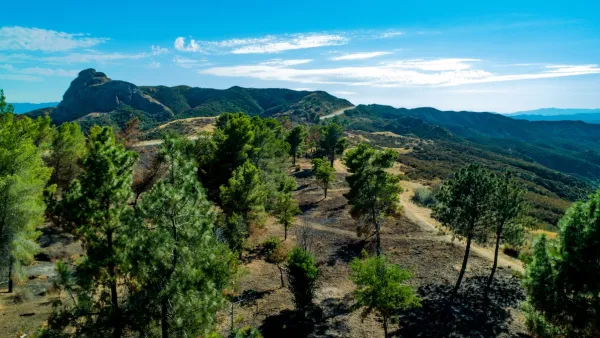
California Advances Its 30x30 Conservation Goals
California is making significant progress toward its 30x30 conservation goals, but looming federal rollbacks and gaps in biodiversity protections could threaten the state’s efforts to protect lands and coastal waters by 2030.

Planetizen Federal Action Tracker
A weekly monitor of how Trump’s orders and actions are impacting planners and planning in America.

The state-sanctioned urbicide of Austin
People don’t kill cities. Freeways do.

US to reduce Colorado River water deliveries to Mexico
A new Colorado Treaty amendment reduces Mexico’s Colorado River water allocation by 250,000 acre feet.

Baltimore to break ground on $50 million Transit Priority Project
The project will bring faster bus trips, safer streets and better bike connections to Baltimore.

Airbnb launches $250 million 'last-dollar financing' housing accelerator, makes first investment in Austin
The company will put $6.4 million towards affordable housing development in Texas’ capital.

Guerilla urbanists are building DIY bus stop benches in Chicago
A before-and-after of one of the bus stops with a new bench. The new benches are not officially sanctioned or permitted, but the residents who placed them hope they will be the start of a network of DIY benches across the city.

FREE Course: Walkable City 1: Why Walkability?
After describing his path towards focusing on walkability as the essence of good planning, Jeff Speck marches through his five principal reasons for making more walkable places.
Reinventing Malls: Planning Alchemy—Turning Gray Fields Into Gold
The course focuses on the opportunities and imperatives that shape reinvention of mall sites.


Eagle County Government
Harvard University Graduate School of Design
Nashville Planning Department
The Architects Foundation
University of Cincinnati Online
The Pocatello Development Authority
The Urban Renewal Agency of the City of Pocatello
Journal of the American Planning Association