The ‘Work, Live, Ride’ bill would prioritize funding for designated transit-oriented zones to encourage denser development near transit.


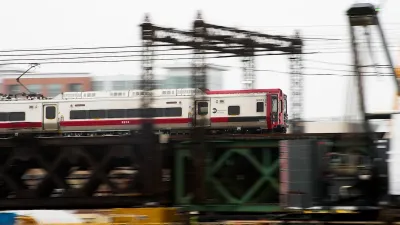
A bill that would encourage more transit-oriented development is back before the Connecticut State Assembly, reports Sam Hilton in Connecticut Mirror.
Dubbed Work, Live, Ride by the housing advocacy group DesegregateCT, this measure would prioritize communities with qualifying transit-oriented districts when doling out discretionary infrastructure funding or grants such as the Small Town Economic Assistance Program (STEAP) or the Urban Act Grant Program, both of which help municipalities invest in economic revitalization.
The law defines transit-oriented districts as “an area within a half-mile radius of a train or bus station that a city or town has designated for mixed-use and more dense development.” The zones would permit middle housing such as duplexes as well as higher-density multifamily housing.
Notably, this new version of the bill allows “transit-adjacent” communities without their own transit stations to create their own transit-oriented districts as well. The updated bill would create a public water and sewer rehabilitation or expansion account to assist communities with improving their infrastructure to accommodate new development.
Opponents say the law could force cities into zoning changes without community input. Hilton notes that the bill doesn’t force cities to create transit-oriented districts, but “specifies that a city must ask the secretary to designate such an area as qualifying for priority funding at a state level, and that areas that are already sufficiently dense can be grandfathered in at the town’s request, but don’t have to be.”
Read the full story: ‘Work Live Ride’ is back on the legislature’s docket. Here’s what to know

Opinion: California’s SB 79 Would Improve Housing Affordability and Transit Access
A proposed bill would legalize transit-oriented development statewide.
Which US cities have the most housing near transit?
Concentrating housing near frequent, reliable transit offers advantages to both residents and transit agencies, who can serve more riders more efficiently.
San Diego wants to limit upzoning law to just 16% of transit-adjacent parcels
The city's planning director says some areas are unfit for immediate upzoning due to a lack of resources or hazards such as wildfire risk.

Planetizen Federal Action Tracker
A weekly monitor of how Trump’s orders and actions are impacting planners and planning in America.

The state-sanctioned urbicide of Austin
People don’t kill cities. Freeways do.

US to reduce Colorado River water deliveries to Mexico
A new Colorado Treaty amendment reduces Mexico’s Colorado River water allocation by 250,000 acre feet.

NYC cools commuters with city's first rain garden above a bus stop
New York City officials say the plants in the rain garden can absorb 16 gallons of rainwater during heavy storms.

Brightline West’s future may rely on $6 billion federal loan
The company has until Nov. 2 to make a $400 million equity investment into its proposed high-speed rail line.

LA Metro’s ultimatum: no extra buses for LA28 if federal funding isn’t imminently secured
If Metro does not provide additional buses, LA28 organizers will have to find a new way to manage Olympic traffic. LA28’s budget does not include a line item for transit.

FREE Course: Walkable City 1: Why Walkability?
After describing his path towards focusing on walkability as the essence of good planning, Jeff Speck marches through his five principal reasons for making more walkable places.
Reinventing Malls: Planning Alchemy—Turning Gray Fields Into Gold
The course focuses on the opportunities and imperatives that shape reinvention of mall sites.

Eagle County Government
Harvard University Graduate School of Design
Nashville Planning Department
The Architects Foundation
University of Cincinnati Online
The Pocatello Development Authority
The Urban Renewal Agency of the City of Pocatello
Journal of the American Planning Association