Rapid population growth and limited pedestrian infrastructure puts people walking at higher risk.


Memphis is the nation’s most dangerous city for pedestrians, according to a study from a Texas law firm. The Tennessee city has the highest rate of pedestrian fatalities per capita, with 13.4 deaths per 100,000 people. “That’s a stark warning for anyone walking the streets of this Tennessee city,” writes Sarah Kennedy in Motor Biscuit.
Memphis has a walkability score of 35 — not the lowest of the cities analyzed. That distinction goes to Charlotte, North Carolina, with a walkability score of 26. Phoenix, a city with a walkability score of 41 that dedicates 16 percent of the city to parks and green spaces, has the highest raw number of pedestrian fatalities (117) or 7.1 deaths per 100,000. “It seems that even with plenty of green spaces, safety isn’t guaranteed. Sources cite a lack of infrastructure, like sidewalks or crosswalks, in high-traffic areas.”
In places like Phoenix and Charlotte, new pedestrian infrastructure has not kept up with rapid population growth that adds both foot and vehicle traffic to city streets.
Read the full story: The most dangerous city in the US for pedestrians isn’t even the least walkable
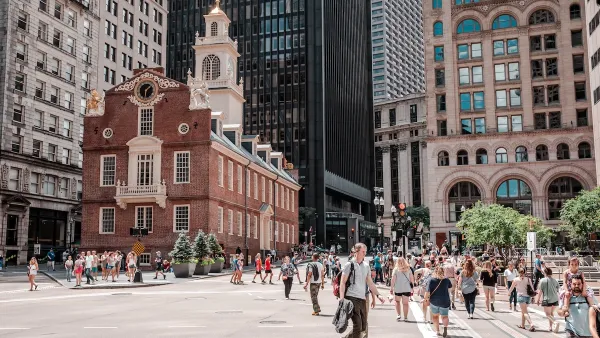
Report: Top US Cities for Pedestrian Safety
The East Coast takes the top three spots, while the South and Southwest dominate the bottom of the list.
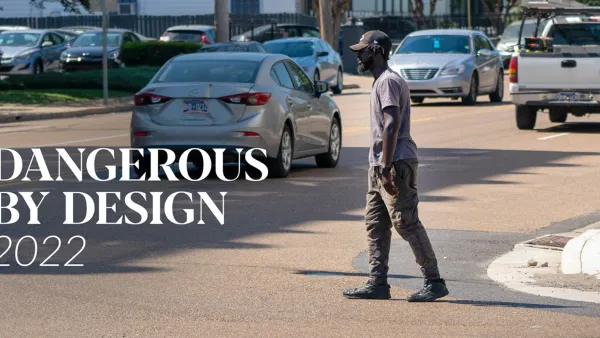
Dangerous By Design: 2022 Report Analyzes Rising Pedestrian Deaths
The report ranks the most dangerous states and metro areas for pedestrians, who died at higher rates during the pandemic despite reduced driving.
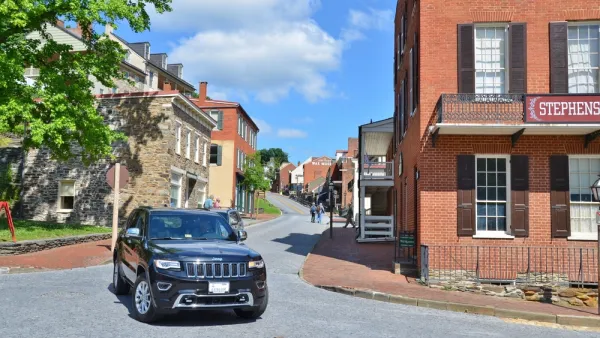
For Transportation Justice, Auto Safety Must Protect People Outside the Car
Light trucks are killing more pedestrians than ever while keeping their drivers and passengers safer. Is it time to reframe safety regulations?

Planetizen Federal Action Tracker
A weekly monitor of how Trump’s orders and actions are impacting planners and planning in America.

California plans to bury El Niño’s downpour
If the state plays its cards right, it may be able to store a billion acre-feet of El Niño’s water in aquifers.

Desperate measures: Advocates weigh draining Lake Powell to fill Colorado River
Draining the reservoir could reduce evaporation losses by a couple hundred thousand acre-feet.

In Texas, data centers are swallowing promised parkland
Residents who moved to Taylor, Texas for a rural community now have to contend with three data centers in their backyard.

How a Chicago-sized wind farm beat the odds and powered on
The project spanned five presidential administrations and a standoff with a U.S. military base.

MTA gives itself 30 days to transform pit into basketball court
The site has been under construction since 2022; the city originally estimated it would finish the court in 2024.

FREE Course: Walkable City 1: Why Walkability?
After describing his path towards focusing on walkability as the essence of good planning, Jeff Speck marches through his five principal reasons for making more walkable places.
Reinventing Malls: Planning Alchemy—Turning Gray Fields Into Gold
The course focuses on the opportunities and imperatives that shape reinvention of mall sites.


City of Rosemead
Rutgers University, Edward J. Bloustein School of Planning and Public Policy
One Hundred Miles
Hunter College, City University of New York (CUNY)
The Architects Foundation
University of Cincinnati Online
City of Cambridge
Montrose County
The Pocatello Development Authority