More people are choosing to bike as the city focuses on filling gaps in its bike infrastructure.


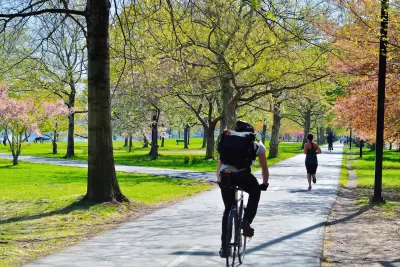
Boston’s efforts to build out its bike lane network seem to be encouraging more Bostonians to bike, reports Taylor Dolven in the Boston Globe.
“On the Boston side of the Mass Ave. bridge, where the state added bike lanes in 2021, the city has tallied a significant increase in the daily average number of bikes in the fall,” Dolven notes. Anecdotally, bike riders interviewed by Dolven said they felt safer and use their bikes more frequently.
“But, challenges remain. Many projects face vocal opposition to ceding valuable street real estate to bikes. And other issues, such as the prevalence of large trucks, and lingering gaps in the bike network, make biking more dangerous than most would like.” Boston’s chief of streets, Jascha Franklin-Hodge, says the city’s focus is on connectivity and filling the gaps in the bikeway network. “When I look at a map, and I see these gaps . . . I see future projects, I see the puzzle pieces that we are stitching together year by year,” Franklin-Hodge said.
FULL STORY: More Bostonians are biking as bike lanes boom, but barriers remain

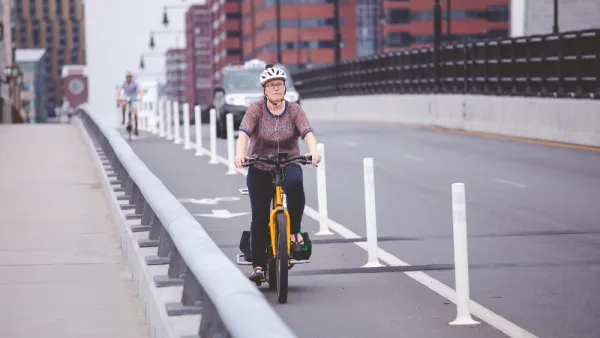
Boston Launches Ambitious Bike Plan
The city plans to dramatically expand its bike lane network, add to its bike share fleet, and provide new e-bike subsidies to residents.
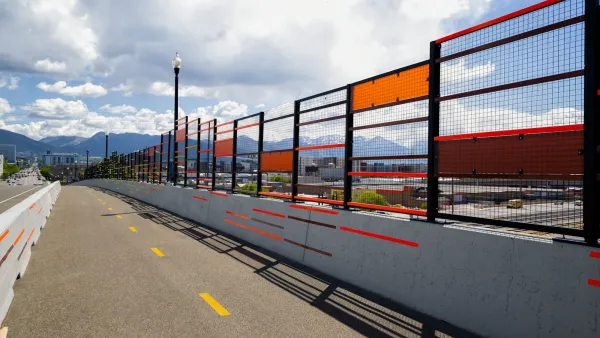
Salt Lake City opens protected bike path on viaduct trail
The 400 South Viaduct Trail features the state's longest continuous piece of public art.
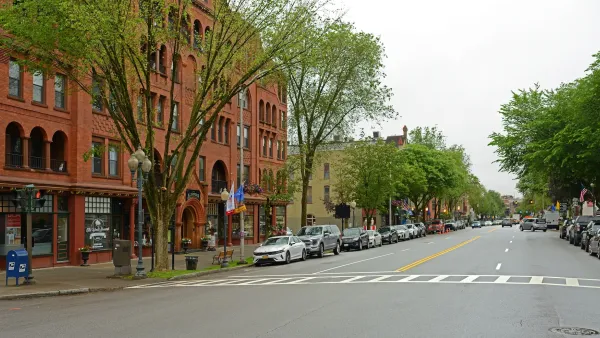
Saratoga Springs bike advocates say city is ignoring its Complete Streets plan
Despite a commitment to improving its multimodal infrastructure, the city has no plans to install bike lanes or curb cuts as part of repaving projects on two streets.

Planetizen Federal Action Tracker
A weekly monitor of how Trump’s orders and actions are impacting planners and planning in America.

The state-sanctioned urbicide of Austin
People don’t kill cities. Freeways do.

US to reduce Colorado River water deliveries to Mexico
A new Colorado Treaty amendment reduces Mexico’s Colorado River water allocation by 250,000 acre feet.

Baltimore to break ground on $50 million Transit Priority Project
The project will bring faster bus trips, safer streets and better bike connections to Baltimore.

Airbnb launches $250 million 'last-dollar financing' housing accelerator, makes first investment in Austin
The company will put $6.4 million towards affordable housing development in Texas’ capital.

Guerilla urbanists are building DIY bus stop benches in Chicago
A before-and-after of one of the bus stops with a new bench. The new benches are not officially sanctioned or permitted, but the residents who placed them hope they will be the start of a network of DIY benches across the city.

FREE Course: Walkable City 1: Why Walkability?
After describing his path towards focusing on walkability as the essence of good planning, Jeff Speck marches through his five principal reasons for making more walkable places.
Reinventing Malls: Planning Alchemy—Turning Gray Fields Into Gold
The course focuses on the opportunities and imperatives that shape reinvention of mall sites.

Eagle County Government
Harvard University Graduate School of Design
Nashville Planning Department
The Architects Foundation
University of Cincinnati Online
The Pocatello Development Authority
The Urban Renewal Agency of the City of Pocatello
Journal of the American Planning Association