The city was the first to tie fair housing requirements to zoning reform.


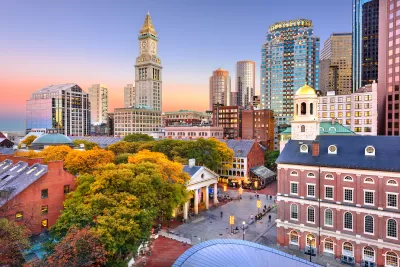
After three years, how is Boston’s approach to tie fair housing to zoning reform panning out? Kalena Thomhave seeks to answer this question in Smart Cities Dive.
The context: “In 2021, the city passed what may be the nation’s first effort to add fair housing requirements to its zoning code. The new policy requires developers of large projects to assess the projects’ possible impacts on area residents historically discriminated against and take steps to reduce those impacts.”
“The Boston Interagency Fair Housing Development Committee, which has representatives from multiple city agencies, reviews a developer’s project assessment and its chosen interventions as well as the city’s own displacement risk data.” Developers can negotiate with the committee to finalize their requirements and can choose from a variety of mitigating measures that include “building a greater share of affordable units, building more family-size units or providing more units to residents with housing vouchers.”
To date, 43 large projects have triggered the ordinance. According to Karina Oliver-Milchman, director of policy development and research for the Mayor’s Office of Housing, “it is difficult to explicitly measure success, though development projects are indeed changing as a result of the ordinance process.”
FULL STORY: Boston was the first major city to pair fair housing with zoning. How’s it going?

HUD to Investigate Minneapolis Over Allegations of ‘Racial and Ethnic Favoritism’ in Housing Policy
The Trump administration says the city’s housing policies and support of ‘cultural districts’ are racially discriminatory, while city leaders call the investigation politically motivated.

Boston Zoning Commission to Consider ‘Squares and Streets’ Plan
The proposal would reduce barriers to the development of denser housing.

Washington State Legislature Could Continue Housing Reforms in 2024
2023 saw some victories and some setbacks for housing advocates. Lawmakers plan to continue the fight in 2024.

The state-sanctioned urbicide of Austin
People don’t kill cities. Freeways do.

US to reduce Colorado River water deliveries to Mexico
A new Colorado Treaty amendment reduces Mexico’s Colorado River water allocation by 250,000 acre feet.

New Jersey’s second-largest city bans standalone data centers
Jersey City will continue to allow co-location facilities, such as those meant for research institutions that store their own data.

Amtrak not solely to blame for New Jersey commuter rail's unreliability, report finds
A new study from the Garden State Initiative found that NJ Transit’s budget grew 20% across a 4 year period, but reliability declined significantly over the same period.

EPA erases limits on planet-warming pollution from power plants
Under Monday’s plan, power plants would still have some limits on how much mercury, arsenic and other contaminants they can emit.

Phoenix announces new on-demand transit service, more frequent RAPID buses
Both new services will launch in October, and are part of Phoenix's Project Effective Access Solutions for Easing Congestion.

FREE Course: Walkable City 1: Why Walkability?
After describing his path towards focusing on walkability as the essence of good planning, Jeff Speck marches through his five principal reasons for making more walkable places.
Reinventing Malls: Planning Alchemy—Turning Gray Fields Into Gold
The course focuses on the opportunities and imperatives that shape reinvention of mall sites.

Eagle County Government
Harvard University Graduate School of Design
Nashville Planning Department
The Architects Foundation
University of Cincinnati Online
The Pocatello Development Authority
The Urban Renewal Agency of the City of Pocatello
Journal of the American Planning Association