The city’s three regional agencies are seeing ridership reaching 64 percent of 2019 levels.


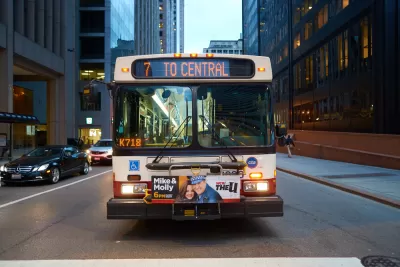
May 2024 showed the highest post-pandemic transit ridership for Chicago’s regional transit systems, according to an article in Mass Transit. “The three operators provided more than 32 million rides in May, bringing the system to 64 percent recovery compared to 2019 levels. RTA of Northern Illinois says that since January, more than 144 million rides have been taken, an increase of 18 million rides compared to 2023.”
The article notes that “The figures represent a nearly 14 percent year-over-year growth for all fixed routes on the three service boards combined,” referring to services operated by the Chicago Transit Authority (CTA), Metra, and Pace Suburban Bus. CTA’s bus ridership recovery is at 77 percent of 2019 levels, while rail recovery stood at 59 percent in May. Metra ridership recovered to 58 percent of 2019 levels, while Pace ridership grew to 62 percent, in part due to the rapid transit Pulse lines.
The CTA recently announced the first five streets it will study for its Better Streets for Buses plan, which aims to develop ideas for improving bus travel on key corridors.
FULL STORY: Chicago, Ill., area transit agencies see improved ridership

Chicago Transit Agencies on Brink of Major Crisis
Without additional funding, regional transit agencies will be forced to cut services by 40 percent.
CTA underestimated Chicago transit ridership by 19 million trips
The agency is moving from using farebox data and manual video reviews to automatic counters that more accurately measure the total number of riders, whether or not they pay full fares.
The Vast Majority of Riders Suspended by Chicago Transit Agencies are Black or Latino
The agencies are allowed to ban riders who are accused of violent or threatening behavior.

Planetizen Federal Action Tracker
A weekly monitor of how Trump’s orders and actions are impacting planners and planning in America.

The state-sanctioned urbicide of Austin
People don’t kill cities. Freeways do.

US to reduce Colorado River water deliveries to Mexico
A new Colorado Treaty amendment reduces Mexico’s Colorado River water allocation by 250,000 acre feet.

Guerilla urbanists are building DIY bus stop benches in Chicago
A before-and-after of one of the bus stops with a new bench. The new benches are not officially sanctioned or permitted, but the residents who placed them hope they will be the start of a network of DIY benches across the city.

Mamdani overhauls NYC's Vision Zero plan with 100 new policy goals
The overhaul aims to reduce traffic deaths and make streets safer for pedestrians, cyclists and drivers through lower speed limits, new safety infrastructure and more.

Amtrak not solely to blame for New Jersey commuter rail's unreliability, report finds
A new study from the Garden State Initiative found that NJ Transit’s budget grew 20% across a 4 year period, but reliability declined significantly over the same period.

FREE Course: Walkable City 1: Why Walkability?
After describing his path towards focusing on walkability as the essence of good planning, Jeff Speck marches through his five principal reasons for making more walkable places.
Reinventing Malls: Planning Alchemy—Turning Gray Fields Into Gold
The course focuses on the opportunities and imperatives that shape reinvention of mall sites.

Eagle County Government
Harvard University Graduate School of Design
Nashville Planning Department
The Architects Foundation
University of Cincinnati Online
The Pocatello Development Authority
The Urban Renewal Agency of the City of Pocatello
Journal of the American Planning Association