The opening of the San Gabriel River Park expands access to green spaces for residents in the San Gabriel Valley, especially for Avocado Heights and other park-poor communities in the area.


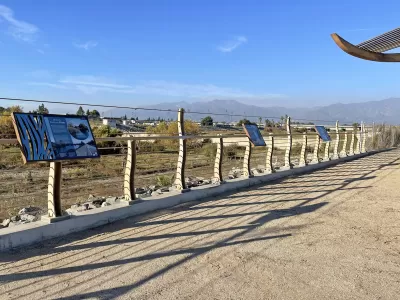
The grand opening of the San Gabriel River Park was celebrated on June 8, 2024, marking a major milestone in the region's efforts to create more green spaces. The event featured a variety of activities, including folklorico dancers, face painting, guided walks, food trucks, and animal presentations. Local organizations such as Active SGV and the National Audubon Society also participated. Los Angeles County Supervisor Hilda Solis emphasized that the park is a step towards environmental justice and equity, providing much-needed open space to underserved communities and improving the lives of thousands of residents in the San Gabriel Valley.
The 30-acre park, previously a duck farm, is part of the Emerald Necklace Greenway network, which connects ten cities in the San Gabriel Valley through a 17-mile loop of parks. The park offers numerous amenities, including picnic areas, biking and walking trails, a river overlook plaza, wildflower meadows, a native plant demonstration area, and a bioswale area. The new park is an oasis for the area's park poor communities, promoting outdoor activities and environmental education.
The project is the result of decades of perseverance and collaboration among various organizations and community leaders. Norma E. García-González, Director of the Los Angeles County Department of Parks and Recreation, highlighted the collective effort that made the park a reality. The park is being developed in multiple phases, with the first phase just opened and the next phase being the opening of a nature center for educational programs. The San Gabriel River Park is envisioned as a lasting gift to future generations, promoting nature appreciation, and community well-being.
Read the full story: New San Gabriel River Park adds to effort for more ‘rewilding’ space in the region

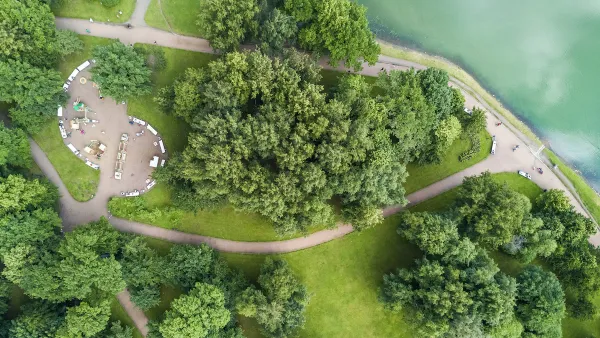
Celebrating World Environment Day
Commemorate the 51st World Environment Day with this curated list of Planetizen articles highlighting research and projects that promote a healthier, more sustainable world.
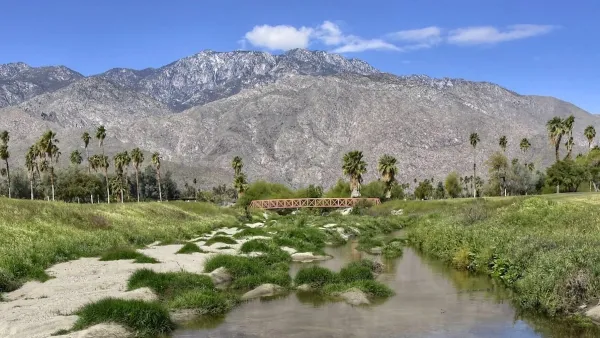
Rewilding the Golf Course
How former golf courses are being transformed from manicured lawns to vibrant habitats.

Returning to a Wilder World
The pandemic induced an accidental 'rewilding' in many places as animals took over cities and streets devoid of humans. As we emerge from our isolation, can we co-exist peacefully?

Planetizen Federal Action Tracker
A weekly monitor of how Trump’s orders and actions are impacting planners and planning in America.

Amtrak, CN end decades-long dispute with eight-year agreement
The new operating agreement establishes an updated framework for the companies to work together, including processes to resolve disputes.

Judges permit Denver to divert 77,000 acre feet from the Colorado River for reservoir expansion
Overuse and climate change have caused the Colorado River’s water levels to plummet.

Idaho may see an 18% drop in federal surface transit funding — the largest estimated cut in the US
Transit systems in rural communities are much more reliant on federal funding to provide their services.

How ‘post-disaster gentrification’ alters neighborhoods after natural calamities
After hurricanes, fires or other calamities, the original residents of a community are often replaced by younger, wealthier residents.

Maryland local governments examine if they should have more power to raise property taxes
Maryland’s housing market is out of reach for the majority of moderate-income residents.

FREE Course: Walkable City 1: Why Walkability?
After describing his path towards focusing on walkability as the essence of good planning, Jeff Speck marches through his five principal reasons for making more walkable places.
Reinventing Malls: Planning Alchemy—Turning Gray Fields Into Gold
The course focuses on the opportunities and imperatives that shape reinvention of mall sites.

Harvard University Graduate School of Design
KFH Group Inc.
Greater Baltimore Committee
The Architects Foundation
University of Cincinnati Online
The Pocatello Development Authority
The Urban Renewal Agency of the City of Pocatello