Does giving short shrift to grassroots tradition cut against the dynamics of community-based decision-making?


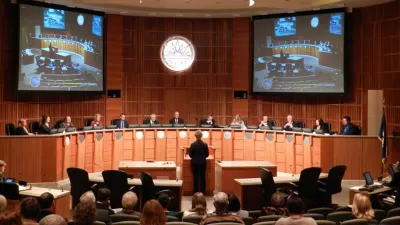
Chuck Wolfe provides perspective on how Mercer Island, Washington—a small, leafy city between Seattle and Bellevue—recently reconstituted the city's Planning Commission in a way that arguably contradicts the dynamics of community-based decision-making, reducing local membership and substituting paid professionals who reside outside the city.
The change also raised concerns among some council members and residents about the implications of replacing residents with non-residents and paid practitioners to make community decisions. A petition, testimony, and letters in opposition stressed the unprecedented approach in the Puget Sound region.
In addition, Wolfe notes that planning commissions have a storied place in American history. Their hallmark was their grassroots composition—an early form of co-creation, a bridge between government and citizenry.
He outlined three concerns:
Will the involvement of non-resident practitioners lead to decisions that do not represent the community?
Will the council’s action weaken residents’ sense of ownership and civic responsibility for community planning?
Similarly, will the commission become disconnected from the local community and its contextual needs, compromising effectiveness and inclusivity?
He concludes that the city must remain mindful of retaining long-term resident wisdom and maximizing civic engagement:
While these forms of participation are often mandated by state law and local code, they need to be more than lip service and more like co-creation.
Read the full story: Why 'Hack' a Planning Commission?


Ask the Ethicist: What to Do When You Hear Internal Alarm Bells
The first in a new series by Planetizen: "Ask the Ethicist," featuring the advice of our resident expert: Carol D. Barrett, FAICP, author of "Everyday Ethics for Practicing Planners."

A Better Way to Plan School Facilities
Taking a wider view of communities could help keep schools open despite falling enrollment.

Rebuilding Together: How One Baltimore Program Advanced Education and Community Development
When Baltimore got funding for a round of school renovations, the state directed it to design schools that would also advance neighborhood revitalization — and it learned some lessons about why that's not always so simple.

Planetizen Federal Action Tracker
A weekly monitor of how Trump’s orders and actions are impacting planners and planning in America.

Northwest rail fans eager for Sept. 30 debut of Amtrak’s Airo fleet
Get ready for that new train smell and more seats. But they won’t go faster or run more frequently on the Cascades route in Washington and Oregon.

Trump is considering data centers on 6 states' public land — some state officials say they had no idea
If the administration approves the proposed projects, data center and data center-related developments will cover 17,600 acres of public land.

After decades of planning, Sacramento gains new light rail station
Trains will arrive every 15 minutes during peak hours and every 30 minutes during non-peak hours.

Massive tunnel-boring machine breaks ground on Gateway Project
The Trump administration revoked funding for the project in October 2025, and then restored it earlier this year.

Airo trainsets begin service on Amtrak Cascades route
The trains feature panoramic windows, complementary wifi and over 300 seats per train set.

FREE Course: Walkable City 1: Why Walkability?
After describing his path towards focusing on walkability as the essence of good planning, Jeff Speck marches through his five principal reasons for making more walkable places.
Reinventing Malls: Planning Alchemy—Turning Gray Fields Into Gold
The course focuses on the opportunities and imperatives that shape reinvention of mall sites.


City of Thousand Oaks
City of Wisconsin Rapids
Harvard University Graduate School of Design
The Architects Foundation
University of Cincinnati Online
The Pocatello Development Authority
The Urban Renewal Agency of the City of Pocatello