Another judge already vacated the rule nationwide before the latest case was decided.



A second federal judge, this time in Kentucky, declared the Biden administration’s new emissions rule unlawful but declined to vacate it, noting that a Texas judge struck it down nationwide last month.
As Nate Raymond explains in an article for Reuters, “In adopting the rule, the FHWA, a part of the U.S. Department of Transportation, relied on a statute that gave the agency authority to establish measures that state departments of transportation could use to assess the national highway system's performance.” Judge Benjamin Beaton said this doesn’t let the federal government override states, which can set their own targets and standards.
“Rather than vacating the rule, Beaton issued declaratory judgment declaring it arbitrary and capricious and gave the parties 21 days to address the need for any additional relief, such as an injunction ‘tailor-made to fit relief’ addressing only the states before him.”
Read the full story: US judge declares Biden climate rule unlawful but won't vacate it
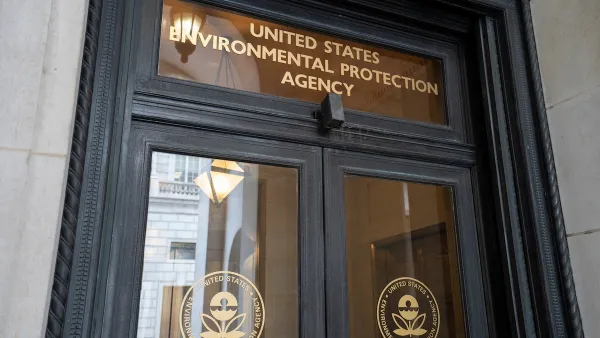
EPA Plans “Largest Deregulatory Action” in History
The agency plans to repeal a key 2009 rule that underpins the government’s authority to regulate greenhouse gas emissions.

USDOT Repeals Emissions Monitoring Rule
A Biden-era regulation required states to report and plan to reduce transportation-related emissions.
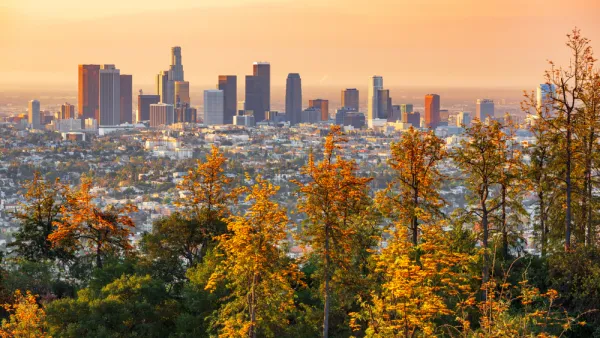
LA’s Trees Absorb More Carbon Than Expected, But Can’t Do It Alone
A USC study finds that Los Angeles’ urban trees absorb more carbon than expected, but while they provide crucial environmental benefits, they cannot replace the urgent need for systemic emissions reductions.

Desperate measures: Advocates weigh draining Lake Powell to fill Colorado River
Draining the reservoir could reduce evaporation losses by a couple hundred thousand acre-feet.

Eastern Nebraska is running out of electricity
Data centers and electrification are straining eastern Nebraska’s grid, throttling economic development.

Malls are becoming the midtowns of the future
Mall and office park redevelopments are a generational opportunity to create new nodes of urbanity.

NYC breaks ground on anti-flooding infrastructure project
New York City's new system will reduce stormwater flows to local sewers by 90%.

One Kentucky town’s secret to affordable housing
The Smoketown Community Land Trust has already built seven affordable homes for community members.

Houston gains petal-shaped cooling infrastructure to make streets more ‘delightful’
The city has installed the pavilions along 15 blocks in Houston.

FREE Course: Walkable City 1: Why Walkability?
After describing his path towards focusing on walkability as the essence of good planning, Jeff Speck marches through his five principal reasons for making more walkable places.
Reinventing Malls: Planning Alchemy—Turning Gray Fields Into Gold
The course focuses on the opportunities and imperatives that shape reinvention of mall sites.

City of Rosemead
Rutgers University, Edward J. Bloustein School of Planning and Public Policy
One Hundred Miles
University of Michigan School for Environment and Sustainability (SEAS)
Hunter College, City University of New York (CUNY)
The Architects Foundation
City of Cambridge
Montrose County
The Pocatello Development Authority