The program, which calls for a $15 fee for most vehicles, requires a final MTA board vote in two months.


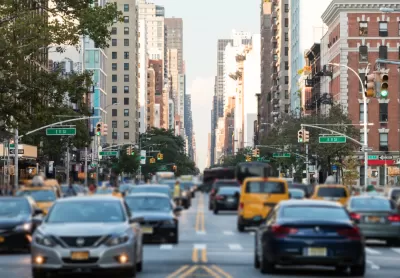
New York City’s congestion pricing program is moving forward with a $15 fee on passenger vehicles, reports Stephen Nessen in Gothamist, after the MTA board voted to approve it. The program now enters a 60-day public comment period before a final vote.
Nessen points out that “The stakes are high for the program. Congestion pricing has been successfully implemented in other countries. But the MTA’s program represents the first effort in the United States to impose a fee to reduce gridlock.” Additionally, “The tolls are required by law to back $15 billion worth of loans, which accounts for nearly a third of the MTA's 2020-2024 construction program.”
The program includes exemptions and fare discounts for low-income drivers, emergency vehicles, and drivers who already pay certain tolls. “Small trucks, buses and vans face a $24 charge during those hours, while large trucks, including big rigs, will have to pay $36. Motorcycles will be tolled a $7.50 daytime fee.” The fee is reduced by 75 percent during nighttime hours.
FULL STORY: MTA board approves congestion pricing tolls, initiating 60-day review

NYC’s ‘Rare and Comprehensive’ Public Data Reveals Congestion Pricing's Success
The Metropolitan Transportation Authority’s analytics and data team maintains over 180 regularly updated datasets about the city’s transportation system.
Judge Extends NYC Congestion Pricing Through at Least June 9
A federal judge halted the Trump administration’s effort to kill the program, which remains in limbo as a lawsuit filed by the MTA moves forward.
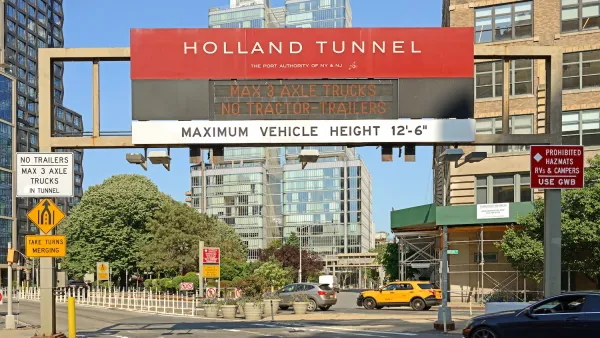
Congestion Pricing Drops Holland Tunnel Delays by 65 Percent
New York City’s contentious tolling program has yielded improved traffic and roughly $100 million in revenue for the MTA.

The state-sanctioned urbicide of Austin
People don’t kill cities. Freeways do.

US to reduce Colorado River water deliveries to Mexico
A new Colorado Treaty amendment reduces Mexico’s Colorado River water allocation by 250,000 acre feet.

New Jersey’s second-largest city bans standalone data centers
Jersey City will continue to allow co-location facilities, such as those meant for research institutions that store their own data.

Amtrak not solely to blame for New Jersey commuter rail's unreliability, report finds
A new study from the Garden State Initiative found that NJ Transit’s budget grew 20% across a 4 year period, but reliability declined significantly over the same period.

EPA erases limits on planet-warming pollution from power plants
Under Monday’s plan, power plants would still have some limits on how much mercury, arsenic and other contaminants they can emit.

Phoenix announces new on-demand transit service, more frequent RAPID buses
Both new services will launch in October, and are part of Phoenix's Project Effective Access Solutions for Easing Congestion.

FREE Course: Walkable City 1: Why Walkability?
After describing his path towards focusing on walkability as the essence of good planning, Jeff Speck marches through his five principal reasons for making more walkable places.
Reinventing Malls: Planning Alchemy—Turning Gray Fields Into Gold
The course focuses on the opportunities and imperatives that shape reinvention of mall sites.

Eagle County Government
Harvard University Graduate School of Design
Nashville Planning Department
The Architects Foundation
University of Cincinnati Online
The Pocatello Development Authority
The Urban Renewal Agency of the City of Pocatello
Journal of the American Planning Association