Some residents feared proposed zoning reforms aimed at redressing historic injustices could harm residents in the short term.



In a piece for Next City co-published with El Paso Matters, Christian De Jesus Betancourt explores the potential for El Paso’s zoning reforms to begin reversing the impact of historic decisions that impacted low-income neighborhoods and perpetuated discriminatory policies.
“City officials say the aim is to create inclusive and healthy neighborhoods by targeting historic disinvestment and redlining through incentivizing infill and mixed-used developments, diversifying housing options, encouraging landmark preservation and expanding sustainable development practices.” But for some community activists, the zoning changes could bring displacement. For example, the hundreds of residents of one public housing complex vacated by the city under its Rental Assistance Demonstration (RAD) program in 2019 are still waiting for temporary housing.
As the article explains, “The new codes — including amended setback standards, removing minimum parking requirements and legalizing existing tenements — could be adopted in April or July of 2024 and broken into two phases, with more straightforward modifications first, followed by larger ones after receiving feedback from the public.” If the city succeeds, it could be a first step toward regaining community trust.
FULL STORY: Can El Paso’s Zoning Reform Help Address Historic Injustices?

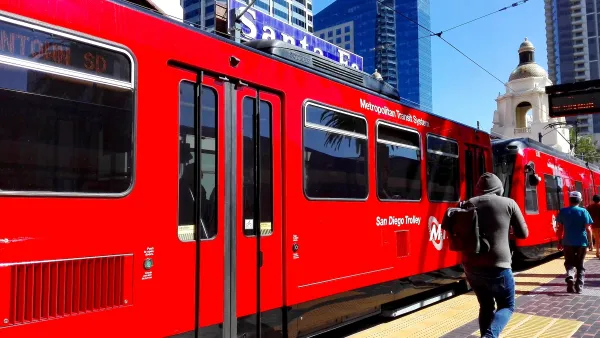
San Diego wants to limit upzoning law to just 16% of transit-adjacent parcels
The city's planning director says some areas are unfit for immediate upzoning due to a lack of resources or hazards such as wildfire risk.

How Atlanta Built 7,000 Housing Units in 3 Years
The city’s comprehensive, neighborhood-focused housing strategy focuses on identifying properties and land that can be repurposed for housing and encouraging development in underserved neighborhoods.

Pittsburgh Mayor Proposes Zoning Changes to Curb Housing Shortage
The mayor’s plan includes legalizing ADUs in single-family neighborhoods, eliminating parking requirements, and adding new affordability requirements to buildings with over 20 units.

The state-sanctioned urbicide of Austin
People don’t kill cities. Freeways do.

US to reduce Colorado River water deliveries to Mexico
A new Colorado Treaty amendment reduces Mexico’s Colorado River water allocation by 250,000 acre feet.

New Jersey’s second-largest city bans standalone data centers
Jersey City will continue to allow co-location facilities, such as those meant for research institutions that store their own data.

Amtrak not solely to blame for New Jersey commuter rail's unreliability, report finds
A new study from the Garden State Initiative found that NJ Transit’s budget grew 20% across a 4 year period, but reliability declined significantly over the same period.

EPA erases limits on planet-warming pollution from power plants
Under Monday’s plan, power plants would still have some limits on how much mercury, arsenic and other contaminants they can emit.

Phoenix announces new on-demand transit service, more frequent RAPID buses
Both new services will launch in October, and are part of Phoenix's Project Effective Access Solutions for Easing Congestion.

FREE Course: Walkable City 1: Why Walkability?
After describing his path towards focusing on walkability as the essence of good planning, Jeff Speck marches through his five principal reasons for making more walkable places.
Reinventing Malls: Planning Alchemy—Turning Gray Fields Into Gold
The course focuses on the opportunities and imperatives that shape reinvention of mall sites.

Eagle County Government
Harvard University Graduate School of Design
Nashville Planning Department
The Architects Foundation
University of Cincinnati Online
The Pocatello Development Authority
The Urban Renewal Agency of the City of Pocatello
Journal of the American Planning Association