‘Living Streets’ lets residents apply for three types of temporary or semi-permanent street closures.


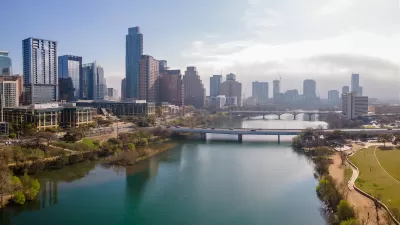
A revived open streets program in Austin, Texas, now named Living Streets, will offer neighborhood groups three options for closing streets to car traffic, reports James Rambin in Austin Towers.
The first option, the ‘block party,’ lets residents close a single block for up to 24 hours on a designated day. Healthy Streets, meanwhile, creates an indefinite closure of three to four blocks using semi-permanent fixtures, similar to the interventions used during the pandemic. According to the city’s website, “After selecting resident-led applications for implementation, City staff will install and maintain semi-permanent partial street closure treatments that discourage motor vehicle traffic and provide more space for walking, biking, and rolling.”
The third option, a new program called Play Streets, lets residents “close a single block for up to 12 hours a week on up to three chosen days of the week for use as a play and gathering space for kids and families.”
Rambin notes that “These three approaches still allow local traffic and don’t reduce access for emergency vehicles or other normal street services like trash collection or deliveries.” The program calls for 60 percent approval from residents on the affected blocks.
Read the full story: Austin’s ‘Living Streets’ Could Make Your Neighborhood Walkable Again
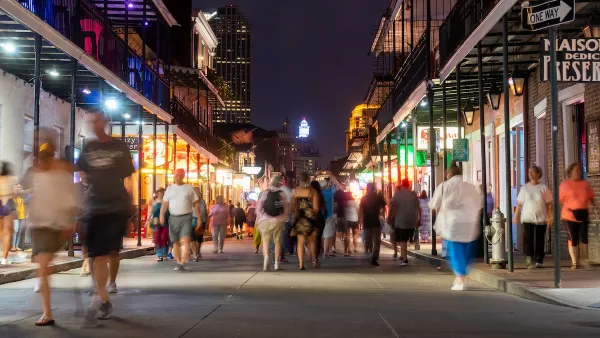
Bourbon Street Could Be a Model for Pedestrian Spaces
The conversation around pedestrianizing public streets isn’t new — think Times Square. Could one of America’s oldest streets lead the way in a revival of the pedestrian mall?
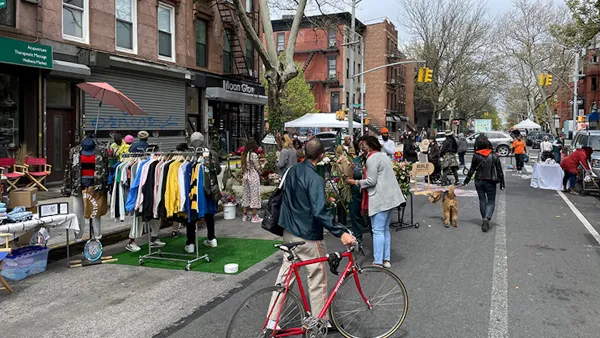
New York Open Streets Shrinking Dramatically
As city funding runs out, the number of miles in open streets projects has dwindled from 83 to just 20.

New York to Expand Holiday Open Streets
The city is making more areas open only to pedestrian traffic in Midtown in anticipation of holiday crowds.

Planetizen Federal Action Tracker
A weekly monitor of how Trump’s orders and actions are impacting planners and planning in America.

Washington state to charge fee to drivers with fuel-efficient cars
Revenue from the fee will go towards supporting the state’s highways.

Trump to blast ‘hydrocarbon highway’ through ‘world’s longest art gallery’
Environmental and historic preservation groups are suing to stop the project.

Army detonates nearly 5 tons of lead in Iowa
The detonation comes after days of delays and public outcry.

Golden Girls bills could bring together older and younger roommates
In more than 30 states, local laws can restrict how many unrelated people can share a home.

Mamdani to replace Rikers Island with four borough-based jails
The four new jails are set to open between 2029 and 2032.

FREE Course: Walkable City 1: Why Walkability?
After describing his path towards focusing on walkability as the essence of good planning, Jeff Speck marches through his five principal reasons for making more walkable places.
Reinventing Malls: Planning Alchemy—Turning Gray Fields Into Gold
The course focuses on the opportunities and imperatives that shape reinvention of mall sites.

City of Charlotte
City of Rosemead
Rutgers University, Edward J. Bloustein School of Planning and Public Policy
University of Michigan School for Environment and Sustainability (SEAS)
Hunter College, City University of New York (CUNY)
The Architects Foundation
University District Partnership