New Jersey’s transit agency is looking to development leases on agency-owned properties to boost revenue and support new housing.


According to an article by Colleen Wilson on NorthJersey.com, “The NJ Transit board unanimously approved a lease Wednesday with the developers looking to build a mix of housing, retail and office space on agency property next to Metropark Station in Woodbridge Township — the largest-scale landlord arrangement in NJ Transit’s portfolio of properties.”
The move could help the agency gain sustainable revenue to bolster its operating budget through a recurring revenue stream while creating new housing opportunities. “The deal is significant because NJ Transit, like many public transportation agencies around the country, has generated real estate value at properties near transit stations, but rarely reaps those fiscal benefits despite facing systemic funding shortfalls.”
Zoe Baldwin, New Jersey director for the Regional Plan Association, said “Putting attractive destinations and housing next to train stations will help boost ridership, reduce car congestion on our roads, and the state will benefit from reduced traffic and environmental pollutants.” NJ Transit hopes the deal will be a model for other agency-owned properties.
Read the full story: NJ Transit to gain revenue from new housing at Metropark station. A recipe for elsewhere?
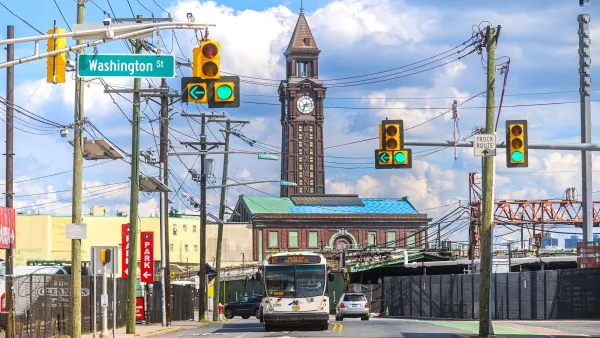
New Jersey has a Plan to buy Transit with LAND. Will it Actually Work?
I have questions.
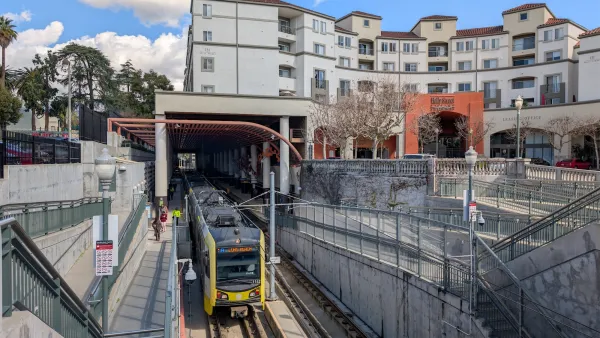
Study: California Transit Agencies Could Build 240,000 Homes on Land They Own
Almost half of the parcels identified as having development potential would fall under California’s new transit-oriented density law.
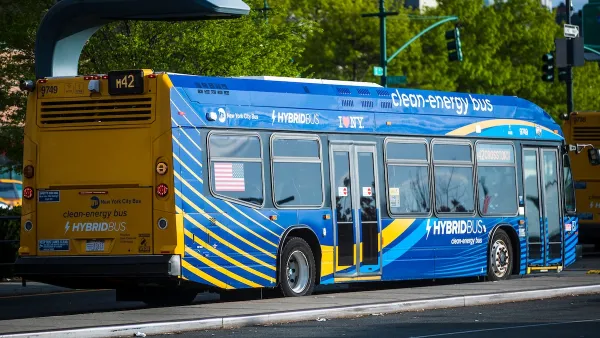
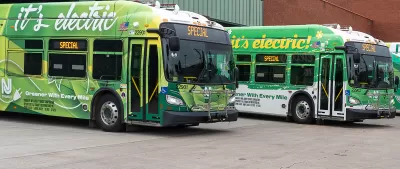
Transit Bus Costs Rise Sharply Due to Tariffs
The cost of a transit bus has gone up by 68 percent since 2021, in part because of recent tariffs on steel and aluminum.

Planetizen Federal Action Tracker
A weekly monitor of how Trump’s orders and actions are impacting planners and planning in America.

California plans to bury El Niño’s downpour
If the state plays its cards right, it may be able to store a billion acre-feet of El Niño’s water in aquifers.

Desperate measures: Advocates weigh draining Lake Powell to fill Colorado River
Draining the reservoir could reduce evaporation losses by a couple hundred thousand acre-feet.

Mamdani’s pied-à-terre tax survives legal challenge
A panel of judges found that the plaintiffs failed to demonstrate injury as a result of New York City's implementation of the tax.

Eastern Nebraska is running out of electricity
Data centers and electrification are straining eastern Nebraska’s grid, throttling economic development.

Seattle passes record-breaking transit services expansion
Proposition 1 will double the city’s transit tax to add 95,000 more bus trips and preserve 180,000 bus trips annually.

FREE Course: Walkable City 1: Why Walkability?
After describing his path towards focusing on walkability as the essence of good planning, Jeff Speck marches through his five principal reasons for making more walkable places.
Reinventing Malls: Planning Alchemy—Turning Gray Fields Into Gold
The course focuses on the opportunities and imperatives that shape reinvention of mall sites.

City of Rosemead
Rutgers University, Edward J. Bloustein School of Planning and Public Policy
One Hundred Miles
University of Michigan School for Environment and Sustainability (SEAS)
Hunter College, City University of New York (CUNY)
The Architects Foundation
City of Cambridge
Montrose County
The Pocatello Development Authority