The allocation from the state legislature is aimed at assisting transit agencies as they work to move away from an overreliance on fare revenue.



In an article for CALmatters, Sameea Kamal outlines how transit agencies around California are planning to spend the $5 billion in transit funding approved by the state legislature in June.
The funding is meant in part to help agencies reduce their dependence on fare revenue and diversify their funding sources. “By Dec. 31, regional planning groups have to submit an application detailing how they plan to use the money to improve ridership and how they will divvy up funds between the transit operators they oversee.”
According to the article, “The other key part of the budget deal requires the state transportation agency to set up a transit “transformation” task force by Jan. 1 — with representatives from the department, local agencies, academic institutions, nongovernmental organizations and other stakeholders — to develop policy recommendations to grow ridership and improve the experience for passengers.”
Kamal notes that “the state ‘bridge’ funding is just that — a bridge” to give agencies time to figure out their next steps.
Read the full story: How will California public transit agencies spend $5 billion?
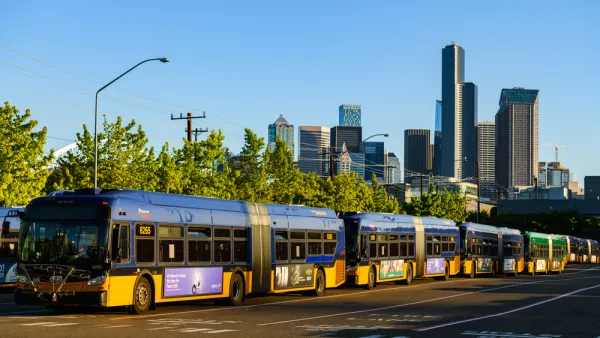
Seattle to Reinstate Bus Fare Enforcement
After a COVID-era move to eliminate fare inspections on city buses, King County Metro is reinstating checks for fare evasion.

Chicago Transit Report Calls for Income-Based Fares, Paratransit Funding
An RTA report highlights a need for state funding to bridge an imminent $730 budget shortfall, calling for an approach that relies less heavily on fare revenue.
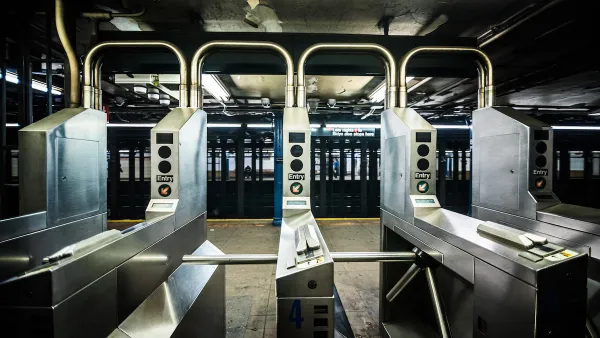
Opinion: Fare Evasion Is a Red Herring
The loss of revenue from fare evasion is a drop in the bucket compared to the fiscal cliff facing major U.S. transit agencies.

Desperate measures: Advocates weigh draining Lake Powell to fill Colorado River
Draining the reservoir could reduce evaporation losses by a couple hundred thousand acre-feet.

Eastern Nebraska is running out of electricity
Data centers and electrification are straining eastern Nebraska’s grid, throttling economic development.

Move over, LA: St. Louis gears up for Olympics, invests millions in downtown redevelopment
The Missouri city will host the 2028 Olympic soccer group stage and knockout matches.

San Diego’s Midway Rising project gets greenlight from city council
The project looks to become the largest affordable housing development in California's history.

Bill to overhaul energy permitting clears Senate
The Bipartisan American Affordability and Jobs Act of 2026 still needs to pass the House of Representatives.

MTA sends Dem leaders a wish list to mend Trump’s damages
Requests include exempting new train and bus components from tariffs and increasing transit security funding.

FREE Course: Walkable City 1: Why Walkability?
After describing his path towards focusing on walkability as the essence of good planning, Jeff Speck marches through his five principal reasons for making more walkable places.
Reinventing Malls: Planning Alchemy—Turning Gray Fields Into Gold
The course focuses on the opportunities and imperatives that shape reinvention of mall sites.

City of Rosemead
Rutgers University, Edward J. Bloustein School of Planning and Public Policy
One Hundred Miles
University of Michigan School for Environment and Sustainability (SEAS)
Hunter College, City University of New York (CUNY)
The Architects Foundation
City of Cambridge
The Pocatello Development Authority
The Urban Renewal Agency of the City of Pocatello