The North Carolina city is exploring ways to expand its transit network.


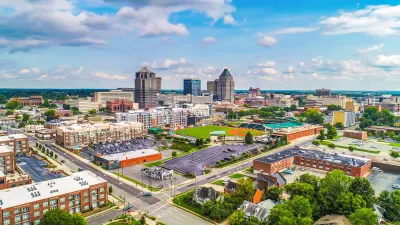
In his blog Human Transit, Jarrett Walker describes his work in Greensboro, North Carolina, a small city intent on developing a more robust public transit system to serve its 300,000 residents.
Two proposals for expanding Greensboro’s transit system would both double existing service while providing a spectrum of option for how to do so. The Ridership Concept would increase frequency along the busiest lines. The Coverage Concept, meanwhile, “focuses instead getting service close to more places, including industrial destinations in the far northeast of the city.”
Walker points out that, “As always, these are two ends of a spectrum, and not an either-or choice.” Walker adds, “We are trying to create a vision of a future network that the people of Greensboro can get behind, so we are asking the community to help us define the balance of ridership and coverage goals that should drive that vision.”
Read the full story: Greensboro: A North Carolina City Imagines a “Car-Optional” Future


Responding to Public Transit Criticism
Public transit plays a unique and important role in an efficient and equitable transportation system. Planners must communicate the benefits that public transit provides and respond to ill-informed critics.
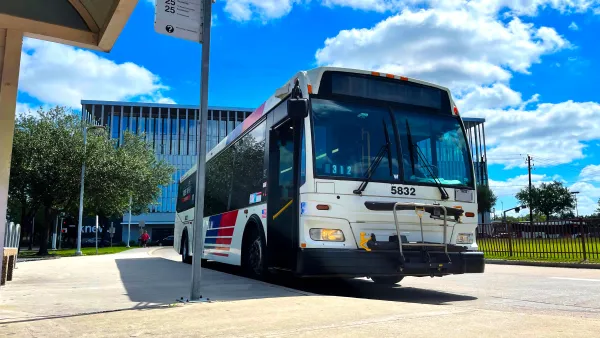
Houston Transit Could Lose a Tenth of Sales Tax Revenue
Agency officials say they will continue to make expansion plans in the face of a potentially dramatic reduction in funding.
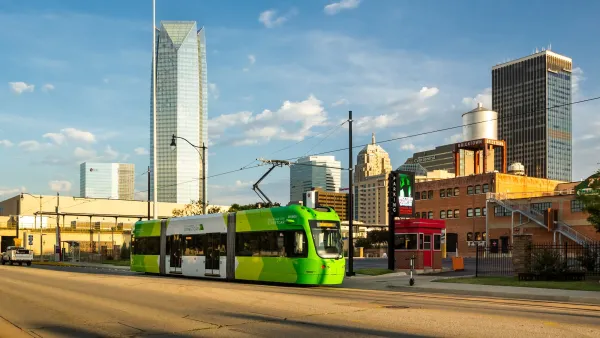
Oklahoma City bets on transit
The city's mayor is urging residents to support a new sales tax that would fund transit expansion in the growing city.

Planetizen Federal Action Tracker
A weekly monitor of how Trump’s orders and actions are impacting planners and planning in America.

California plans to bury El Niño’s downpour
If the state plays its cards right, it may be able to store a billion acre-feet of El Niño’s water in aquifers.

Chicago breaks ground on $3 billion megadevelopment
The new neighborhood, titled Foundry Park, will one day host 3,700 residences.

California High-Speed Rail Authority CEO resigns after $600,000 scandal
Under Ian Choudri, the authority used taxpayer dollars to fund first class flights and trips to nightclubs.

Want to study the Missouri River? Soon, you may need unanimous approval from 10 states
Legislation would require 10 governors’ permission to study or build projects moving water outside the basin.

Desperate measures: Advocates weigh draining Lake Powell to fill Colorado River
Draining the reservoir could reduce evaporation losses by a couple hundred thousand acre-feet.

FREE Course: Walkable City 1: Why Walkability?
After describing his path towards focusing on walkability as the essence of good planning, Jeff Speck marches through his five principal reasons for making more walkable places.
Reinventing Malls: Planning Alchemy—Turning Gray Fields Into Gold
The course focuses on the opportunities and imperatives that shape reinvention of mall sites.

City of Rosemead
Rutgers University, Edward J. Bloustein School of Planning and Public Policy
One Hundred Miles
Hunter College, City University of New York (CUNY)
The Architects Foundation
University of Cincinnati Online
City of Cambridge
Montrose County
The Pocatello Development Authority