The Atlanta City Council passed a pair of ordinances recently to improve conditions for modes other than cars, but a proposal to remove parking requirements for development around the Atlanta Beltline are in limbo.


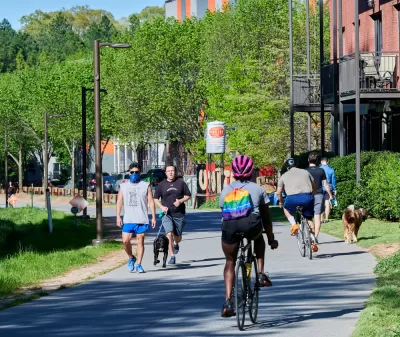
A newly approved ordinance is Atlanta will prohibit “suburban-style drive-thrus and drive-ups and gas pumps near the Beltline,” according to an article by Thomas Wheatley for Axios Atlanta. The changes are part of “a nearly $5 billion public investment designed to make Atlanta easier to access without a car,” adds Wheatley.
Making less progress, however, is a similar ordinance that would have removed parking minimums with one-half mile of the Beltline. According to Wheatley, “The city and some neighborhoods have used so-called ‘parking minimums’ policies to push back against problem bars and other nightlife businesses.”
Writing for ThreadAtl, Darin Givens provides additional insight into the failure of the parking reform legislation, noting that cities around the country are rolling back parking requirements to reduce car dependency, greenhouse gas emissions, and lower the cost of housing.
FULL STORY: Atlanta City Council fails to eliminate parking minimums near the Beltline

Richmond Weighing How to End Parking Requirements
A series of town hall meetings will allow the public a chance to give feedback about zoning changes in Richmond, Virginia that would include the end of parking requirements.

Toronto City Council Removes Most Minimum Parking Requirements
The parking reform movement has a major new feather in its cap: the Toronto City Council has this week adopted sweeping changes to the parking requirements of the city's zoning bylaws.
San Diego Removes Some Commercial Parking Requirements
After approving parking reforms for swaths of residential areas in the city in 2019, the city of San Diego is expanding the effort to select commercial areas in the city.

Planetizen Federal Action Tracker
A weekly monitor of how Trump’s orders and actions are impacting planners and planning in America.

The state-sanctioned urbicide of Austin
People don’t kill cities. Freeways do.

US to reduce Colorado River water deliveries to Mexico
A new Colorado Treaty amendment reduces Mexico’s Colorado River water allocation by 250,000 acre feet.

Baltimore to break ground on $50 million Transit Priority Project
The project will bring faster bus trips, safer streets and better bike connections to Baltimore.

Airbnb launches $250 million 'last-dollar financing' housing accelerator, makes first investment in Austin
The company will put $6.4 million towards affordable housing development in Texas’ capital.

Guerilla urbanists are building DIY bus stop benches in Chicago
A before-and-after of one of the bus stops with a new bench. The new benches are not officially sanctioned or permitted, but the residents who placed them hope they will be the start of a network of DIY benches across the city.

FREE Course: Walkable City 1: Why Walkability?
After describing his path towards focusing on walkability as the essence of good planning, Jeff Speck marches through his five principal reasons for making more walkable places.
Reinventing Malls: Planning Alchemy—Turning Gray Fields Into Gold
The course focuses on the opportunities and imperatives that shape reinvention of mall sites.

Eagle County Government
Harvard University Graduate School of Design
Nashville Planning Department
The Architects Foundation
University of Cincinnati Online
The Pocatello Development Authority
The Urban Renewal Agency of the City of Pocatello
Journal of the American Planning Association