To protect kids from extreme heat, California just distributed another $73 million to local school districts to transform schoolyards by converting blacktops to green spaces, planting trees, and other related efforts.


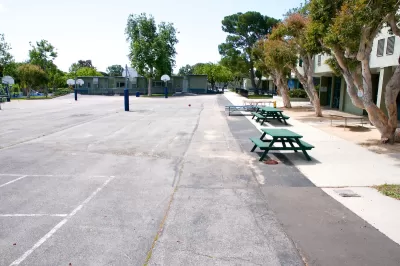
California Governor Gavin Newsom recently announced another $73 million from CAL FIRE for school districts to replace asphalt with green spaces, trees and vegetation to provide more protection against extreme heat for students. Adding to the $47 million that was announced in July, the State of California has distributed $120 million for these projects.
Specifically, funds are offered through the Green Schoolyard Grant program which helps schools convert pavement to green spaces, create drought-tolerant natural areas on school grounds, and other activities to help children connect to nature. The program is part of Governor Newsom’s Extreme Heat Action Plan, which is backed by the $52.3 billion California Climate Commitment budget.
One of the grant recipients is the Porterville Unified School District which will complete high-impact green schoolyard projects at five Central Valley elementary schools. This includes funding to create tree-shaded pathways, drought-tolerant landscaping, nature-based exercise and play areas for children, add filtered water hydration stations, and launch a career pathways and internship program designed to increase climate resilience while helping students learn hands-on design skills for future career tracks.
FULL STORY: More Trees, Less Asphalt at School

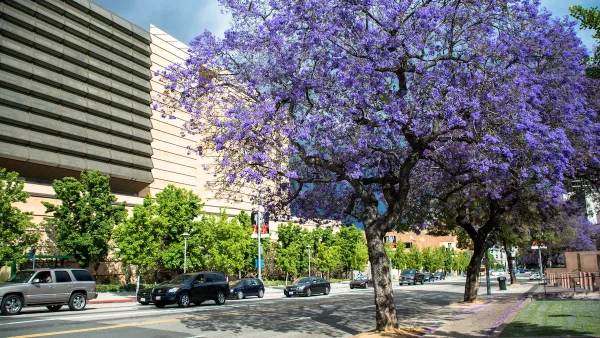
Addressing Tree Canopy Disparity in South Los Angeles
A new study highlights the complex challenge of addressing tree canopy disparities in South L.A., where historical environmental injustices, budget constraints, and competing community priorities hinder efforts to increase equitable tree coverage.
Applying Trauma-Informed Design to Cities
How trauma-informed urbanism can make cities and their residents healthier and more resilient.
Green Spaces Benefit Neighborhoods—When Residents can Reach Them
A study comparing green space and walkability scores found that, without effective access to local parks, residents of greener neighborhoods don’t reap the health benefits.

The state-sanctioned urbicide of Austin
People don’t kill cities. Freeways do.

US to reduce Colorado River water deliveries to Mexico
A new Colorado Treaty amendment reduces Mexico’s Colorado River water allocation by 250,000 acre feet.

New Jersey’s second-largest city bans standalone data centers
Jersey City will continue to allow co-location facilities, such as those meant for research institutions that store their own data.

Amtrak not solely to blame for New Jersey commuter rail's unreliability, report finds
A new study from the Garden State Initiative found that NJ Transit’s budget grew 20% across a 4 year period, but reliability declined significantly over the same period.

EPA erases limits on planet-warming pollution from power plants
Under Monday’s plan, power plants would still have some limits on how much mercury, arsenic and other contaminants they can emit.

Phoenix announces new on-demand transit service, more frequent RAPID buses
Both new services will launch in October, and are part of Phoenix's Project Effective Access Solutions for Easing Congestion.

FREE Course: Walkable City 1: Why Walkability?
After describing his path towards focusing on walkability as the essence of good planning, Jeff Speck marches through his five principal reasons for making more walkable places.
Reinventing Malls: Planning Alchemy—Turning Gray Fields Into Gold
The course focuses on the opportunities and imperatives that shape reinvention of mall sites.

Eagle County Government
Harvard University Graduate School of Design
Nashville Planning Department
The Architects Foundation
University of Cincinnati Online
The Pocatello Development Authority
The Urban Renewal Agency of the City of Pocatello
Journal of the American Planning Association