Thanks to parking reforms at the state level, Oregon cities are rapidly eliminating parking requirements, paving the way for more affordable housing construction and higher density.



Minimum parking requirements are quietly being eliminated in cities across Oregon, writes Catie Gould for the Sightline Institute.
Normally, parking is one of the most contentious issues for local governments. Any relaxation of parking mandates—rules that prescribe a certain minimum number of parking spaces for any new home or business—is a political hot potato. But new state parking rules have taken that status quo off the table and turned what could be a big debate into a boring compliance exercise.
Cities that want to retain parking minimums under the new state law would have to comply with a complex series of regulations, making the choice to eliminate parking mandates an easy one for many communities. “Now over a million Oregonians live in communities where parking is fully voluntary. More cities are poised to join them the next year, after using a deadline extension granted by the state.”
The domino effect is aided by another law passed in early 2022 that removed parking mandates on developments near transit corridors and stations, which, in some cities, cover the majority of lots. Fully eliminating parking minimums also means cities don’t need to adjust requirements when transit service changes, making it easier for property owners to build ADUs and other ‘missing middle housing’ that is often made too costly by the addition of parking.
Read the full story: PARKING MANDATES ARE VANISHING ACROSS OREGON

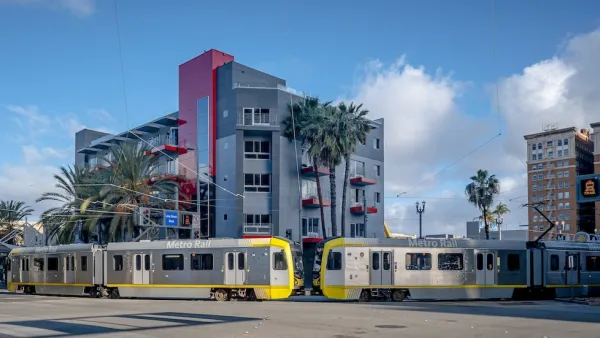
California Law Bars Parking Mandates Near Transit
Local governments are prohibited from requiring parking spaces at new developments where transit is readily available.

Parking Reform Gains Momentum
More cities and states around the country are recognizing the value of eliminating parking requirements.
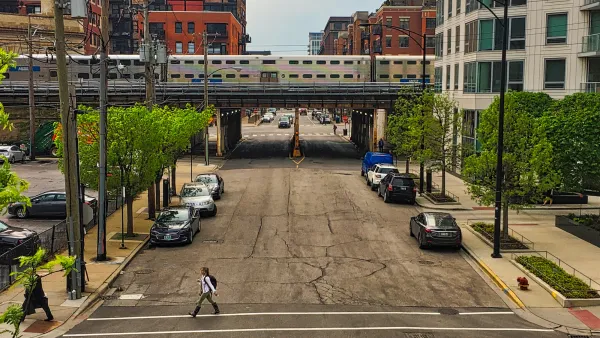
Chicago eliminates parking requirements near transit
In 2025, Illinois barred cities from mandating parking near train and bus stations.

Planetizen Federal Action Tracker
A weekly monitor of how Trump’s orders and actions are impacting planners and planning in America.

Data reveals that NYC’s bet on congestion pricing has paid off
After almost two years of the program, reports show positive impacts on traffic and air quality and no disruptions to parking.

Denver is solving homelessness. Why aren't the rest of us?
Since 2023, Denver's street homeless population has decreased by 64%, proving that effective tools exist to support those in need of housing.

Will sprawl save California?
California residents will vote on Proposition 45 in November, which would make it easier to build large housing developments on the outskirts of the state’s cities.

Texas suburbs are popping up around old oil wells. Some are starting to leak
Several plugged wells in Texas have failed in recent years, endangering those who unknowingly settled nearby.

This Chicago neighborhood is using planning to increase life expectancy
The Garfield Park Quality-Of-Life Plan aims to bring residents everything from easier access to fresh food to revitalized commercial corridors.

FREE Course: Walkable City 1: Why Walkability?
After describing his path towards focusing on walkability as the essence of good planning, Jeff Speck marches through his five principal reasons for making more walkable places.
Reinventing Malls: Planning Alchemy—Turning Gray Fields Into Gold
The course focuses on the opportunities and imperatives that shape reinvention of mall sites.

Rutgers University, Edward J. Bloustein School of Planning and Public Policy
One Hundred Miles
County of Mendocino
The Architects Foundation
University of Cincinnati Online
Montrose County
Northern Illinois Transit Authority (NITA)
The Pocatello Development Authority