Mixed-use development and a floodplain overlay are the big-ticket items when the small community of Akron Borough in Pennsylvania recently updated its zoning code.


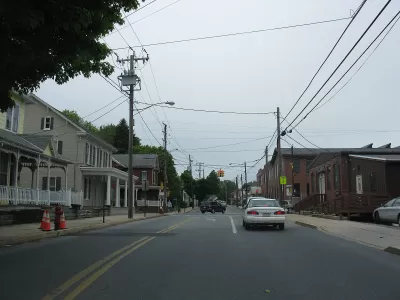
The Borough Council in Akron Borough, Pennsylvania, a small community of just over 4,000 residents, recently approved the city’s first update to its zoning ordinance since 1997, with two big cutting related to the separate issues of commercial zoning to flood management.
According to an article by Larry Alexander, the majority of the changes approved by the city council updated definitions, including changes to mixed-use provisions in the city’s C1 commercial districts. “Primarily this ordinance addresses potential uses involving the Ten Thousand Villages building. The ordinance now will allow for some retail ‘providing they meet certain criteria,’” writes Alexander, quoting Assistant Borough Manager Sean Molchany.
Another change to the city’s zoning includes the creation of a floodplain overlay for all R1 residential properties located in a floodplain.
The source article, linked below, includes descriptions of some of the additional changes approved by the city.
FULL STORY: Akron council approves revisions to its zoning ordinances


Mapping Chicago's Zoning Code Changes
A new interactive map feature launched by the Chicago Cityscape website maps all the zoning changes up for approval around the city.
Boston to Begin Zoning Code Update, Mayor Announces
It’s been nearly 60 years, but the city of Boston is finally ready to do a comprehensive rewrite of its zoning code.

Zoning Changes Could Allow More Restaurants and Bars in D.C. Neighborhoods
Zoning can limit more than just multi-family housing.

Planetizen Federal Action Tracker
A weekly monitor of how Trump’s orders and actions are impacting planners and planning in America.

The state-sanctioned urbicide of Austin
People don’t kill cities. Freeways do.

US to reduce Colorado River water deliveries to Mexico
A new Colorado Treaty amendment reduces Mexico’s Colorado River water allocation by 250,000 acre feet.

Guerilla urbanists are building DIY bus stop benches in Chicago
A before-and-after of one of the bus stops with a new bench. The new benches are not officially sanctioned or permitted, but the residents who placed them hope they will be the start of a network of DIY benches across the city.

Mamdani overhauls NYC's Vision Zero plan with 100 new policy goals
The overhaul aims to reduce traffic deaths and make streets safer for pedestrians, cyclists and drivers through lower speed limits, new safety infrastructure and more.

Amtrak not solely to blame for New Jersey commuter rail's unreliability, report finds
A new study from the Garden State Initiative found that NJ Transit’s budget grew 20% across a 4 year period, but reliability declined significantly over the same period.

FREE Course: Walkable City 1: Why Walkability?
After describing his path towards focusing on walkability as the essence of good planning, Jeff Speck marches through his five principal reasons for making more walkable places.
Reinventing Malls: Planning Alchemy—Turning Gray Fields Into Gold
The course focuses on the opportunities and imperatives that shape reinvention of mall sites.


Eagle County Government
Harvard University Graduate School of Design
Nashville Planning Department
The Architects Foundation
University of Cincinnati Online
The Pocatello Development Authority
The Urban Renewal Agency of the City of Pocatello
Journal of the American Planning Association