The NHTSA is proposing new guidance that would, after years of demands from safety advocates, include pedestrian safety assessments in crash test requirements.



The National Highway Traffic Safety Administration (NHTSA) is proposing an update to crash testing standards that would finally take pedestrian safety into account, reports Colin Woodard in Jalopnik. This would be a major step forward for an agency that, until now, only conducted tests to assess the safety of people inside vehicles.
Woodard writes that “In addition to testing how well vehicles protect pedestrians, the NHTSA’s proposal also includes a plan to set safety standards for automatic emergency braking, which includes pedestrian detection.”
For Woodard and many traffic safety advocates who have expressed concern about increasingly large trucks and SUVs that put pedestrians at higher risk, the actions are long overdue. “Hopefully, adding pedestrian safety tests will not only lead to safer cars but also add a stigma to driving oversized behemoths that are hard to see out of and are a danger to everyone.”
Woodard encourages readers to submit their comments to the NHTSA, which is receiving public comment on the issue for the next two months.
FULL STORY: NHTSA Is Proposing Caring About Pedestrians Too

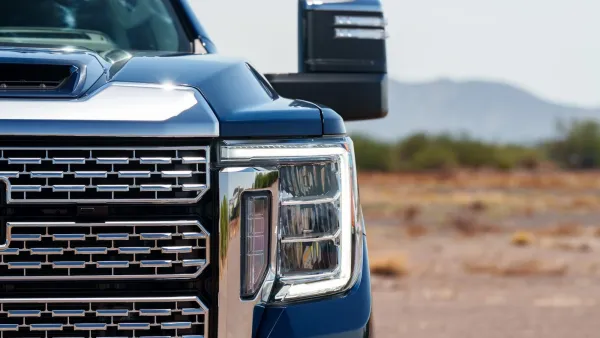
Analysis: Bigger cars are responsible for 10% of increase in pedestrian deaths
The New York Times offers a visual explanation of how larger vehicles make US roads more dangerous.
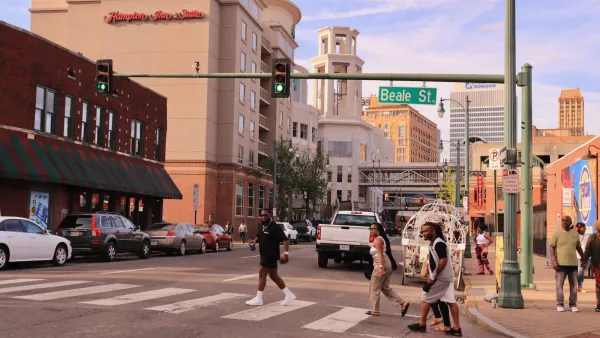
Memphis is the nation's most dangerous city for pedestrians
Memphis had the highest rate of traffic deaths for people walking in the US for two years in a row.
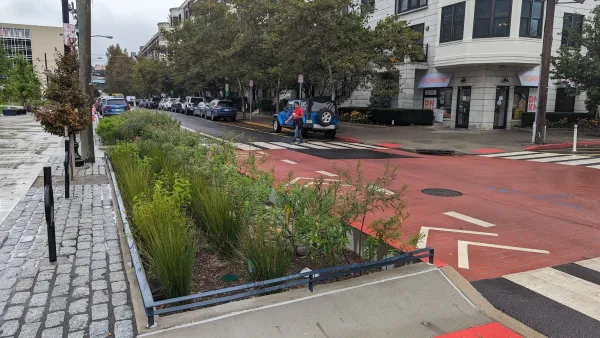
Hoboken's $20 Vision Zero fix
The New Jersey city eliminated traffic deaths for the last nine years in a row.

Planetizen Federal Action Tracker
A weekly monitor of how Trump’s orders and actions are impacting planners and planning in America.

The state-sanctioned urbicide of Austin
People don’t kill cities. Freeways do.

US to reduce Colorado River water deliveries to Mexico
A new Colorado Treaty amendment reduces Mexico’s Colorado River water allocation by 250,000 acre feet.

5 New England states march closer to 800 megawatt wind energy project
Securing federal approval for the project may be complicated under the Trump administration, which has historically been hostile towards domestic wind power.

Baltimore to break ground on $50 million Transit Priority Project
The project will bring faster bus trips, safer streets and better bike connections to Baltimore.

Airbnb launches $250 million 'last-dollar financing' housing accelerator, makes first investment in Austin
The company will put $6.4 million towards affordable housing development in Texas’ capital.

FREE Course: Walkable City 1: Why Walkability?
After describing his path towards focusing on walkability as the essence of good planning, Jeff Speck marches through his five principal reasons for making more walkable places.
Reinventing Malls: Planning Alchemy—Turning Gray Fields Into Gold
The course focuses on the opportunities and imperatives that shape reinvention of mall sites.

Eagle County Government
Harvard University Graduate School of Design
Nashville Planning Department
The Architects Foundation
University of Cincinnati Online
The Pocatello Development Authority
The Urban Renewal Agency of the City of Pocatello
Journal of the American Planning Association