The Boise Planning Commission gave its approval to a new zoning code for the city of Boise. The City Council is expected to consider the draft zoning code in June.


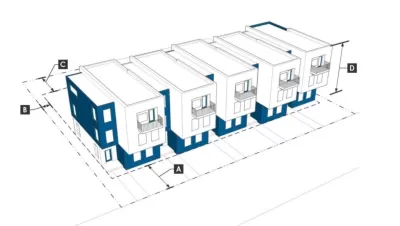
The Boise Planning Commission approved the first major rewrite of the city’s zoning code in 60 years last week, setting the stage for the Boise City Council to consider the new zoning code in June.
“The code updates allow for greater housing density and flexibility, expanding mixed residential and commercial zones into more areas of the city,” according to an article by Troy Oppie, which broke the news of the commission vote.
In an article published earlier in April, Planetizen Editor Diana Ionescu described the listed the priorities of the zoning code rewrite as a “more sustainable, equitable, and affordable.” To achieve those lofty goals, the code changes regulations on everything from building heights, parking requirements, neighborhood markets, lot sizes, transit-oriented development, and mixed-use development.
A few controversies arose during the 20 hours of hearings the commission devoted to study of the new zoning code, according to Oppie, including concerns about reduced parking requirements and the perception that new multi-family residential developments would pose a risk to the existing character of residential neighborhoods.
According to Oppie, some of the code’s new allowances for density, in the form of those parking reforms and multi-family zoning, were crafted deliberately in response to Idaho’s state preemption of inclusionary zoning. “Because state law prohibits cities from requiring housing units be below market rate, part of what’s known as ‘inclusionary zoning,’ the city chose to incentivize certain practices in the code,” explains Oppie.
“The code rewrite has been in progress since 2020, with dozens of open houses and hearings and thousands of public comments and survey responses gathered at different stages of development,” adds Oppie for background on the path that brought the city to the brink of a new zoning code. Tim Keane, the city’s planning director, announced in July 2022 that the zoning rewrite would target changes along major corridors, rather than achieving citywide changes, in response to feedback from residents.
The entire Boise Modern Zoning Code Project Report can be read at the city of Boise’s website.
Read the full story: Boise’s zoning code rewrite unanimously passes Planning & Zoning Commission

Proposed Update to Boise Zoning Code Would Boost Density, Discourage Sprawl
A years-long process has culminated in a proposal that would encourage the creation of affordable housing, promote transit-oriented development, and position the city for less car-oriented growth.
Boise Backing Off Proposed Citywide Zoning Changes
Boise was considering allowing up to four units by-right on any residential parcel in the city, but has since rolled back the scale of the proposed zoning changes.
Boise Poised To Revise Zoning Code
The city of Boise is soliciting public input on its plan to revise its zoning code to permit a wider variety of housing options.

Planetizen Federal Action Tracker
A weekly monitor of how Trump’s orders and actions are impacting planners and planning in America.

California plans to bury El Niño’s downpour
If the state plays its cards right, it may be able to store a billion acre-feet of El Niño’s water in aquifers.

Desperate measures: Advocates weigh draining Lake Powell to fill Colorado River
Draining the reservoir could reduce evaporation losses by a couple hundred thousand acre-feet.

California city breaks ground on transit connector
The project includes three mobility hubs and a pedestrian bridge.

After public outcry, Massachusetts city releases housing development tracker
Cambridge’s tracker currently shows 250 housing projects in various stages of development.

40 years after approval, Chicago breaks ground on new park
The park honors Jean Baptiste Point du Sable, the city’s first permanent non-native settler.

FREE Course: Walkable City 1: Why Walkability?
After describing his path towards focusing on walkability as the essence of good planning, Jeff Speck marches through his five principal reasons for making more walkable places.
Reinventing Malls: Planning Alchemy—Turning Gray Fields Into Gold
The course focuses on the opportunities and imperatives that shape reinvention of mall sites.

City of Rosemead
Rutgers University, Edward J. Bloustein School of Planning and Public Policy
One Hundred Miles
Hunter College, City University of New York (CUNY)
The Architects Foundation
University of Cincinnati Online
City of Cambridge
Montrose County
The Pocatello Development Authority