A proposed ‘pace of change’ policy would have restricted the number of development proposals the city would accept in an effort to limit displacement of existing residents in affordable, low-rise rental units.



The Vancouver City Council rejected a proposed change to the city’s Broadway Plan that would have put a cap on the number of development proposals considered each year through a “pace of change” policy, reports Kenneth Chan for Daily Hive.
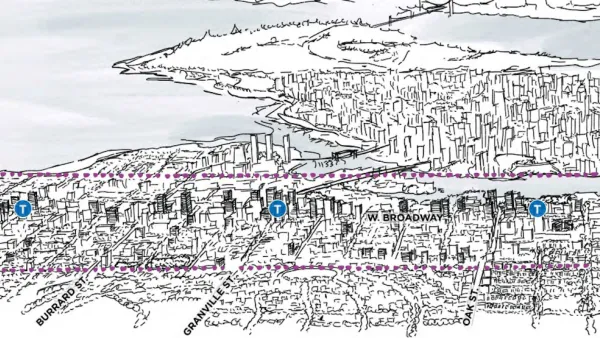
The proposal came from city staff who estimated that as many as 2,000 residents in the existing residential areas affected by the plan. “The Broadway Plan’s area is home to 25% of Vancouver’s secured rental housing stock, with much of this supply in the area deemed to be within the affordable range due to the older age of the buildings,” Chan explains.
“City staff assert existing renters have nowhere else to go due to extremely low vacancies across the region, and new development projects could be tied up by the Broadway Plan’s Tenant Relocation and Protection Policy (TRPP) of requiring developers to find temporary replacement housing for impacted tenants before they can get shovels into the ground — something developers may not be able to do with ease given the existing rental housing shortages.”
City councillors largely rejected the proposal, saying it would slow down development and act in opposition to the goals of the Broadway Plan. “ABC councillor Peter Meiszner said he is confident with the ‘very strong’ tenant protection and relocation programs in place, which are ‘the strongest in North America.’ He says ‘bold action’ is needed to deliver more housing, with incoming record levels of immigration and dwindling rental vacancies.”
Read the full story: Vancouver City Council rejects policy of slowing the pace of new housing in the Broadway Plan

Vancouver’s Controversial Broadway Plan Approved With Amendments
A plan to add new significant amounts of housing, shifting development south into a “second downtown” around the future SkyTrain Millennium Line Broadway Extension, has been approved in Vancouver.

Vancouver Set To Finalize Broadway Rezoning Plan
A plan to increase density along the city's 'Second Downtown' promises to bring badly needed housing to the corridor as the Broadway subway line nears completion.

Which US cities have the most housing near transit?
Concentrating housing near frequent, reliable transit offers advantages to both residents and transit agencies, who can serve more riders more efficiently.

Planetizen Federal Action Tracker
A weekly monitor of how Trump’s orders and actions are impacting planners and planning in America.

California plans to bury El Niño’s downpour
If the state plays its cards right, it may be able to store a billion acre-feet of El Niño’s water in aquifers.

Chicago breaks ground on $3 billion megadevelopment
The new neighborhood, titled Foundry Park, will one day host 3,700 residences.

Satanic Place Names
From streams and lakes to valleys and canyons, I mapped more than 1,000 places named after the Devil.

California High-Speed Rail Authority CEO resigns after $600,000 scandal
Under Ian Choudri, the authority used taxpayer dollars to fund first class flights and trips to nightclubs.

Want to study the Missouri River? Soon, you may need unanimous approval from 10 states
Legislation would require 10 governors’ permission to study or build projects moving water outside the basin.

FREE Course: Walkable City 1: Why Walkability?
After describing his path towards focusing on walkability as the essence of good planning, Jeff Speck marches through his five principal reasons for making more walkable places.
Reinventing Malls: Planning Alchemy—Turning Gray Fields Into Gold
The course focuses on the opportunities and imperatives that shape reinvention of mall sites.

City of Rosemead
Rutgers University, Edward J. Bloustein School of Planning and Public Policy
One Hundred Miles
Hunter College, City University of New York (CUNY)
The Architects Foundation
University of Cincinnati Online
City of Cambridge
Montrose County
The Pocatello Development Authority