Fairfax County wants to move away from a heavy reliance on level of service in favor of more pedestrian- and transit-oriented planning.


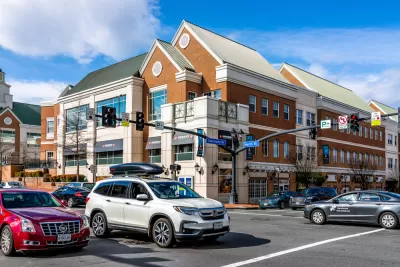
A proposal in Virginia’s Fairfax County could shift the focus of local transportation planning to pedestrian infrastructure and transit, moving away from the common level of service (LOS) model that prioritizes the fast movement of vehicular traffic. As Vernon Miles reports for FFX Now, the policy, called “Additional Measures of Effectiveness,” would require the Department of Transportation to evaluate the impact of transportation projects on pedestrian, bike, and transit infrastructure and safety.
According to Gregg Stevenson, deputy director of the Fairfax County Department of Transportation, “if the county wants to become more multimodal and make bus, bicycle, and pedestrian traffic as viable as cars, it needs to update its measures of effectiveness to match that.”
Miles notes that any new transportation analyses wouldn’t apply in the same way across the country. “The presentation noted that the county is broken up into ‘tiers’ of similar land uses, with different modes of transportation emphasized in different areas. For example, the type of bicycle and transit-focused development might be more heavily emphasized in Tysons’ urban environment, but not as much in low-density, residential neighborhoods.”
The agency plans to keep developing the policy throughout 2023.
FULL STORY: Fairfax County could put bicycles and transit on par with cars when gauging transportation needs

Vehicle Miles Travelled, Level of Service, and a Soon-to-be-Insolvent Transportation Trust Fund
Level of Service and the gas tax have served our transportation needs for a long time. Now, it’s time for a change.
Opinion: Stop Paving Seattle Playgrounds for Parking Lots
Seattle schools are often forced to reduce their playground space in favor of parking and circulation for private cars, but altering the city code could change that.
Pedestrian Improvements Planned for Washington State Highway
New medians, dedicated turn lanes, and signalized crosswalks are aimed at improving pedestrian safety along the busy corridor.

Planetizen Federal Action Tracker
A weekly monitor of how Trump’s orders and actions are impacting planners and planning in America.

The state-sanctioned urbicide of Austin
People don’t kill cities. Freeways do.

US to reduce Colorado River water deliveries to Mexico
A new Colorado Treaty amendment reduces Mexico’s Colorado River water allocation by 250,000 acre feet.

5 New England states march closer to 800 megawatt wind energy project
Securing federal approval for the project may be complicated under the Trump administration, which has historically been hostile towards domestic wind power.

Baltimore to break ground on $50 million Transit Priority Project
The project will bring faster bus trips, safer streets and better bike connections to Baltimore.

Airbnb launches $250 million 'last-dollar financing' housing accelerator, makes first investment in Austin
The company will put $6.4 million towards affordable housing development in Texas’ capital.

FREE Course: Walkable City 1: Why Walkability?
After describing his path towards focusing on walkability as the essence of good planning, Jeff Speck marches through his five principal reasons for making more walkable places.
Reinventing Malls: Planning Alchemy—Turning Gray Fields Into Gold
The course focuses on the opportunities and imperatives that shape reinvention of mall sites.

Eagle County Government
Harvard University Graduate School of Design
Nashville Planning Department
The Architects Foundation
University of Cincinnati Online
The Pocatello Development Authority
The Urban Renewal Agency of the City of Pocatello
Journal of the American Planning Association