If approved by the state legislature, a $6 million program would help fund the purchase of e-bikes, helmets, and other accessories.



A bill proposed in the Oregon state legislature would establish a rebate program for electric bikes and accessories such as helmets and lights, reports Michael Brady in Smart Cities Dive. The bill’s sponsor, Rep. Karin Power, says the bill is meant to encourage transportation diversification and put e-bikes within reach of more Oregonians. Power says e-bikes can help lower the city’s carbon footprint and provide an efficient, affordable transportation option for commuters. “Incentivizing e-bikes is one way we can creatively foster greater transportation justice and equity,” says Power.
Through the program, “Only purchases from authorized, in-state retailers would be eligible for rebates, and rebate recipients would need to own their e-bikes ‘for at least one year after receiving the rebate,’ according to the bill.”
Rebates on e-bikes are proving hugely popular in places like Denver, where applications for the city’s rebate program get snapped up almost as quickly as they are released.
Read the full story: Oregon to consider e-bike rebate program in 2023
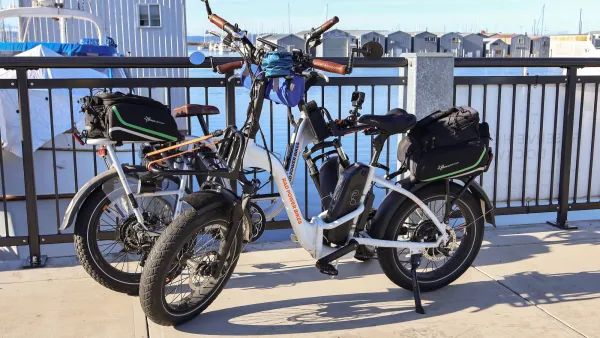
Washington’s E-Bike Rebate Rollout Shows Success for $1,200 Incentive, Low Redemption Rate for $300 Vouchers
The state’s first e-bike rebate program offers some valuable lessons for future rollouts.
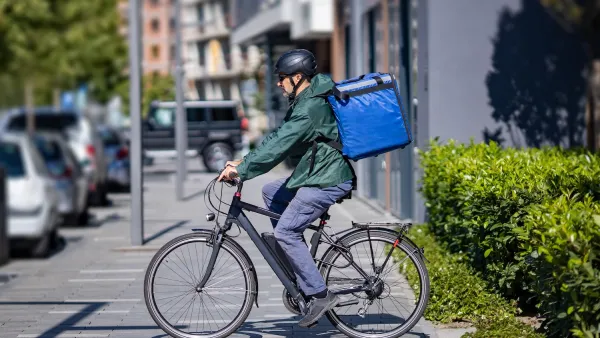
California Cuts Funding for E-bike Rebates
The state cancelled an upcoming round of applications for the wildly popular e-bike incentive program that provided up to $2,000 toward the cost of an electric bike.

Pilot Project Offers E-Bike Rebates in New York State
The program will start in the Village of Ossining with plans to expand in the greater Hudson River region.

Planetizen Federal Action Tracker
A weekly monitor of how Trump’s orders and actions are impacting planners and planning in America.

Eastern Nebraska is running out of electricity
Data centers and electrification are straining eastern Nebraska’s grid, throttling economic development.

Washington state to charge fee to drivers with fuel-efficient cars
Revenue from the fee will go towards supporting the state’s highways.

Instead of building new housing, LA developers are turning mansions into mega-mansions
In the richest areas, the number of houses valued at $30 million with demolition permits has skyrocketed since 2018.

Illinois considers spending $1 billion in taxpayer money on data center
A quantum computing campus and data center are currently under construction in Chicago.

As development costs rise, Boston moves to lessen affordable housing requirements
The Boston Zoning Commission and the City Council still need to approve Boston Mayor Michelle Wu’s proposed changes

FREE Course: Walkable City 1: Why Walkability?
After describing his path towards focusing on walkability as the essence of good planning, Jeff Speck marches through his five principal reasons for making more walkable places.
Reinventing Malls: Planning Alchemy—Turning Gray Fields Into Gold
The course focuses on the opportunities and imperatives that shape reinvention of mall sites.

City of Charlotte
City of Rosemead
Rutgers University, Edward J. Bloustein School of Planning and Public Policy
University of Michigan School for Environment and Sustainability (SEAS)
Hunter College, City University of New York (CUNY)
The Architects Foundation
City of Cambridge
The Pocatello Development Authority
The Urban Renewal Agency of the City of Pocatello