Deferred home maintenance can lead to serious structural, safety, and health issues. A new program in Pennsylvania aims to fill the gaps in home repair and weatherization programs.


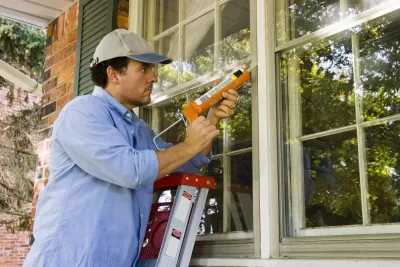
High utility bills and years of deferred maintenance have forced many low-income homeowners and renters in Pennsylvania to live with lead paint, drafty windows, leaky roofs, exposed wiring, mold, and other health hazards. Many residents endure these conditions because they can’t afford to make repairs. Others are forced to abandon their homes, allowing pests and crime to fester, or sell to an investor.
It’s a story heard in both urban and rural communities across Pennsylvania, with many weatherization and home repair programs failing to address the root problem and more homes falling further into disrepair.
The Whole-Home Repairs Program aims to address this issue by providing grants to low-income homeowners and forgivable loans to small landlords for critical habitability repairs and energy efficiency and accessibility upgrades. The program also dedicates resources to coordinate home repair and weatherization programs and provides funding for workforce development to train people to do the work.
After a spring push to introduce the Whole-Home Repairs legislation, known as Senate Bill 1135, by Sen. Nikil Saval, the Pennsylvania legislature approved $125 million for fiscal year 2022-23 for the Whole-Home Repairs Program. It’s a one-time influx of dollars from the American Rescue Plan Act, but Saval is confident the program will prove its value and receive ongoing funding. The program includes money for income-eligible homeowners to apply for grants of up to $50,000 for home repairs. For a household to qualify, income cannot exceed 80 percent of the area median income.
“We’re glad that the Legislature acted to enact something that is popular and will be popular,” says Saval, a Democrat representing Philadelphia, who gathered a coalition of community organizations, housing and energy advocates, and residents to support the Whole-Home Repairs Act. “We know from our survey data there is immense need for this across the commonwealth.”
Need for Home Repair Reform
Pennsylvania, and particularly Philadelphia, has some of the oldest housing stock in the nation. Roughly one in four Pennsylvania voters need critical repairs to their homes and almost one in three say their utility bills are unaffordable. Almost half of Pennsylvania voters who are homeowners, including many in Philadelphia ...
Read the full story: Sealing the Cracks in Weatherization and Home Repair
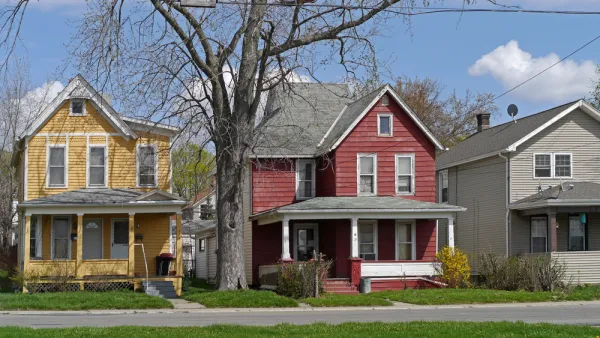
How Repairing and Modernizing Aging Homes Can Contribute to Housing Affordability
Weatherization and efficiency upgrades can reduce energy costs and keep older homes habitable, but many low-income households are excluded from federal funding.

Preserving Houston’s ‘Naturally Occurring Affordable Housing’
Unsubsidized, low-cost rental housing is a significant source of affordable housing for Houston households, but the supply is declining as units fall into disrepair or are redeveloped into more expensive units.
Colorado Launches New Efficiency and Weatherization Rebate Program
The state is using federal funds to assist homeowners in replacing inefficient appliances and making their homes more climate-friendly and resilient.

California plans to bury El Niño’s downpour
If the state plays its cards right, it may be able to store a billion acre-feet of El Niño’s water in aquifers.

Desperate measures: Advocates weigh draining Lake Powell to fill Colorado River
Draining the reservoir could reduce evaporation losses by a couple hundred thousand acre-feet.

Eastern Nebraska is running out of electricity
Data centers and electrification are straining eastern Nebraska’s grid, throttling economic development.

SpaceXAI may be fined $6 million for data center lacking water permits
A Mississippi agency also responds after a federal judge criticized the state’s Clean Air Act enforcement.

Housing is the top priority of Seattle’s sole new councilmember
Jenks campaigned on building 1,000 new units of affordable housing.

New tax cuts may slash $1.5 billion in funding for Miami transit, public parks
Amendment 3 will save Miami-Dade homeowners $2,700 in 2028.

FREE Course: Walkable City 1: Why Walkability?
After describing his path towards focusing on walkability as the essence of good planning, Jeff Speck marches through his five principal reasons for making more walkable places.
Reinventing Malls: Planning Alchemy—Turning Gray Fields Into Gold
The course focuses on the opportunities and imperatives that shape reinvention of mall sites.

City of Rosemead
Rutgers University, Edward J. Bloustein School of Planning and Public Policy
One Hundred Miles
University of Michigan School for Environment and Sustainability (SEAS)
Hunter College, City University of New York (CUNY)
The Architects Foundation
City of Cambridge
Montrose County
The Pocatello Development Authority