Mayors around the country are pledging to bolster infrastructure projects with new federal funding, generate economic growth, and support the most vulnerable residents.


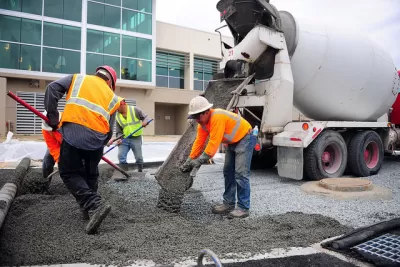
The National League of Cities has released its annual State of the Cities report, which highlights infrastructure, economic development, budgets and management, and public safety” as top priorities, based on an analysis of 60 mayoral speeches. Danielle McLean outlines the report’s findings in an article for Smart Cities Dive.
Researchers found that cities are focused on utilizing an influx of federal funds through the American Rescue Plan that passed last year, as well as the forthcoming infusion of money via the bipartisan infrastructure law that passed in the fall, the report stated. Mayors also focused on working through employment pressures, while trying to ensure their residents are treated equitably.
Mayors expressed more optimism this year than last year, when funding for infrastructure and economic development was more uncertain. “In the latest report, 36% of the mayoral speeches NLC analyzed had ‘significant mention’ of infrastructure. Recognizing the need for maintenance and spending on roads, bridges, broadband and water and sewer systems, local governments were preparing to apply for, receive and utilize the influx of federal and state grants they have received or will soon be available, the report states.”
Additionally, “Economic development was central in mayoral speeches, with 33% significantly mentioning it. In an effort to generate economic growth, mayors highlighted plans to invest in downtown developments and commercial real estate projects. They also mentioned lifting up residents most impacted financially by the pandemic through community development, entrepreneurship initiatives and other strategies, the report states.”
Mayors also prioritized leadership and city management, as well as public safety and criminal justice reform.
FULL STORY: Mayors’ top 4 priorities in 2022: NLC’s State of the Cities report

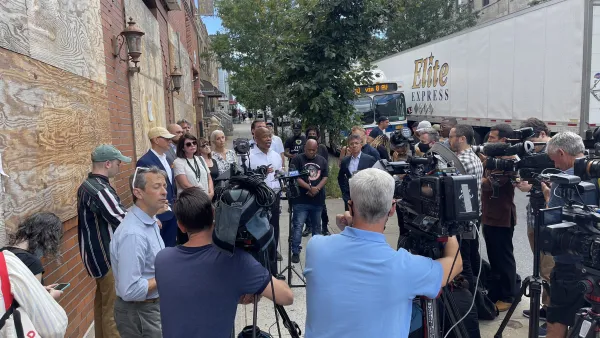
U.S. Mayors List Infrastructure as 2023’s Top Concern
The National League of Cities (NLC) has published an analysis of mayoral speeches from various U.S. cities, along with Census data and resident sentiments, in the latest edition of the annual “State of the Cities” report.

State of the Cities 2019
The National League of Cities has released their annual analysis of the top issues mayors are talking about in the United States.

Ten extraordinary women making cities work better for everyone
A new book profiles women leaders shaping the future of modern cities. These are some of their stories.

Planetizen Federal Action Tracker
A weekly monitor of how Trump’s orders and actions are impacting planners and planning in America.

The state-sanctioned urbicide of Austin
People don’t kill cities. Freeways do.

US to reduce Colorado River water deliveries to Mexico
A new Colorado Treaty amendment reduces Mexico’s Colorado River water allocation by 250,000 acre feet.

5 New England states march closer to 800 megawatt wind energy project
Securing federal approval for the project may be complicated under the Trump administration, which has historically been hostile towards domestic wind power.

Baltimore to break ground on $50 million Transit Priority Project
The project will bring faster bus trips, safer streets and better bike connections to Baltimore.

Airbnb launches $250 million 'last-dollar financing' housing accelerator, makes first investment in Austin
The company will put $6.4 million towards affordable housing development in Texas’ capital.

FREE Course: Walkable City 1: Why Walkability?
After describing his path towards focusing on walkability as the essence of good planning, Jeff Speck marches through his five principal reasons for making more walkable places.
Reinventing Malls: Planning Alchemy—Turning Gray Fields Into Gold
The course focuses on the opportunities and imperatives that shape reinvention of mall sites.

Eagle County Government
Harvard University Graduate School of Design
Nashville Planning Department
The Architects Foundation
University of Cincinnati Online
The Pocatello Development Authority
The Urban Renewal Agency of the City of Pocatello
Journal of the American Planning Association