The Department of Housing and Urban Development announced a $365 million package aimed at efforts to reduce homelessness and provide outreach and care for people lacking adequate housing.


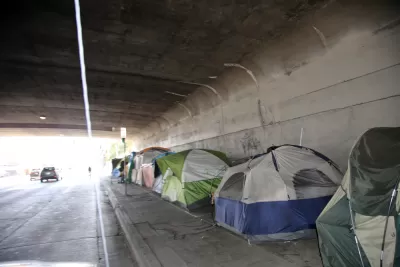
The federal government hopes to ease the nationwide homelessness crisis with a new package of funding announced by the Department of Housing and Urban Development (HUD). According to an article by Sarah Holder in Bloomberg CityLab, the package “includes $43 million worth of housing choice vouchers, which provide recipients with permanent subsidized housing, and $322 million in Continuum of Care homelessness grants.”
And it’s not a coincidence that this week’s funding announcement comes at a time when some statehouses are advancing legislation that would ban camping in public right-of-ways, and law enforcement officers in places like Los Angeles and New York have doubled down on conducting sweeps of encampments — a sometimes violent practice that advocates warn does little to get people off the streets long term and can lead to harmful cycles between jail and the streets.
In a statement, HUD Secretary Marcia Fudge said “Solving unsheltered homelessness means delivering help to the people who need it the most, but who have the hardest time reaching it. It means putting housing first and health care and other supportive services right after.” Fudge said the funding should create the resources for local agencies to “scale up coordinated efforts to humanely and effectively move people from encampments into homes by linking homeless outreach with health care, treatment and housing.”
The model known as Housing First, which promotes placing people into housing without prerequisites, has helped cities like Houston and Denver drastically reduce the number of people living without shelter.
FULL STORY: White House Hopes New Funding Will Deter Clearing Homeless Encampments


$150 Million for L.A.’s Unhoused People Go Unspent
The city returned nearly $150 million in federal funding directed to providing shelter and supportive services to the Department of Housing and Urban Development.

How One Minnesota County Cut Homelessness by 80 Percent
While homelessness rose in most U.S. regions, Hennepin County invested heavily in programs to end chronic homelessness and get people into temporary and supportive housing faster.
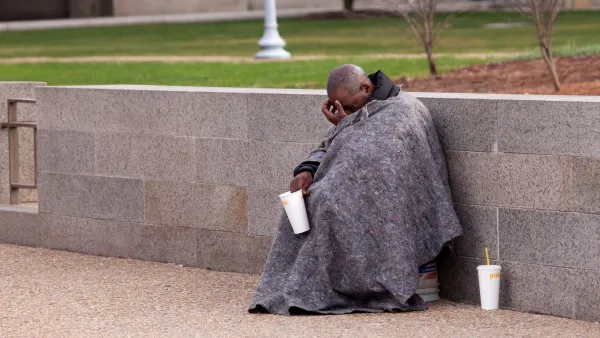
HUD: US homelessness grew by 27% since 2013
Despite the alarming increase in unhoused Americans, HUD is asking for a budget reduction.

The state-sanctioned urbicide of Austin
People don’t kill cities. Freeways do.

US to reduce Colorado River water deliveries to Mexico
A new Colorado Treaty amendment reduces Mexico’s Colorado River water allocation by 250,000 acre feet.

New Jersey’s second-largest city bans standalone data centers
Jersey City will continue to allow co-location facilities, such as those meant for research institutions that store their own data.

Amtrak not solely to blame for New Jersey commuter rail's unreliability, report finds
A new study from the Garden State Initiative found that NJ Transit’s budget grew 20% across a 4 year period, but reliability declined significantly over the same period.

EPA erases limits on planet-warming pollution from power plants
Under Monday’s plan, power plants would still have some limits on how much mercury, arsenic and other contaminants they can emit.

Phoenix announces new on-demand transit service, more frequent RAPID buses
Both new services will launch in October, and are part of Phoenix's Project Effective Access Solutions for Easing Congestion.

FREE Course: Walkable City 1: Why Walkability?
After describing his path towards focusing on walkability as the essence of good planning, Jeff Speck marches through his five principal reasons for making more walkable places.
Reinventing Malls: Planning Alchemy—Turning Gray Fields Into Gold
The course focuses on the opportunities and imperatives that shape reinvention of mall sites.

Eagle County Government
Harvard University Graduate School of Design
Nashville Planning Department
The Architects Foundation
University of Cincinnati Online
The Pocatello Development Authority
The Urban Renewal Agency of the City of Pocatello
Journal of the American Planning Association