The city council voted to override a veto of the ordinance by the mayor, enacting new water conservation measures.


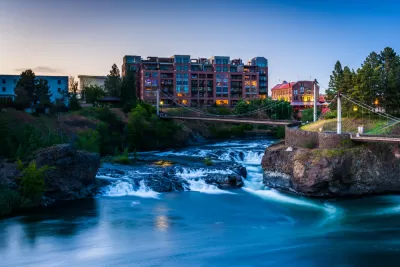
According to a news release from the city of Spokane, Washington, “Spokane City Council voted 5-1 (Councilmember Bingle absent) to override the Mayoral veto of Ordinance C36209, which establishes water conservation and drought response measures.” The ordinance enacts voluntary water conservation measures and becomes effective immediately.
An article by Amanda Roley for KREM2 notes that the ordinance contains two levels of voluntary restrictions. The second, stricter level would apply “when the Spokane River is predicted to fall below 1,000 cubic feet per second, or when the mayor or council declares a drought emergency.”
The press release acknowledges the lack of penalties or incentives for residents to participate. “Any enforcement of these new expectations won’t occur for at least two years, and there are no financial consequences for non-compliance. Codifying these measures is fundamentally rooted in education,” said Councilmember Lori Kinnear, a co-sponsor of the ordinance. “The City’s water department will provide education and community engagement to all water ratepayers within the city’s retail water delivery area on the importance of complying with the new ordinance highlighting the benefits to the community and the river.”
Read the full story: Spokane City Council Votes To Override Vetoed Drought Response Ordinance
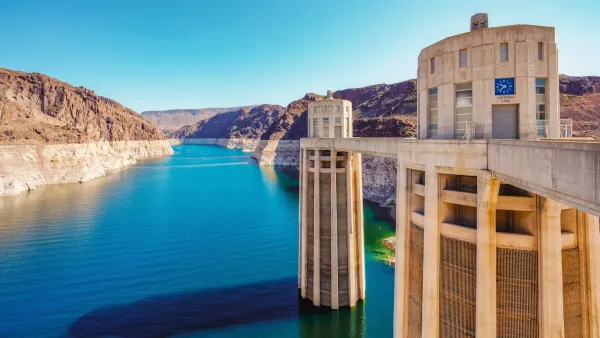
Federal proposal calls for mandatory water cuts to Arizona, California and Nevada
The Bureau of Reclamation stepped in after states failed to come to an agreement over Colorado River water use reductions.
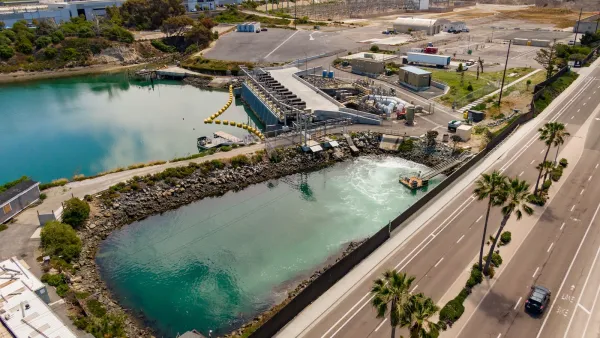
New agreement would let Arizona, Nevada use water from California desalination plant
The plan will help reduce strain on Lake Mead during extreme drought periods.
Southern California water agencies accelerate reuse and recycling projects
From desalination to wastewater recycling, California officials are promoting more reclamation projects as the Southwest remains in drought.

Planetizen Federal Action Tracker
A weekly monitor of how Trump’s orders and actions are impacting planners and planning in America.

Washington state to charge fee to drivers with fuel-efficient cars
Revenue from the fee will go towards supporting the state’s highways.

Illinois considers spending $1 billion in taxpayer money on data center
A quantum computing campus and data center are currently under construction in Chicago.

Texas cities and counties forgo $1 billion in taxes to data centers in exchange for few job guarantees
The Tribune found 53 local tax agreements across 34 data centers guaranteed a total of 465 jobs. Roughly half of the agreements had no job stipulations.

Mamdani unveils his ‘most ambitious bus lane project’ so far
The city has added two new bus lanes, which it expects to speed up tens of thousands of bus riders’ commutes.

New Jersey and New York suggest $10.3 billion budget for transit
Some of the budget is dedicated to replacing Manhattan's Midtown Bus Terminal.

FREE Course: Walkable City 1: Why Walkability?
After describing his path towards focusing on walkability as the essence of good planning, Jeff Speck marches through his five principal reasons for making more walkable places.
Reinventing Malls: Planning Alchemy—Turning Gray Fields Into Gold
The course focuses on the opportunities and imperatives that shape reinvention of mall sites.

City of Charlotte
City of Rosemead
Rutgers University, Edward J. Bloustein School of Planning and Public Policy
University of Michigan School for Environment and Sustainability (SEAS)
Hunter College, City University of New York (CUNY)
The Architects Foundation
University District Partnership
City of Cambridge
The Pocatello Development Authority