It’s not just traffic collisions that kill—a new study from researcher at Rutgers finds that the loud noises emanating from cars has direct impact on heart health in Americans.


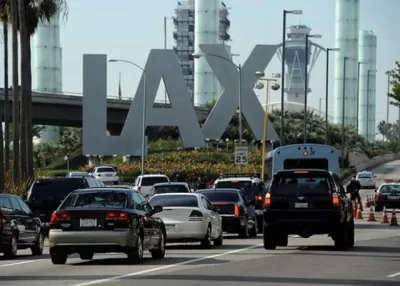
A recent study of New Jersey residents that finds car noise contributes to heart attacks, cardiovascular damage and higher rates of heart disease.
An article by Eve Kessler for Streetsblog USA shares news of the study, by researchers at Rutgers’s Robert Wood Johnson Medical School.
“The study used state data to look at almost 16,000 Garden State residents hospitalized for a heart attack in 2018. It found that the heart-attack rate was 72 percent higher in areas with a lot of transportation noise (cars, but also air traffic; Attention: Stop the Chop NYNJ), with fully 5 percent of hospitalizations for heart attacks traceable to elevated transportation noise,” writes Kessler.
“The ground-breaking study — which is among the first such efforts in the United States — aligns with several European studies and likely could be replicated in similarly dense, noisy urban areas.”
France is one of the few countries in the world with policies that work to curb excessive car noise. Earlier this year, French officials announced a plan to install “sound radars” to detect scofflaws. “According to a study by Bruitparif, a state-backed center that monitors noise in the Paris area, a modified scooter crossing Paris at night can wake as many as 10,000 people,” according to a New York Times article by Emma Bubola reporting the news in February 2022. Paris has banned most cars in an area of the city known as a zone apaisée, or quiet zone.
More details from the recent study, connected to the larger collection of findings on the ill effects of automobile dependency, are included in the source article below.
FULL STORY: THUNDER ROAD: Car Noise Stokes Heart Attacks, Study Finds


Planning for Love, Part 1: The link between urban form and dating
A brief exploration of dating through history highlights how the spaces in which we live and move shape our social lives and relationships.

‘Quiet Parks’ Highlight Importance of Silence for Public Health
The initiative recognizes parks and other areas that preserve natural quiet in a world full of noise pollution.
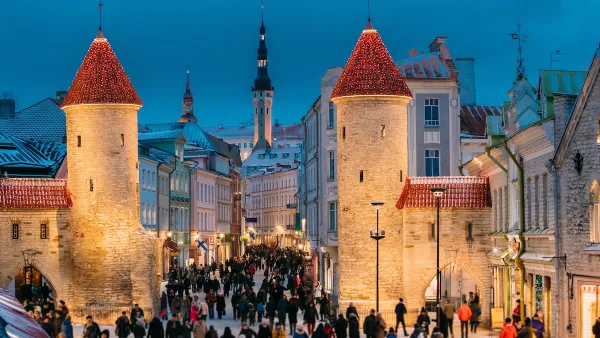
Estonian Capital Launches Noise Reduction Action Plan
European Union cities are required to create ‘noise maps’ and strategic plans for reducing environmental noise.

The state-sanctioned urbicide of Austin
People don’t kill cities. Freeways do.

US to reduce Colorado River water deliveries to Mexico
A new Colorado Treaty amendment reduces Mexico’s Colorado River water allocation by 250,000 acre feet.

New Jersey’s second-largest city bans standalone data centers
Jersey City will continue to allow co-location facilities, such as those meant for research institutions that store their own data.

Amtrak not solely to blame for New Jersey commuter rail's unreliability, report finds
A new study from the Garden State Initiative found that NJ Transit’s budget grew 20% across a 4 year period, but reliability declined significantly over the same period.

EPA erases limits on planet-warming pollution from power plants
Under Monday’s plan, power plants would still have some limits on how much mercury, arsenic and other contaminants they can emit.

Phoenix announces new on-demand transit service, more frequent RAPID buses
Both new services will launch in October, and are part of Phoenix's Project Effective Access Solutions for Easing Congestion.

FREE Course: Walkable City 1: Why Walkability?
After describing his path towards focusing on walkability as the essence of good planning, Jeff Speck marches through his five principal reasons for making more walkable places.
Reinventing Malls: Planning Alchemy—Turning Gray Fields Into Gold
The course focuses on the opportunities and imperatives that shape reinvention of mall sites.

Eagle County Government
Harvard University Graduate School of Design
Nashville Planning Department
The Architects Foundation
University of Cincinnati Online
The Pocatello Development Authority
The Urban Renewal Agency of the City of Pocatello
Journal of the American Planning Association