A trend is emerging in intercity travel in an era of pilot shortages and high fuel prices: intercity buses are replacing flights for shorter regional trips.


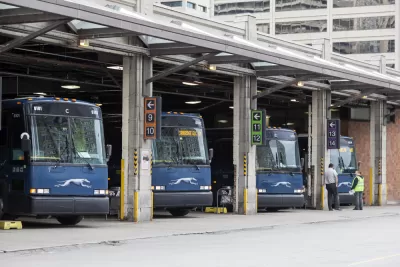
“U.S. airlines are beginning to contract with bus companies to run on-the-ground ‘flights’ between nearby cities,” according to an article by Kea Willson for Streetsblog USA. The trend is providing talking points for advocates to suggest that “the intercity bus should no longer be ignored in the conversation about curbing car and plane dependency.”
An article by Edward Russell for Airline Weekly broke the news that American Airlines had contracted with Landline to connect American’s Philadelphia hub to Lehigh Valley airport near Allentown, Pennsylvania and the airport in Atlantic City, New Jersey. The intercity bus service will commence on June 3.
“The partnership is similar to ones Landline has with Sun Country Airlines in Minneapolis-St. Paul and United Airlines in Denver,” according to Russell.
Wilson provides more on the advocacy angle of the news:
Some sustainable transportation advocates praised the move as a common-sense way to axe emissions from short-haul flights and connect isolated communities with long-distance air travel that at least gets cars off the interstate. But others saw the move as an indicator of America’s under-investment in rail — or a cheap marketing gimmick aimed at bait-and-switching passengers who would never be caught dead on any shared mode, unless it happens to operate at cruising altitude.
Wilson provides a lot more detail and context about intercity travel in the United States in the source article below.
Read the full story: Can ‘Buses-As-Flights’ Get Americans Out of Cars — And Planes?
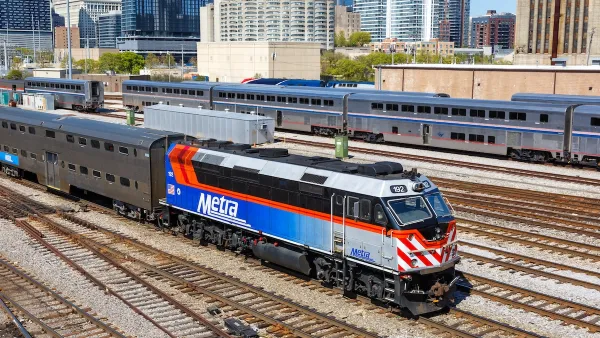
Opinion: Illinois Transit Bill Could Revolutionize Intercity Travel
A bill passed by the state’s General Assembly would create a permanent source of dedicated funding for intercity rail.
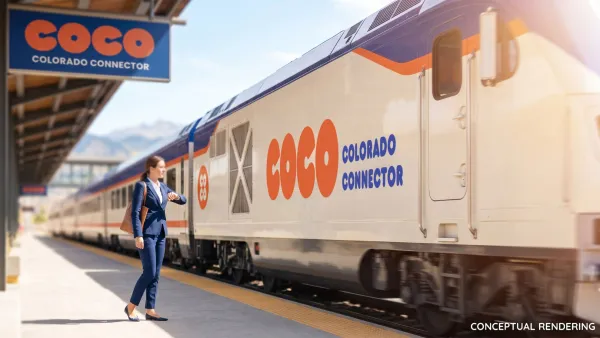
Colorado unveils fox mascot, branding for 'CoCo' high-speed rail
The new Denver-to-Fort Collins train is expected to begin service in 2029.
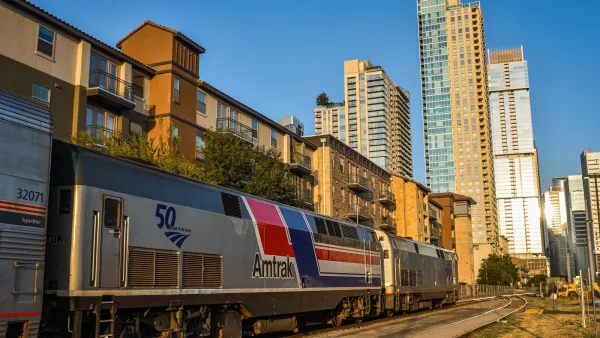
Texas DOT report outlines options for commuter rail between Austin and San Antonio
Amtrak currently operates just one trip per day between the two cities.

Planetizen Federal Action Tracker
A weekly monitor of how Trump’s orders and actions are impacting planners and planning in America.

Eastern Nebraska is running out of electricity
Data centers and electrification are straining eastern Nebraska’s grid, throttling economic development.

Study reveals best places in the U.S. for cycling, walking
New research from Streetlight Data examines bicycle and pedestrian miles per capita in the 100 largest U.S. cities by population.

All sides of BRT debate unhappy with CDOT’s most recent move
The Colorado Department of Transportation is no longer considering center-running bus lanes for Colorado Boulevard.

Massachusetts bogs generate both power, and cranberries
Putting solar panels above farmland is one way Massachusetts is advancing toward its goal of net-zero carbon emissions by 2050.

What could the future of LA transit look like under Raman?
The mayor-elect views broken sidewalks and potholes as crises that can be fixed with better governance.

FREE Course: Walkable City 1: Why Walkability?
After describing his path towards focusing on walkability as the essence of good planning, Jeff Speck marches through his five principal reasons for making more walkable places.
Reinventing Malls: Planning Alchemy—Turning Gray Fields Into Gold
The course focuses on the opportunities and imperatives that shape reinvention of mall sites.

City of Rosemead
Rutgers University, Edward J. Bloustein School of Planning and Public Policy
One Hundred Miles
University of Michigan School for Environment and Sustainability (SEAS)
Hunter College, City University of New York (CUNY)
The Architects Foundation
City of Cambridge
The Pocatello Development Authority
The Urban Renewal Agency of the City of Pocatello