The agency is seeking to execute joint development agreements to support more density near transit stations and boost affordable housing production.


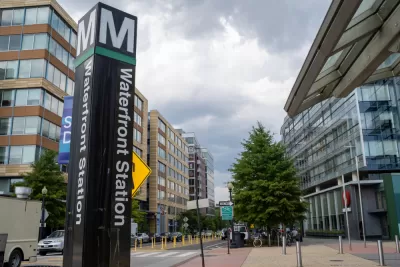
The Washington Metropolitan Area Transit Authority (Metro) wants to encourage transit-oriented development near its stations, reports John Aaron. "The agency hopes to execute new joint development agreements at 20 more stations in the next 10 years."
According to Liz Price, Metro’s vice president of real estate and parking, "Joint development agreements are not new to Metro, which has seen 55 buildings built at 30 stations since Metro opened in the 1970s."
Overall, the report says there are development opportunities at 40 stations — there are 91 in the system currently — totaling more than 500 acres, which could translate to 31 million square feet of new development and 26,000 new housing units.
Per Metro's strategic plan, the agency aims to "support higher density, mixed-use development," "secure infrastructure investments," "maximize economic development," and "support transit operations" with increased ridership and revenue. As Aaron notes, "Price also said that while the strategic planning process predates the pandemic, income from the developments would help Metro address potential financial shortfalls in the future."
Read the full story: Metro looks to accelerate development near stations

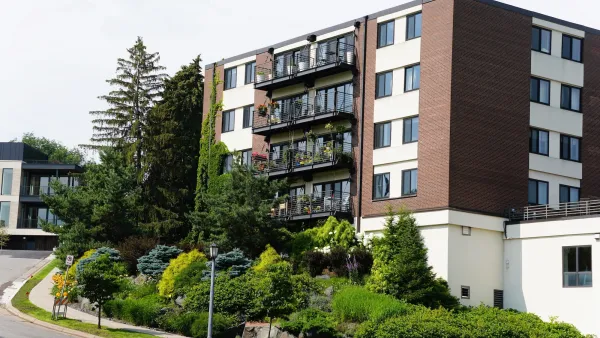
How policy changes helped Minneapolis beat rent inflation
Despite a boom in population, Minneapolis has managed to keep rents relatively steady through a combination of legislative action and private investment.
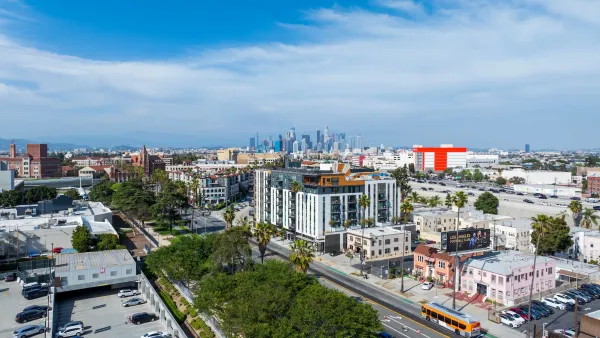
LA delays state housing mandate with 'low-rise ordinance'
The new ordinance allows the city to delay implementing SB 79, a state law requiring more density near transit.
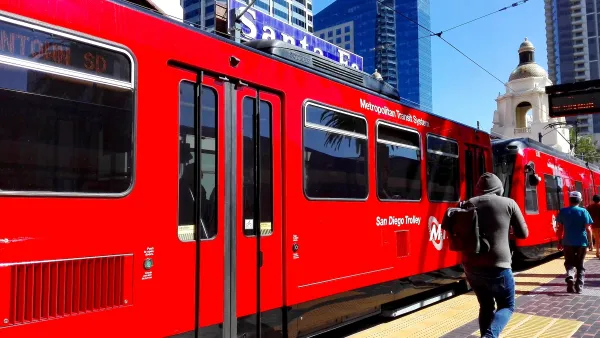
San Diego wants to limit upzoning law to just 16% of transit-adjacent parcels
The city's planning director says some areas are unfit for immediate upzoning due to a lack of resources or hazards such as wildfire risk.

Planetizen Federal Action Tracker
A weekly monitor of how Trump’s orders and actions are impacting planners and planning in America.

Amtrak, CN end decades-long dispute with eight-year agreement
The new operating agreement establishes an updated framework for the companies to work together, including processes to resolve disputes.

Judges permit Denver to divert 77,000 acre feet from the Colorado River for reservoir expansion
Overuse and climate change have caused the Colorado River’s water levels to plummet.

Boston has spent millions making the Green Line more accessible — and there’s no end in sight
While the city has invested millions into expanding and adding platforms to the Green Line to make it more accessible, new train cars set to arrive next year will be too tall for disabled passengers to board without raising the current platforms.

Idaho may see an 18% drop in federal surface transit funding — the largest estimated cut in the US
Transit systems in rural communities are much more reliant on federal funding to provide their services.

How ‘post-disaster gentrification’ alters neighborhoods after natural calamities
After hurricanes, fires or other calamities, the original residents of a community are often replaced by younger, wealthier residents.

FREE Course: Walkable City 1: Why Walkability?
After describing his path towards focusing on walkability as the essence of good planning, Jeff Speck marches through his five principal reasons for making more walkable places.
Reinventing Malls: Planning Alchemy—Turning Gray Fields Into Gold
The course focuses on the opportunities and imperatives that shape reinvention of mall sites.

City of Wisconsin Rapids
Harvard University Graduate School of Design
KFH Group Inc.
The Architects Foundation
University of Cincinnati Online
The Pocatello Development Authority
The Urban Renewal Agency of the City of Pocatello