The trend of Black Americans leaving urban areas for suburban communities mirrors the White Flight of the mid-20th century but for vastly different reasons and with vastly different consequences.


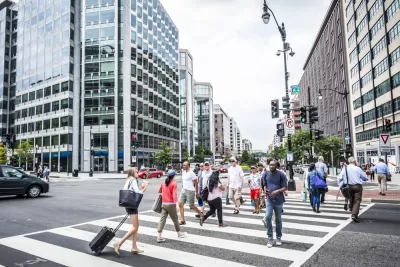
Sophia Tareen writes for the Associated Press (via the Los Angeles Times) about the continuing migration of Black Americans around the country. In the contemporary version of this story, Black Americans are moving away from cities into the suburbs.
The article starts with anecdotes from Chicago, but notes that the trend is echoed around the country. Tareen cites 2020 Census data to show how Black out-migration from urban areas has persisted over the past decade.
For more background on how this story has played out over the years, see some of the articles in Planetizen's archive in addition to the source article, linked below.
- The 'Crisis of Non-Replacement' Undermining Black Neighborhoods (May 2021)
- Black Californians Leaving the City and Reshaping the States (July 2020)
- No Slowdown of Out-Migration of Black Residents from Chicago (March 2020)
- Gentrification and Race in the San Francisco Bay Area (August 2019)
- Whites Moving Into Black Neighborhoods Tip the Scales in Problematic Ways (May 2019)
- Bay Area Displacement and Gentrification Trends Have Regional Consequences (October 2018)
- When Whites Return to the Black Neighborhoods They Fled (November 2017)
- Two Types of Black Suburbanization (January 2016)
Read the full story: Black population continues to grow in suburbs and shrink in cities across the U.S.
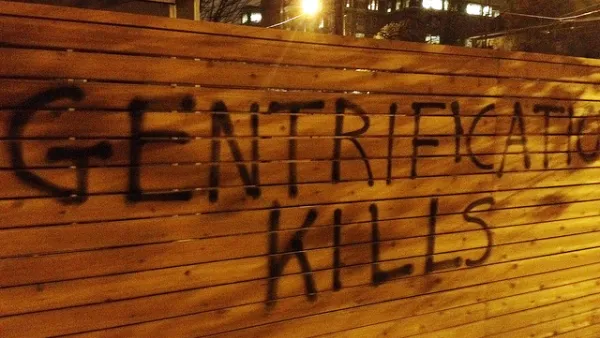
What We Really Mean When We Say Gentrification
The focus on gentrifying communities has, in many cases, eclipsed the similar problems facing more stagnant neighborhoods.
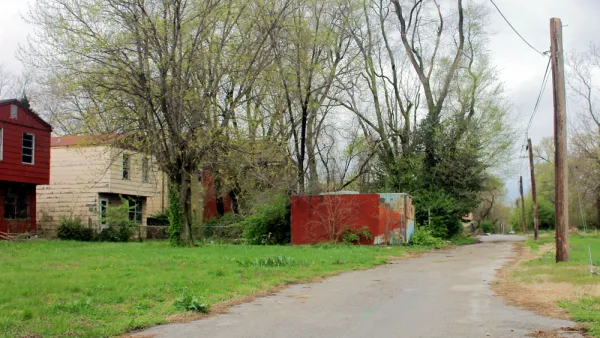
More Evidence that Decline and Concentrated Poverty Define the Urban Experience
Concern about gentrification in urban areas has dominated the urbanism discussion for more than a decade now, at the expense of a more informed understanding of urban dynamics and the potential for more effective action.

Revitalization Should Not Overshadow the Continued Decline in Cities
When gentrification takes center stage, neglected places facing poverty, segregation, and disinvestment are overlooked.

Desperate measures: Advocates weigh draining Lake Powell to fill Colorado River
Draining the reservoir could reduce evaporation losses by a couple hundred thousand acre-feet.

Eastern Nebraska is running out of electricity
Data centers and electrification are straining eastern Nebraska’s grid, throttling economic development.

Malls are becoming the midtowns of the future
Mall and office park redevelopments are a generational opportunity to create new nodes of urbanity.

NYC breaks ground on anti-flooding infrastructure project
New York City's new system will reduce stormwater flows to local sewers by 90%.

One Kentucky town’s secret to affordable housing
The Smoketown Community Land Trust has already built seven affordable homes for community members.

Houston gains petal-shaped cooling infrastructure to make streets more ‘delightful’
The city has installed the pavilions along 15 blocks in Houston.

FREE Course: Walkable City 1: Why Walkability?
After describing his path towards focusing on walkability as the essence of good planning, Jeff Speck marches through his five principal reasons for making more walkable places.
Reinventing Malls: Planning Alchemy—Turning Gray Fields Into Gold
The course focuses on the opportunities and imperatives that shape reinvention of mall sites.

City of Rosemead
Rutgers University, Edward J. Bloustein School of Planning and Public Policy
One Hundred Miles
University of Michigan School for Environment and Sustainability (SEAS)
Hunter College, City University of New York (CUNY)
The Architects Foundation
City of Cambridge
Montrose County
The Pocatello Development Authority