L.A.'s transit agency was awarded over a billion dollars in American Rescue Plan funding for maintenance and operations.


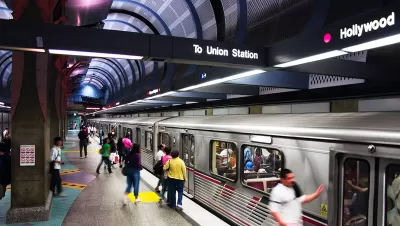
The Los Angeles County Metropolitan Transportation Authority (Metro) was awarded $1.24 billion in American Rescue Plan funds, which the agency's Board Chair, Hilda Solis, says will be used to "rebuild and grow our ridership, maintain the highest standards of service and safety, ensure no employee is laid off, and provide equitable access to transit for all Los Angeles County residents who rely on Metro buses and trains."
According to a blog post from the agency, "Metro will use the America Rescue Plan Act funds to benefit riders, including seniors, persons with disabilities, low-income and transit-dependent individuals by supporting bus and rail operations and maintenance – critical activities that will ensure our transit system operates safely, efficiently, reliably, and sustainably."
The agency is also receiving over $275 million for four Metro transit capital projects through the Capital Investment Grant (CIG) Program, which will help fund construction of the Regional Connector in downtown Los Angeles and the Purple Line Westside Extension.
Metro's decision last week to reinstate fares despite the continuing pandemic has prompted backlash from critics who say the decision will negatively impact low-income transit-dependent riders as new COVID variants surge. Meanwhile, some parents complain that they still haven't received the passes needed for the fareless student pilot that Metro officially launched in October.
Read the full story: Metro awarded $1.24 billion from Federal American Rescue Plan Act to maintain service and project progress during COVID-19 pandemic


L.A. Metro's Proposed Budget Cuts Capital Spending on Transit, Speeds Freeway Expansions
After repeatedly cutting transit service due to the pandemic and a labor shortage, L.A.'s transit agency plans to double down on freeway expansion projects.
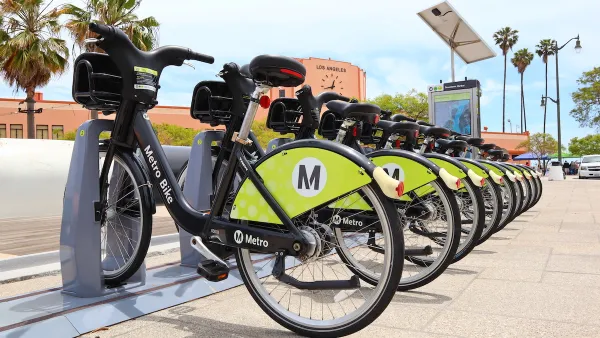
LA Metro Celebrates Bike Month With Free Rides, Discounted Bike Share
Skeptical about riding a bike in Los Angeles? Its transit agency wants to change your mind this May.
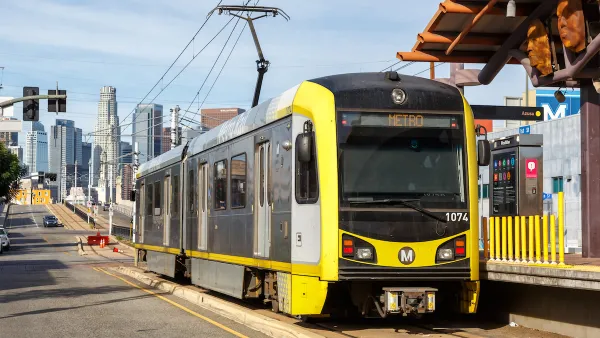
Los Angeles Transit Ridership Grew in 2023
Metro attributes the growth to new destinations, added security, and a streamlined train system.

Planetizen Federal Action Tracker
A weekly monitor of how Trump’s orders and actions are impacting planners and planning in America.

California plans to bury El Niño’s downpour
If the state plays its cards right, it may be able to store a billion acre-feet of El Niño’s water in aquifers.

Chicago breaks ground on $3 billion megadevelopment
The new neighborhood, titled Foundry Park, will one day host 3,700 residences.

Satanic place names
From streams and lakes to valleys and canyons, I mapped more than 1,000 places named after the Devil.

California High-Speed Rail Authority CEO resigns after $600,000 scandal
Under Ian Choudri, the authority used taxpayer dollars to fund first class flights and trips to nightclubs.

Want to study the Missouri River? Soon, you may need unanimous approval from 10 states
Legislation would require 10 governors’ permission to study or build projects moving water outside the basin.

FREE Course: Walkable City 1: Why Walkability?
After describing his path towards focusing on walkability as the essence of good planning, Jeff Speck marches through his five principal reasons for making more walkable places.
Reinventing Malls: Planning Alchemy—Turning Gray Fields Into Gold
The course focuses on the opportunities and imperatives that shape reinvention of mall sites.

City of Rosemead
Rutgers University, Edward J. Bloustein School of Planning and Public Policy
One Hundred Miles
Hunter College, City University of New York (CUNY)
The Architects Foundation
University of Cincinnati Online
City of Cambridge
Montrose County
The Pocatello Development Authority