A survey from scooter operator Spin indicates that e-scooter users experience a boost in relaxation and positive feelings after a ride.


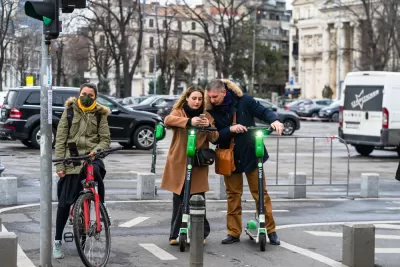
E-scooters could have a surprising side benefit, reports Kea Wilson: a boost to their riders' mental health.
In the first-ever study of the holistic health impacts of e-scooters, researchers from micromobility outfit Spin found that 69 percent of the company’s riders either 'agreed' or 'strongly agreed' with the statement 'riding a shared scooter improves my mental health' — with a majority of riders further specifying that the mode made them feel more relaxed, less stressed, and more mindful of their surroundings and fellow road users.
Research has repeatedly shown that active transportation has positive mental health outcomes, writes Wilson. While most studies have focused on more cardio-intensive modes like biking and walking, electric devices can have similarly positive effects, letting people "experience their streets at human scale," zip past traffic, and socialize with friends and family in an outdoor setting, a benefit that became more important during the pandemic.
While the report is only a small step in understanding the effects of e-scooter use on mental health across different demographic groups and contexts—a rider with access to protected bike lanes might experience more joy than one having to navigate treacherous traffic conditions—the results show that "sustainable transportation may be an overlooked tool in fighting America’s mental health crisis."
Read the full story: Survey Says: E-Scooters Are Great for Riders’ Mental Health


San Diego To Consider Tightening Regulations on E-Scooters
Proposed regulations would limit the popular micromobility devices to two operators, impose new fees, and require more accountability for safe scooter use and parking.
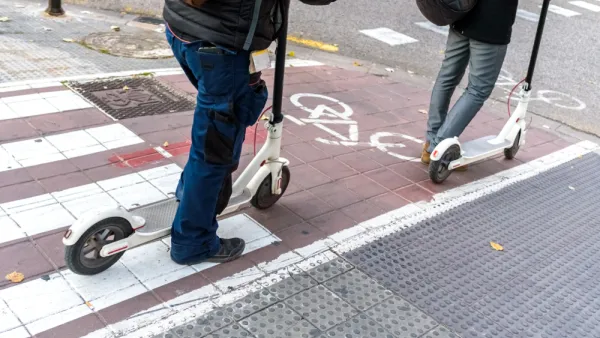
E-Scooter Helmet Laws Could Harm Ridership
Transportation experts warn that mandatory helmet laws for shared e-scooters could cripple the nascent industry and discourage casual rides.
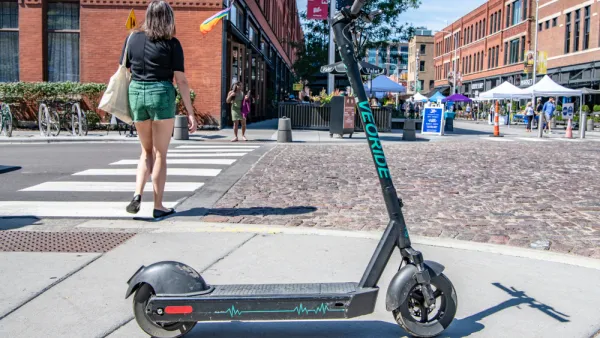
Lessons From Five Years of E-Scooters
As cities continue to adapt micromobility regulations to address new devices and technologies, what can we learn from Chicago's five years of e-scooter pilots?

Planetizen Federal Action Tracker
A weekly monitor of how Trump’s orders and actions are impacting planners and planning in America.

HUD modernizes 50-year-old manufactured housing framework
The Next Generation Manufactured Housing Action Plan establishes new energy-efficiency standards for manufactured homes, and new guidelines for anchoring them.

Data reveals that NYC’s bet on congestion pricing has paid off
After almost two years of the program, reports show positive impacts on traffic and air quality and no disruptions to parking.

How Chicago, New York and Seattle are funding transit projects amid tough times
Notes from the American Public Transportation Association's TransForm conference in Chicago.

Transport for London tackles hate crime spike with free bystander training
Recorded hate crime offences on the London's transport network have increased by 36 per cent.

Denver is solving homelessness. Why aren't the rest of us?
Since 2023, Denver's street homeless population has decreased by 64%, proving that effective tools exist to support those in need of housing.

FREE Course: Walkable City 1: Why Walkability?
After describing his path towards focusing on walkability as the essence of good planning, Jeff Speck marches through his five principal reasons for making more walkable places.
Reinventing Malls: Planning Alchemy—Turning Gray Fields Into Gold
The course focuses on the opportunities and imperatives that shape reinvention of mall sites.

One Hundred Miles
County of Mendocino
planning NEXT
The Architects Foundation
University of Cincinnati Online
Montrose County
Northern Illinois Transit Authority (NITA)
The Pocatello Development Authority