The Idaho Stop—allowing people on bikes to treat stop signs in empty intersections as yield signs—is gaining popularity around the country. Next (not quite) stop: California.


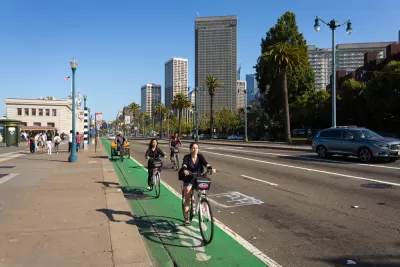
California Assembly Bill 122, also known as the Safety Stop Bill, is awaiting Governor Gavin Newsom's signature after passing the State Legislature. The bill would legalize the "Idaho Stop"—or the practice of allowing people on bikes to treat stop signs as yield signs. The Idaho Stop is a favorite cause of bike safety advocates, who argue that keeping momentum through an intersection is often safer than stopping for people on bikes.
In a (paywalled) article on AB 122, Ricardo Cano provides background on the Idaho Stop and the legislation, noting that Idaho Stops are illegal, though many people on bikes already treat stop signs as yield signs.
"Under the bill, bicyclists approaching a stop sign would be allowed to instead treat it as a yield sign by slowing down and proceeding if it’s safe to do so and there are no pedestrians or car traffic approaching or entering the intersection," explains Cano.
"Lawmakers and supporters of AB122 say the bill would improve cyclists’ safety, encourage more people to ride bikes and bring state law up to speed with the behaviors and best practices already used by experienced cyclists."
According to Cano, "the bill passed both the state’s legislative chambers with strong support," but the bill has been waiting for the governor's signature since the beginning of the month. Newsom has until Oct. 10 to decide on the bills.
As also noted by Cano, "Two other traffic-related bills are awaiting a signature or veto from Newsom. The Legislature also passed AB43, which would give cities more flexibility in reducing speed limits, as well as AB1238, which removes fines and penalties for jaywalking when there are no cars present."
Washington was the most recent state to make the Planetizen newsfeed for legalizing the Idaho Stop, in September 2020.
FULL STORY: California cyclists could treat stop signs as yields if 'Idaho Stop' bill becomes law

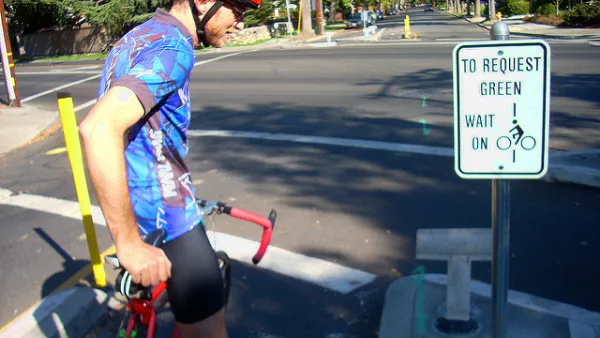
‘Idaho Stop’ Now Legal in Colorado
Colorado is the latest state to make it legal for people on bikes to treat stop signs like yield signs when no cars are in the intersection.
Colorado Legislature Approves 'Idaho Stop' Bill
Pending Gov. Polis's signature on a bill approved recently by the Colorado State Legislature, Colorado will become the latest state to allow people on bikes to yield at stop signs.
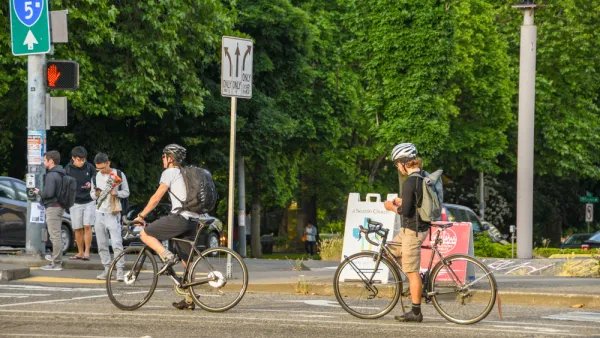
Starting Today: The Idaho Stop Is Legal in Washington State
A law passed in March allowing people on bikes to treat stop signs as yield signs when conditions permit takes effect today in Washington State.

The state-sanctioned urbicide of Austin
People don’t kill cities. Freeways do.

US to reduce Colorado River water deliveries to Mexico
A new Colorado Treaty amendment reduces Mexico’s Colorado River water allocation by 250,000 acre feet.

New Jersey’s second-largest city bans standalone data centers
Jersey City will continue to allow co-location facilities, such as those meant for research institutions that store their own data.

Amtrak not solely to blame for New Jersey commuter rail's unreliability, report finds
A new study from the Garden State Initiative found that NJ Transit’s budget grew 20% across a 4 year period, but reliability declined significantly over the same period.

EPA erases limits on planet-warming pollution from power plants
Under Monday’s plan, power plants would still have some limits on how much mercury, arsenic and other contaminants they can emit.

Phoenix announces new on-demand transit service, more frequent RAPID buses
Both new services will launch in October, and are part of Phoenix's Project Effective Access Solutions for Easing Congestion.

FREE Course: Walkable City 1: Why Walkability?
After describing his path towards focusing on walkability as the essence of good planning, Jeff Speck marches through his five principal reasons for making more walkable places.
Reinventing Malls: Planning Alchemy—Turning Gray Fields Into Gold
The course focuses on the opportunities and imperatives that shape reinvention of mall sites.

Eagle County Government
Harvard University Graduate School of Design
Nashville Planning Department
The Architects Foundation
University of Cincinnati Online
The Pocatello Development Authority
The Urban Renewal Agency of the City of Pocatello
Journal of the American Planning Association