The National Park Service is seeking public comments on the redevelopment of sites within the Santa Monica Mountains National Recreation Area that were burned in the 2018 Woolsey Fire.



The Santa Monica Mountains National Recreation Area (SMMNRA) is the largest urban national park in the United States, encompassing over 150,000 acres of mountains and coastline in Los Angeles and Ventura counties. The National Park Service (NPS) is currently asking the public to provide comments on the redevelopment of sites within the SMMNRA that were burned in the devastating 2018 Woolsey Fire. Specifically, the NPS is initiating a public scoping phase to kick off the preparation of an environmental assessment under the National Environmental Policy Act (NEPA).
The proposed recovery work would replace facilities at three sites: Paramount Ranch, Rocky Oaks, and Peter Strauss Ranch. The NPS planning team is evaluating the restoration of visitor services, employee housing, and cultural features. During this initial public scoping period, the following types of comments are particularly helpful:
- Information about the project area that the NPS should consider during the analysis,
- Information about how you use the project area and how the project might affect that use,
- Other projects or activities that might affect or be affected by the project,
- Resource and other impacts that should be considered, and
- Other ideas, studies, data, or alternatives for meeting project objectives.
There will be two opportunities to comment formally on the proposed project: 1) now during scoping and 2) following release of the environmental assessment. During the current scoping phase, the NPS invites the public to submit written suggestions, comments, and concerns regarding the proposed project. All comments must be received or postmarked by midnight, July 16, 2021.
FULL STORY: Public Comments Sought on Proposed Woolsey Fire Recovery

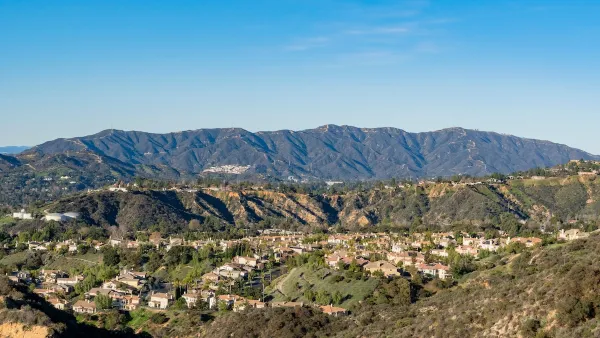
Altadena’s Resilience: Restoring a Fire-Ravaged Community
The Eaton Fire has devastated Altadena, destroying homes, cultural landmarks, and community institutions, while residents rally to rebuild and preserve the town's rich history, diversity, and neighborly character.
Resilient Communities, Healthy Ecosystems: A Balanced Approach to Wildfires
Effective wildfire mitigation in California requires a holistic approach that goes beyond large-scale vegetation removal, emphasizing home hardening, defensible space, strategic planning, and reducing human-caused ignitions.

Building Resilient Communities: Insights from the LA County Cities Summit
The Los Angeles County Cities Summit convened local leaders to share strategies for advancing sustainability, addressing climate resilience, extreme heat, and other pressing environmental challenges through policy and community-driven solutions.

The state-sanctioned urbicide of Austin
People don’t kill cities. Freeways do.

US to reduce Colorado River water deliveries to Mexico
A new Colorado Treaty amendment reduces Mexico’s Colorado River water allocation by 250,000 acre feet.

New Jersey’s second-largest city bans standalone data centers
Jersey City will continue to allow co-location facilities, such as those meant for research institutions that store their own data.

Amtrak not solely to blame for New Jersey commuter rail's unreliability, report finds
A new study from the Garden State Initiative found that NJ Transit’s budget grew 20% across a 4 year period, but reliability declined significantly over the same period.

EPA erases limits on planet-warming pollution from power plants
Under Monday’s plan, power plants would still have some limits on how much mercury, arsenic and other contaminants they can emit.

Phoenix announces new on-demand transit service, more frequent RAPID buses
Both new services will launch in October, and are part of Phoenix's Project Effective Access Solutions for Easing Congestion.

FREE Course: Walkable City 1: Why Walkability?
After describing his path towards focusing on walkability as the essence of good planning, Jeff Speck marches through his five principal reasons for making more walkable places.
Reinventing Malls: Planning Alchemy—Turning Gray Fields Into Gold
The course focuses on the opportunities and imperatives that shape reinvention of mall sites.

Eagle County Government
Harvard University Graduate School of Design
Nashville Planning Department
The Architects Foundation
University of Cincinnati Online
The Pocatello Development Authority
The Urban Renewal Agency of the City of Pocatello
Journal of the American Planning Association