A comic strip illustrates the humans behind remarkable resilience in the face of incredible risks.


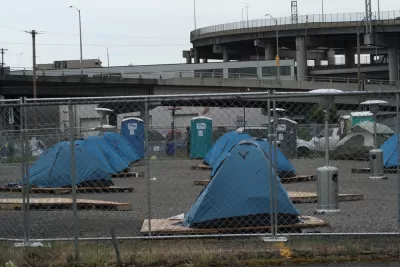
A comic strip, with reporting by Amber Cortes and illustrations by Carl Nelson, provides a rare kind of access to the human stories of homelessness during the pandemic. The comic focuses on the work of a group of people experiencing homelessness during the pandemic in Portland, Oregon, detailing the steps they took to reduce risks during the pandemic in the face of the threat posed by the novel coronavirus in addition to new levels of economic and food insecurity.
The headline of the story I about how the pandemic exacerbated the pandemic, but much of the story focuses on the actions taken by members of the Portland homeless community to ensure their own safety and health. The effort constantly evolved as CDC recommendations shifted and obvious concerns dictated the need for change (e.g., "It was clearly a bad idea in a pandemic to be pushing shelters").
While the comic acknowledges that the pandemic created new opportunities for a new approach to homeless support services, according to this story, it was the homeless community that came to the rescue.
FULL STORY: The Emergency We’ve Accepted

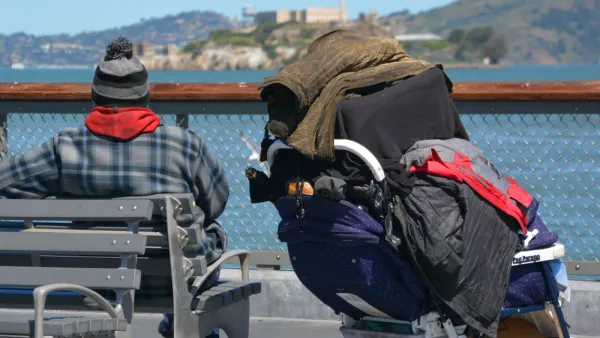
Fewer People Experiencing Homelessness in San Francisco
In a first since 2015, the number of people experiencing homelessness in San Francisco declined from the year prior, according to preliminary analysis of the city’s most recent Point-in-Time count.
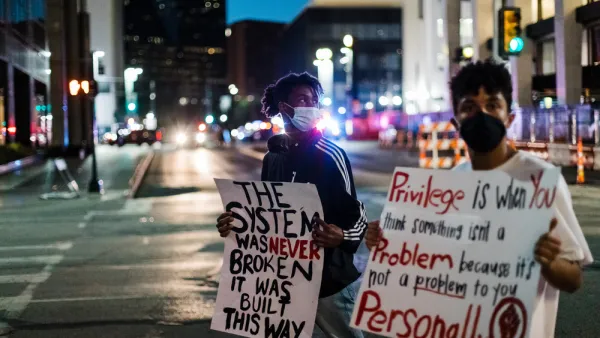
Urban Planning in a Time of COVID
In Dallas, Dr. Eric Anthony Johnson is not letting last year's crises go to waste.
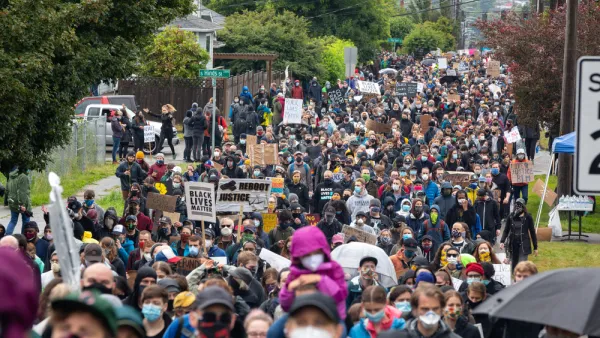
Stories of Resilience From 2020
A year of intense challenges also offers a chance to break from the unsustainable, inequitable status quo.

Planetizen Federal Action Tracker
A weekly monitor of how Trump’s orders and actions are impacting planners and planning in America.

The state-sanctioned urbicide of Austin
People don’t kill cities. Freeways do.

US to reduce Colorado River water deliveries to Mexico
A new Colorado Treaty amendment reduces Mexico’s Colorado River water allocation by 250,000 acre feet.

5 New England states march closer to 800 megawatt wind energy project
Securing federal approval for the project may be complicated under the Trump administration, which has historically been hostile towards domestic wind power.

Baltimore to break ground on $50 million Transit Priority Project
The project will bring faster bus trips, safer streets and better bike connections to Baltimore.

Airbnb launches $250 million 'last-dollar financing' housing accelerator, makes first investment in Austin
The company will put $6.4 million towards affordable housing development in Texas’ capital.

FREE Course: Walkable City 1: Why Walkability?
After describing his path towards focusing on walkability as the essence of good planning, Jeff Speck marches through his five principal reasons for making more walkable places.
Reinventing Malls: Planning Alchemy—Turning Gray Fields Into Gold
The course focuses on the opportunities and imperatives that shape reinvention of mall sites.

Eagle County Government
Harvard University Graduate School of Design
Nashville Planning Department
The Architects Foundation
University of Cincinnati Online
The Pocatello Development Authority
The Urban Renewal Agency of the City of Pocatello
Journal of the American Planning Association