While eviction moratoriums helped keep many tenants in their homes during the pandemic, the nation's renters have amassed a collective debt of over $52 billion, and many mom-and-pop landlords are struggling to hold on.


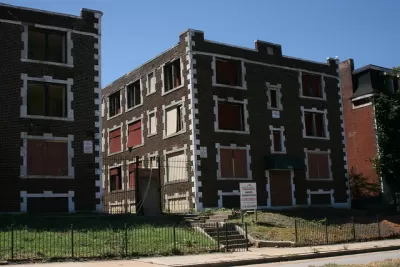
A year after governments across the country implemented eviction moratoriums, some landlords are struggling to pay their own bills as back rent piles up. "Many said they or their clients are dipping into savings to keep properties afloat and delaying maintenance or repairs because they can’t afford them." Writing in the Los Angeles Times, Andrew Khouri reports on the growing crisis.
Without financial assistance, many small landlords are falling behind on their own expenses, and some fear having to sell their properties. "One property owner in her 60s said she is considering taking a second job to avoid having to sell her two 20-unit buildings because she’s having difficulty keeping up with mortgage payments. An owner in his 80s said he’s already told his lender he can no longer meet payments and anticipates handing the 200 units he owns back to the bank."
While some "billionaire landlords" have seen their wealth increase over the course of the pandemic, smaller owners have fared much differently. A study by the Institute for Policy Studies shows that "L.A. property owners with five or fewer units were most likely, at 37%, to report an expectation of financial distress before three months. Owners with 30 or more units were least likely to expect financial distress before three months, but the percentage was still 20.3%." Dan Yukelson, executive director of the Apartment Association of Greater Los Angeles, said "missed rent is a hit to association members, who have also faced added costs over the last year including rising water bills and requests for repairs as homes became offices, classrooms and all-around sanctuaries during the pandemic."
Larry Gross, executive director of the tenant rights group Coalition for Economic Survival, argues that, while small landlords do deserve more relief, "current eviction restrictions should not be rolled back," and income verification requirements "would make more people homeless than the small number of individuals who might be taking advantage."
FULL STORY: Landlords are waiting for rent payments — and some can’t hold on much longer

Spiking Rents Putting More People at Risk of Eviction
Housing costs across the country are becoming more and more unaffordable for low- and moderate-income households, a trend that began even before the COVID-19 pandemic.
As Rental Assistance Ends, Houston Sees Eviction Filings Rise
More Houston households face evictions as landlords seek to recover back rent accrued during the last two years of the pandemic.
Rent Crisis Deferred
One-third of tenants didn't pay rent in April, according to a data released today by the National Multifamily Housing Council.

The state-sanctioned urbicide of Austin
People don’t kill cities. Freeways do.

US to reduce Colorado River water deliveries to Mexico
A new Colorado Treaty amendment reduces Mexico’s Colorado River water allocation by 250,000 acre feet.

New Jersey’s second-largest city bans standalone data centers
Jersey City will continue to allow co-location facilities, such as those meant for research institutions that store their own data.

Amtrak not solely to blame for New Jersey commuter rail's unreliability, report finds
A new study from the Garden State Initiative found that NJ Transit’s budget grew 20% across a 4 year period, but reliability declined significantly over the same period.

EPA erases limits on planet-warming pollution from power plants
Under Monday’s plan, power plants would still have some limits on how much mercury, arsenic and other contaminants they can emit.

Phoenix announces new on-demand transit service, more frequent RAPID buses
Both new services will launch in October, and are part of Phoenix's Project Effective Access Solutions for Easing Congestion.

FREE Course: Walkable City 1: Why Walkability?
After describing his path towards focusing on walkability as the essence of good planning, Jeff Speck marches through his five principal reasons for making more walkable places.
Reinventing Malls: Planning Alchemy—Turning Gray Fields Into Gold
The course focuses on the opportunities and imperatives that shape reinvention of mall sites.

Eagle County Government
Harvard University Graduate School of Design
Nashville Planning Department
The Architects Foundation
University of Cincinnati Online
The Pocatello Development Authority
The Urban Renewal Agency of the City of Pocatello
Journal of the American Planning Association