The novel coronavirus wasn't the only public health risk spreading around the United States in 2020.


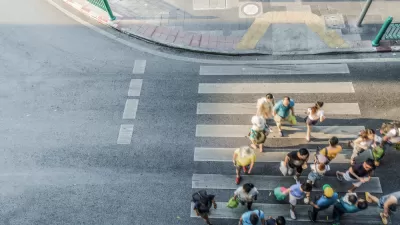
The latest edition of the annual "Spotlight on Highway Safety" report from the Governors Highway Safety Association (GHSA) projects that the pedestrian fatality rate in the United States rose 20% in the first six months of 2020. The projections are based on preliminary data provided by state highway safety offices in all 50 states and the District of Columbia.
"If this troubling pattern continues for the second half of the year as many traffic safety experts fear, 2020 is projected to have the largest ever annual increase in the U.S. pedestrian fatality rate per mile driven," according to a press release announcing the report.
The press release credits the record increase in pedestrian fatality rate on the increasing amount of speeding, distracted and impaired driving, and other dangerous driving behaviors during the COVID-19 pandemic.
The report also finds that pedestrian fatalities account for a growing portion of the traffic fatalities on U.S. streets and roads. "The GHSA report also examines 2019 data from the National Highway Traffic Safety Administration’s (NHTSA) Fatality Analysis Reporting System (FARS), finding that pedestrians accounted for 17% of all traffic deaths in 2019, compared to 13% in 2010," according to the press release. "While pedestrian deaths have risen by 46% over the past decade, the number of all other traffic deaths has increased by only 5%."
The tragedy also has disproportionate impacts for Black, Indigenous and People of Color (BIPOC) pedestrians, according to the report: "Drivers struck and killed a larger proportion of Black, Indigenous and People of Color (BIPOC) traveling on foot than expected based on their respective share of the population, while people on foot classified as white/non-Hispanic accounted for a considerably smaller proportion based on population. This reinforces the need for racial equity to be a centerpiece of comprehensive pedestrian safety action plans."
A Twitter thread by Peter Flax pulls out some of the alarming lowlights from the report.
BREAKING: "A new report from the GHSA projects that the US pedestrian fatality rate rose 20% in the first six months of 2020 as speeding, distracted and impaired driving, and other dangerous driving behaviors increased during the COVID-19 pandemic."https://t.co/w8WpW07lyJ
— Peter Flax (@Pflax1) March 23, 2021
The news isn't entirely tragic: the report identified 20 states and the District of Columbia as making progress on pedestrian safety, and nine states even report double-digit decreases in the number of pedestrians killed by drivers. The 2019 version of the same report found similarly alarming and record-breaking pedestrian safety data, and now it seems like the pandemic only exacerbated the pedestrian safety trends already obvious in the country.
FULL STORY: Projected 2020 U.S. Pedestrian Death Rate on Pace for Record High Despite Significant Drop in Driving

Pedestrian Deaths Last Year Projected to Be Highest Since 1990
Among the factors that stand out in the "Spotlight on Highway Safety" report released Thursday by the Governors Highway Safety Association is increased "death by SUV," which kill at a higher rate than cars. Distraction, however, is hard to prove.
Halloween a Deadly Reminder of the Failures of U.S. Traffic Safety
When it comes to pedestrian safety, Halloween has never been so frightening.
Why Pedestrian Deaths Are Rising
Jarrett Walker offers insights into "Right of Way," a book written last year by Angie Schmitt that is influencing the traffic safety conversation and pushing the fields of planning and engineering in new directions.

The state-sanctioned urbicide of Austin
People don’t kill cities. Freeways do.

US to reduce Colorado River water deliveries to Mexico
A new Colorado Treaty amendment reduces Mexico’s Colorado River water allocation by 250,000 acre feet.

New Jersey’s second-largest city bans standalone data centers
Jersey City will continue to allow co-location facilities, such as those meant for research institutions that store their own data.

Amtrak not solely to blame for New Jersey commuter rail's unreliability, report finds
A new study from the Garden State Initiative found that NJ Transit’s budget grew 20% across a 4 year period, but reliability declined significantly over the same period.

EPA erases limits on planet-warming pollution from power plants
Under Monday’s plan, power plants would still have some limits on how much mercury, arsenic and other contaminants they can emit.

Phoenix announces new on-demand transit service, more frequent RAPID buses
Both new services will launch in October, and are part of Phoenix's Project Effective Access Solutions for Easing Congestion.

FREE Course: Walkable City 1: Why Walkability?
After describing his path towards focusing on walkability as the essence of good planning, Jeff Speck marches through his five principal reasons for making more walkable places.
Reinventing Malls: Planning Alchemy—Turning Gray Fields Into Gold
The course focuses on the opportunities and imperatives that shape reinvention of mall sites.

Eagle County Government
Harvard University Graduate School of Design
Nashville Planning Department
The Architects Foundation
University of Cincinnati Online
The Pocatello Development Authority
The Urban Renewal Agency of the City of Pocatello
Journal of the American Planning Association