If implemented, Home in Tacoma would create new housing categories to encourage more multi-family buildings.


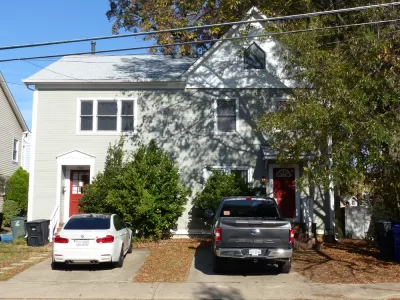
Home in Tacoma proposes major reforms to the city's historically single-family zoning, calling for new housing categories that create more density and affordable "missing middle housing" options. Nick Bowman, writing for MyNorthwest, reports on the policy recommendations, which include "a pair of potential options would either have the city be 75% low-scale and 25% mid-scale, or 40% low-scale and 60% mid-scale."
The proposal "would eliminate the 'single family' and 'multi-family' land use designations altogether, replacing them with 'low-scale residential' and 'mid-scale residential.'" The commission stated that the two options presented both "include significant new housing options." Compiled by the Home in Tacoma Project at the direction of the Tacoma City Council, the proposal focuses on expanding multi-family housing options in a city where 90% of land is currently zoned for single-family homes.
The proposal also recommends the "expansion of regulatory affordable housing incentives and requirements" and "anti-displacement actions intended to help lower- income residents remain in growing neighborhoods."
The Planning Commission is accepting public comments and will hold a public hearing on April 7. According to the Home in Tacoma Project, "the City Council has directed staff and the Commission to provide zoning and development standards updates to implement the adopted policy direction by December of 2021."
FULL STORY: Tacoma unveils plan to do away with ‘single-family’ zoning label, reimagine housing options

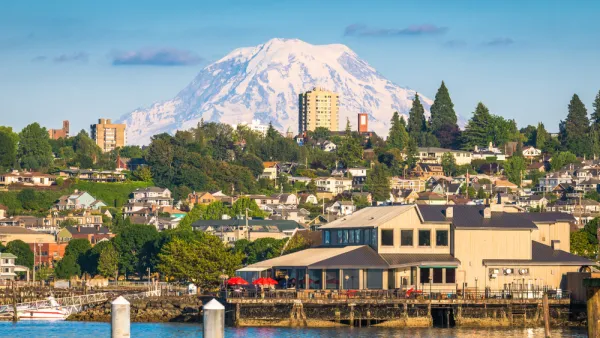
Tacoma Density Plan Moves to Phase Two
The Home in Tacoma plan would amend the city's zoning code to include more 'missing middle' housing types and encourage infill development.
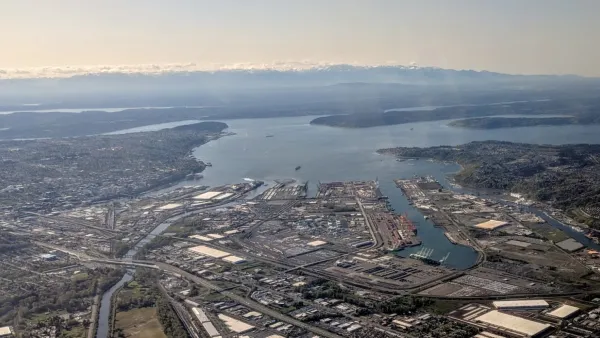
Sweeping Residential Zoning Reform Advances in Tacoma
Zoning and land use changes proposed in the Home in Tacoma plan, an element of the One Tacoma Comprehensive Plan, was approved this month by the Tacoma Planning Commission.
Upping Tacoma's Missing Middle Housing Game
Tacoma is looking to expand on the accessory dwelling unit reforms of the Home in Tacoma project by planning for new residential density along the city's transit routes.

Planetizen Federal Action Tracker
A weekly monitor of how Trump’s orders and actions are impacting planners and planning in America.

The state-sanctioned urbicide of Austin
People don’t kill cities. Freeways do.

US to reduce Colorado River water deliveries to Mexico
A new Colorado Treaty amendment reduces Mexico’s Colorado River water allocation by 250,000 acre feet.

Baltimore to break ground on $50 million Transit Priority Project
The project will bring faster bus trips, safer streets and better bike connections to Baltimore.

Airbnb launches $250 million 'last-dollar financing' housing accelerator, makes first investment in Austin
The company will put $6.4 million towards affordable housing development in Texas’ capital.

Guerilla urbanists are building DIY bus stop benches in Chicago
A before-and-after of one of the bus stops with a new bench. The new benches are not officially sanctioned or permitted, but the residents who placed them hope they will be the start of a network of DIY benches across the city.

FREE Course: Walkable City 1: Why Walkability?
After describing his path towards focusing on walkability as the essence of good planning, Jeff Speck marches through his five principal reasons for making more walkable places.
Reinventing Malls: Planning Alchemy—Turning Gray Fields Into Gold
The course focuses on the opportunities and imperatives that shape reinvention of mall sites.

Eagle County Government
Harvard University Graduate School of Design
Nashville Planning Department
The Architects Foundation
University of Cincinnati Online
The Pocatello Development Authority
The Urban Renewal Agency of the City of Pocatello
Journal of the American Planning Association